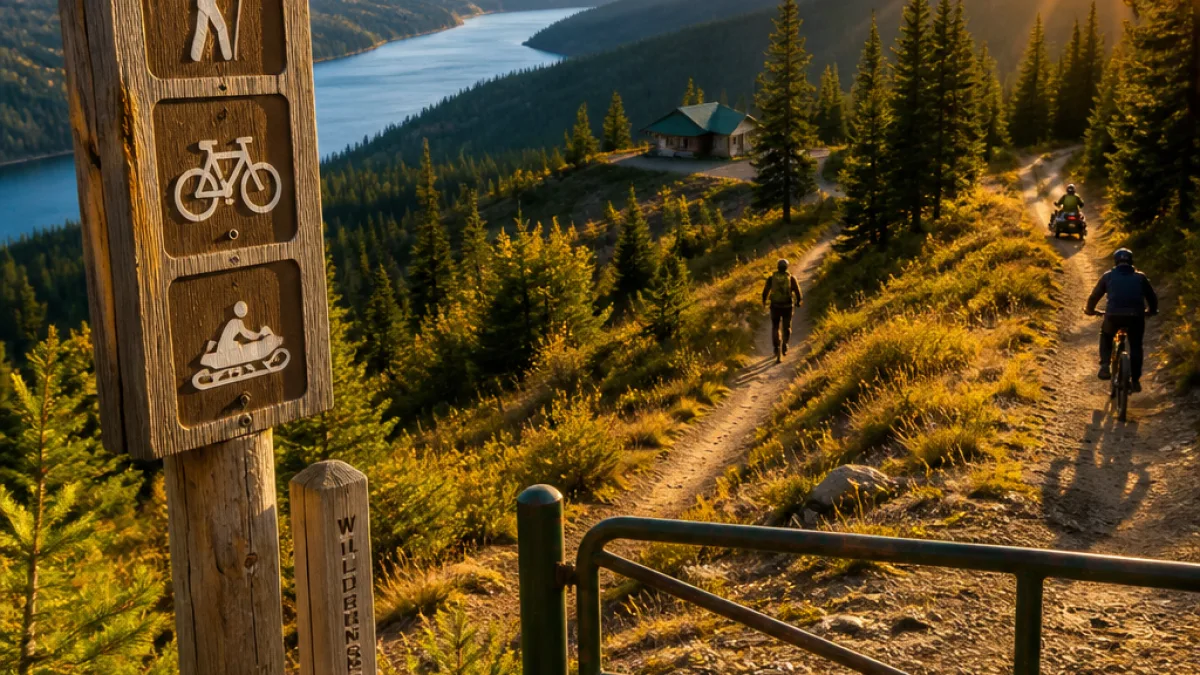
The Idaho Panhandle’s patchwork of trails, rivers and roadless ridgelines — assets that draw residents and visitors for hiking, hunting, fishing, motorized recreation and winter sports — is the subject of a newly announced agreement meant to calm recurring fights over how those public lands are managed.
From conflict to compromise
Brad Smith, a contributor to the Sandpoint Reader who has worked in conservation for more than two decades, framed the accord as the result of repeated confrontations during past federal planning efforts. The U.S. Forest Service’s land management plan for the Idaho Panhandle National Forests, finalized in 2015, set off disputes that pitted different recreation groups and conservation organizations against one another.
"The ways people value public lands are as diverse as the people who use them."
Smith wrote that the strong public backlash last year to some congressional proposals to sell public lands underscored how deeply Idahoans value those forests and rangelands. He described how the disagreements emerged around specific places — the Upper Pack River, Long Canyon, the Upper Priest River, Parker Creek and other roadless watersheds — and how those fights often repeated each time agency planning cycles turned over.
Points of tension
Smith recounted several concrete flash points where groups diverged over management outcomes:
- Upper Pack River: debate over whether portions should remain in proposed wilderness boundaries or be opened for snowmobile access
- Long Canyon and Upper Priest River: disputes involving mountain bikers and conservation groups about protections and trail access
- Long-standing roadless areas: Parker Creek and neighboring watersheds were raised as places conservationists sought to keep free from new road construction
Those specific examples shaped Smith’s larger point: without negotiated compromise among users, planning decisions tend to return the same conflicts to public view and courtrooms.
What the agreement seeks to do
The newly reported agreement attempts to build a common ground among those competing interests. According to Smith, the effort recognizes that Idahoans come to public lands for different reasons — from backcountry solitude to motorized recreation — and that the answer to recurring disagreements lies in collaborative solutions rather than one-sided outcomes.
While the piece does not list the precise language of the accord or the federal approvals required to implement any changes, it signals an important shift in approach: stakeholders who previously opposed each other in planning processes are now negotiating trade-offs and protections in advance.
Why this matters locally
Public-lands policy in the Panhandle affects tourism, outdoor businesses, subsistence and cultural practices, and the region’s water and wildlife resources. For many communities, those forests are an economic backbone and a source of daily recreation. When stakeholders reach agreements, it can reduce litigation, speed up management actions such as trail maintenance or habitat protections, and provide clearer expectations for users.
| Issue | Stakeholders |
|---|---|
| Wilderness boundaries | Conservation groups, snowmobile communities |
| Trail access in Long Canyon | Mountain bikers, wilderness advocates |
| Roadless watershed protections | Local residents, conservationists |
What comes next
Any negotiated agreement must still be reconciled with federal planning requirements and the Forest Service’s management mandate. That process typically includes environmental analysis, public comment periods and, in some instances, legal challenges. Smith’s account suggests the value of pre-emptive negotiation: reducing the number of issues that reach the formal planning stage may result in fewer surprises and less adversarial decision-making.
For Idahoans who use the Panhandle’s public lands, the immediate practical takeaway is to stay engaged. Public input remains a formal part of forest plan revisions and local implementation. Recreational users, property owners and conservationists alike will want to monitor how any agreement gets translated into management actions, trail designations, road projects or seasonal access changes.
Ultimately, the reported agreement reflects a broader trend in public-land policy nationwide: an increased emphasis on collaborative planning and local stewardship as a way to navigate competing values while keeping forests, rivers and trails open and resilient for future generations.