Boise, Idaho — The U.S. Department of Energy has designated Idaho one of five potential host states for a new Nuclear Lifecycle Innovation Campus, but the memorandum of understanding Gov. Brad Little signed July 24 contains a stipulation that could reshape the state’s longstanding role in national nuclear waste policy: Idaho would be required to accept out-of-state used nuclear fuel, spent nuclear fuel and high-level radioactive waste if it signs a formal host agreement.
What the memo says
The MOU between the federal government and the state of Idaho spells out the conditions for moving forward with the proposed campus. One explicit requirement reads:
“The host agreement shall provide for the acceptance of out-of-state used nuclear fuel, spent nuclear fuel, and high-level radioactive waste.”
Federal officials have framed the campuses as an industrial and research initiative intended to spur domestic manufacturing, create jobs, and bolster U.S. energy independence. Idaho was named alongside Utah, Tennessee, Oklahoma and Louisiana as potential locations.
How the decision collides with a decades-old pact
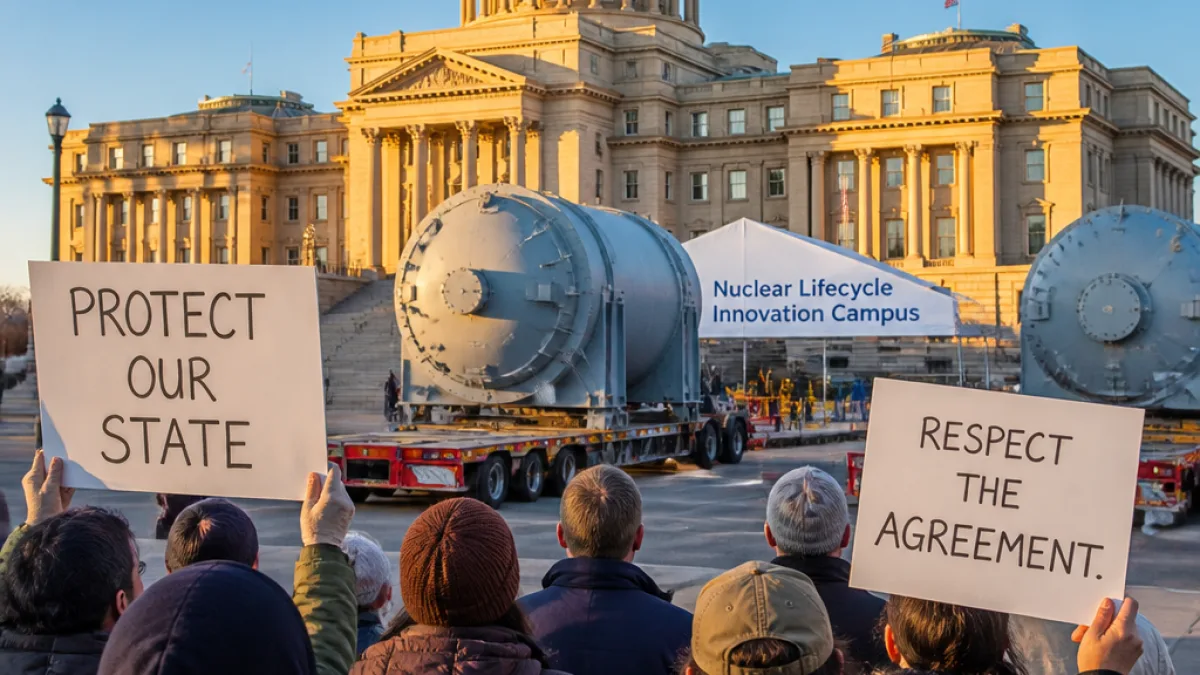
For many Idahoans, the news reopens an old wound. In 1995, the state and the Department of Energy reached a settlement widely known as the Batt Agreement — named for the late Gov. Phil Batt — which aimed to limit shipments of spent nuclear fuel into Idaho and to accelerate the removal of waste from the state. That agreement has been a cornerstone of local opposition to becoming a long-term repository for the nation’s nuclear materials.
The new memorandum does not erase the Batt Agreement but creates a path that would require Idaho to accept material from other states as a condition of hosting the DOE’s campus. Media reports have suggested that the three states selected for campuses could each take as much as one-third of the nation’s stockpile of spent nuclear fuel; the MOU language signed by Little indicates this type of redistribution would be a feature of the program if Idaho signs a host agreement.
Local and state stakes
The stakes are practical and political. Hosting a DOE campus could bring federal investment, specialized jobs and an expansion of research capacity at Idaho National Laboratory and other local facilities. At the same time, accepting shipments of high-level radioactive waste raises concerns about transportation safety, long-term storage and environmental protections — questions that typically prompt intensive review and public debate.
How Idaho balances potential economic gains against environmental and public-safety risks will likely be a central issue in the next phase of discussions between the state, local communities and the DOE.
Where the proposal stands
At this stage, Idaho is a potential host site. Moving from that designation to an actual campus requires the state to negotiate and sign a formal host agreement with the Department of Energy that would implement the MOU’s terms. The governor’s signature on the MOU indicates the state’s willingness to consider the project but does not finalize any commitments beyond that understanding.
- Potential benefits: federal investment, manufacturing growth, research expansion, job creation.
- Potential risks: long-term storage decisions, transportation of spent fuel, environmental and public-safety concerns.
- Legal backdrop: the 1995 Batt Agreement aimed to limit shipments and require removal of Idaho’s nuclear waste.
Questions Idahoans will face
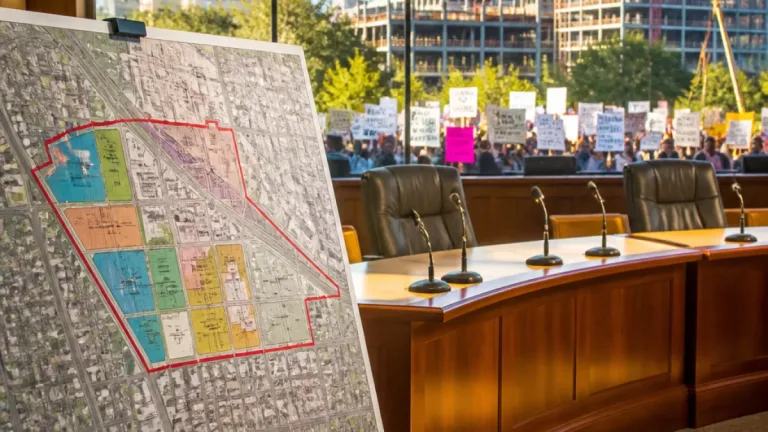
Practical questions remain unanswered publicly: Where within Idaho might the campus and storage facilities be located? What state-level safeguards would be negotiated to control transportation routes and storage conditions? What mechanisms would guarantee monitoring, emergency preparedness and long-term oversight?
These are the sorts of issues that typically shape public hearings and state legislative scrutiny. They also help explain why the DOE’s selection prompted immediate attention: it is not only a technical or scientific decision but a policy choice with residential, environmental and fiscal consequences across the state.
| Item | Implication |
|---|---|
| DOE campus designation | Idaho named one of five potential hosts |
| Signed MOU | Requires acceptance of out-of-state spent fuel in a host agreement |
| Batt Agreement (1995) | Originally limited incoming shipments and sought expedited removal of Idaho waste |
Federal officials argue the campuses will strengthen domestic supply chains and energy independence. Local officials and residents — especially near existing facilities like the Idaho National Laboratory — will need to weigh those potential economic gains against the implications of becoming a regional hub for spent nuclear fuel.
As discussions progress, Idaho lawmakers, tribal governments and local jurisdictions can expect to be drawn into negotiations that will determine whether hosting a DOE Nuclear Lifecycle Innovation Campus is an economic boon, a policy burden, or a complex mix of both.