Judge blocks ballot-separation effort
A federal judge in Alaska has rejected the Trump administration's attempt to set aside and preserve ballots cast for Dan J. Sullivan, a candidate whose name matches that of Republican Sen. Dan Sullivan in the state's upcoming Senate election. The ruling leaves the ballots within the ordinary election process and draws a firm line around the privacy of Alaska voters as the contest approaches its final day.
U.S. District Judge Sharon Gleason dismissed the administration's lawsuit Sunday. The case sought to address what federal officials described as possible voter confusion between the incumbent senator and the lesser-known candidate. It also asked the court to stop certification of the Senate result if Sen. Sullivan were to lose.
The legal effort came after a New York Times report drew attention to claims that Mary Peltola's campaign and other Democrats had helped recruit Dan J. Sullivan to enter the race. Peltola, a Democrat and former U.S. representative, is challenging the incumbent in a contest that has taken on national significance.
| Issue | What the ruling did |
|---|---|
| Ballots | Rejected a request to separate and preserve votes for Dan J. Sullivan |
| Certification | Declined to block certification if Sen. Dan Sullivan loses |
| Next legal step | The Justice Department said it would appeal |
Secret ballot at the center
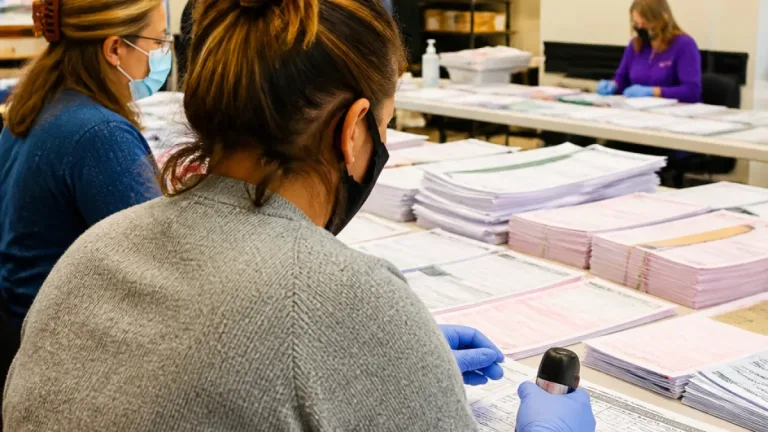
Gleason's concern was not limited to whether voters might have selected the wrong candidate. She focused on what would happen after those ballots were identified. The administration's proposal, she wrote, did not explain how officials could investigate the ballots while preserving the secrecy promised to voters.
“Requiring the segregation of ballots cast by voters for Daniel J. Sullivan so that these voters can be further investigated by law enforcement is not a remedy that this Court can or should order as it clearly violate Alaskans’ right to a secret ballot.”
In another passage, Gleason said the government had failed to show how its requested action could address its alleged injury without compromising ballot secrecy. The ruling therefore places the practical mechanics of the administration's proposal under the same scrutiny as its political premise: identifying certain voters could reveal how individual Alaskans voted.
A rapid legal turn
The decision did not end the dispute. Shortly after Gleason issued her ruling, the Justice Department said it would appeal. A department spokesperson said the court had dismissed the case on procedural grounds and had not rejected the government's underlying contention that Dan J. Sullivan entered the race as a frivolous candidate intended to confuse voters.
That appeal keeps the issue alive even as Alaska's election nears. The court fight has moved quickly, with the administration seeking to preserve particular ballots and challenge the path toward certification before voters' choices are finalized. The supplied court account does not say whether an appeals court will act before the election or what effect any further filing could have on the schedule.
Campaigns trade sharply different claims
Peltola's campaign welcomed the dismissal and portrayed the lawsuit as an effort to interfere with Alaska's choice. In a statement, the campaign said no investigation or lawsuit would stop voters from selecting their next senator. It also argued that the election should be decided by Alaskans rather than by officials in Washington.
“Alaskans will choose their next U.S. Senator — not Dan Sullivan or his DC allies.”
The statement reflects the campaign's broader effort to separate Peltola from the allegations surrounding the same-name candidate. Peltola has denied involvement in what has been described as an effort to recruit a decoy candidate. Her campaign has also sought to distance itself from the newspaper report that connected a group supporting the former congresswoman with a Democratic operative involved in the recruitment effort.
Why the name matters
The election presents voters with two candidates named Sullivan, creating a problem that is unusually simple to describe and difficult to resolve without touching the ballot's privacy. The administration argued that some votes for Dan J. Sullivan could have been cast in error and that those votes should be identified for possible investigation.
Gleason's order does not decide whether voters were confused, whether the candidacy was created to influence the race or whether any campaign violated the law. It rejects the requested remedy. The distinction matters: the government's allegations remain part of the political and legal dispute, but the court would not authorize a process that could expose individual voters' choices.
Alaska's election enters its final stretch
The Senate race has become a test of more than the two candidates' campaigns. It now includes a dispute over how far federal officials may go to examine votes when they believe a candidate's name could have affected the outcome. For Alaska voters, the immediate message from the ruling is that a ballot marked for Dan J. Sullivan cannot be pulled into a separate investigative track under the order the administration proposed.
- Sen. Dan Sullivan is the Republican incumbent.
- Mary Peltola is the Democratic challenger and a former U.S. representative.
- Dan J. Sullivan is the same-name candidate whose presence prompted the federal lawsuit.
- The Justice Department has said it will seek review of the ruling.
The next legal filing will determine whether the controversy gains another layer before the vote. For now, Judge Gleason's order keeps the central promise of the voting booth intact: the state may count a ballot, but the government may not use the count as a doorway to discover the identity of the voter behind it.