JUNEAU — The Alaska Legislature closed the first week of its third special session on the proposed trans‑Alaska natural gas pipeline without taking any legislative action, leaving a narrowly focused agenda stalled as lawmakers returned to routine scheduling.
Gov. Mike Dunleavy convened the special session to consider a single measure: a property tax break intended to encourage development of the proposed gasline. But as this week ended, the governor had not submitted any legislation for lawmakers to debate or vote on.
The inaction follows a failed effort during the second special session earlier this month, when the state House rejected a compromise bill after Dunleavy warned he would veto it. The governor’s office says he is engaged in private talks to craft an alternative, but has released no details about the negotiations or the content of a prospective bill.
Procedural meetings replace debate
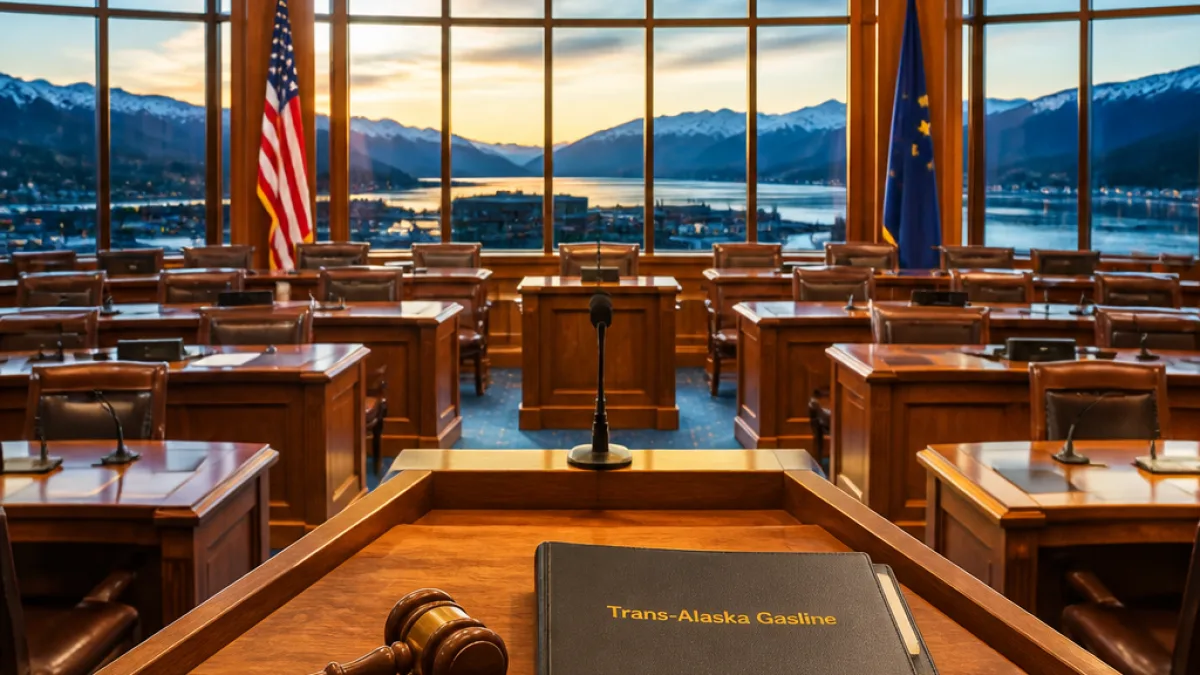
With no bill on the table, the House and Senate held brief, perfunctory meetings Friday that officials described as "technical sessions." Two members of the House and one member of the Senate attended the sessions to meet the constitutional requirement for lawmakers to assemble.
"technical sessions"
Article II, Section 10 of the Alaska Constitution requires regular meetings of the Legislature unless members approve a resolution setting a different schedule, and the sessions this week ensured the state complied with that provision. Lawmakers have scheduled additional short sessions: the House plans another technical meeting Monday morning and the Senate is slated to meet Tuesday morning.
| Chamber | Next scheduled session | Type |
|---|---|---|
| House | Monday morning | Technical session |
| Senate | Tuesday morning | Technical session |
What remains unresolved
The single item on the special session agenda is a proposed property tax exemption designed to make the pipeline project more attractive to developers and investors. Supporters argue such an incentive would lower project costs and accelerate construction; opponents have warned about long‑term impacts on local tax bases and public services.
Because the governor has yet to present draft legislation, lawmakers have no text to negotiate. Without a bill, procedural votes, committee hearings or floor debates cannot formally begin — a stalemate that leaves the fate of the tax break and the timeline for any pipeline planning uncertain.
Closed‑door talks, open questions
The governor’s office says Dunleavy is pursuing closed‑door negotiations to produce an alternative to the bill rejected in the prior session. The details of those discussions have not been disclosed, and there is no public schedule for when a proposed measure might be filed.
Lawmakers who opposed the earlier compromise worried the measure granted too much in tax relief and lacked sufficient safeguards for communities and local governments. Proponents countered that concessions are needed to secure private investment in a project that has been discussed in Alaska for decades but never built.
- Session focus: property tax break related to proposed trans‑Alaska gas pipeline
- Governor’s role: called the special session and set the agenda but has not filed legislation
- Legislative action this week: none beyond short “technical” meetings to satisfy constitutional requirements
For residents watching from communities that would be touched by a pipeline or by shifts in local tax revenue, the pause in the legislative process means continued uncertainty. Municipal officials and taxes analysts will remain without legislative text to review, and investors will lack clarity about the state fiscal terms that might govern any future development.
As the Legislature moves into the second week of the special session, the calendar shows only brief meetings unless the governor delivers a bill. In the absence of a filed measure, lawmakers are limited to procedural compliance; meaningful debate cannot resume until a legislative proposal is publicly available for committees, amendments and votes.
The situation places pressure on both the governor and the Legislature: Dunleavy to present the details of any proposed tax relief and lawmakers to decide whether to accept a new proposal, modify it or reject it again. For now, Juneau’s business is the business of waiting.