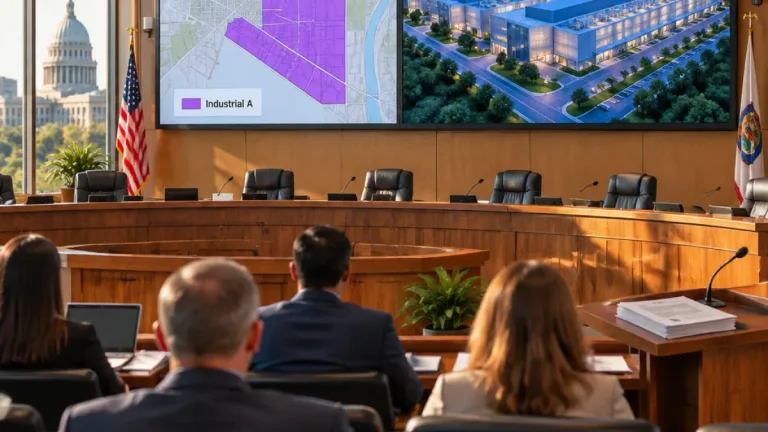
The Santa Ana City Council on Friday took a decisive step toward automated traffic enforcement, voting 4-2 to petition state leaders to include Santa Ana in California’s automated speed camera pilot program. Council members framed the move as a public‑safety intervention aimed at curbing reckless driving in the city’s high‑injury corridors and school zones.
Council action amid sharply elevated crash figures
Supporters cited recent local traffic data to make the case that traditional enforcement alone is insufficient. According to figures released by the California Office of Traffic Safety and referenced at the council discussion, Santa Ana ranked as the third worst city in the state for speed‑related fatalities and injuries among cities with populations over 250,000.
The city’s 2025 totals were emphasized repeatedly during the hearing: 3,487 traffic collisions, 1,943 injuries and 26 deaths. Council members and staff pointed to persistent trouble spots — including Segerstrom Avenue, 17th Street at Fairview Street, and Bristol Street — as areas where speeding, street racing and red‑light running have repeatedly endangered people walking, biking and driving.
| Metric (2025) | Count |
|---|---|
| Traffic collisions | 3,487 |
| Injuries | 1,943 |
| Fatalities | 26 |
Why automated cameras now?
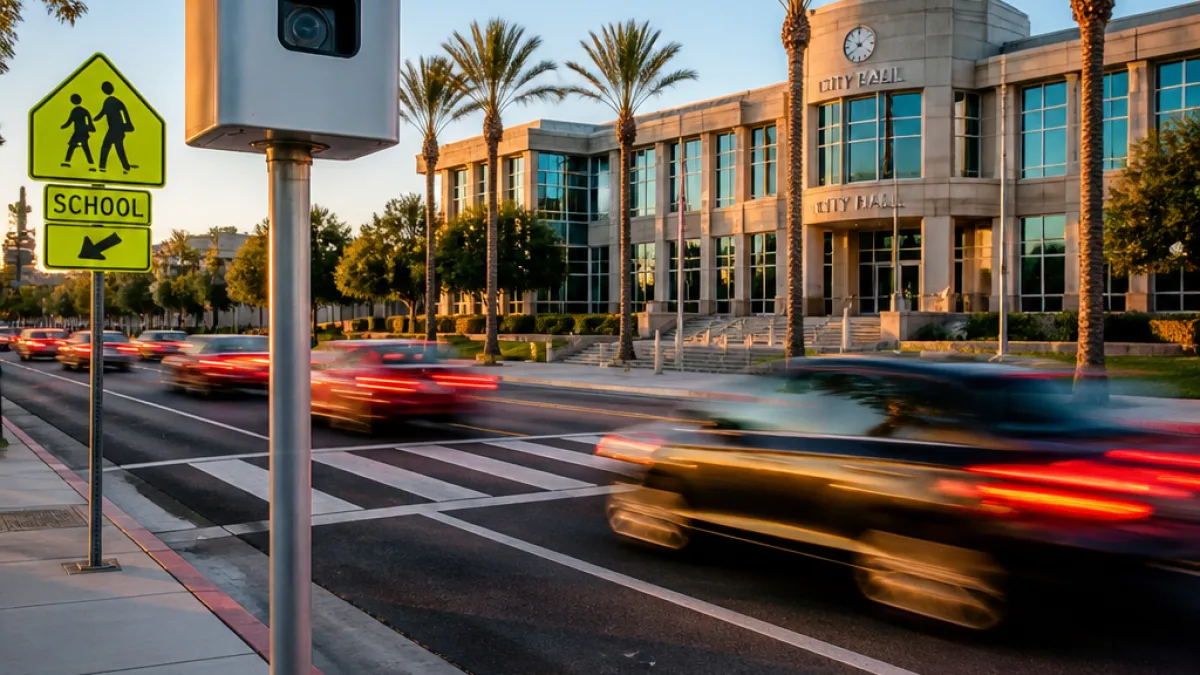
Under Assembly Bill 645 (2023), the state created a pilot program allowing municipalities to deploy automated speed safety systems in designated high‑injury corridors and school zones. Proponents on the council argued that cameras provide persistent, around‑the‑clock deterrence that officers cannot sustain through patrols alone.
“The city council recently took a decisive, life‑saving step,” reads the statement used by supporters during the discussion, encapsulating the argument that automated systems change driver behavior and reduce crashes where they are installed.
- Constant enforcement: Cameras operate continuously, unlike officers who must divide shifts, calls and beats.
- Targeted deployment: Systems are limited by law to high‑injury corridors and school zones, focusing on documented hotspots.
- Data‑driven approach: The city cites OTS rankings and 2025 collision numbers to justify the petition.
Opposition and concerns
The decision was not unanimous. Two council members voted against the petition, reflecting persistent public concerns about privacy, civil liberties and the fairness of automated citations. Opponents in other California cities have also expressed worries about camera placement, accuracy and the impact on lower‑income drivers who may be disproportionately cited.
While proponents pointed to successful reductions in speed and crashes in other municipalities that have adopted cameras, the council did not finalize a deployment plan or budget; the vote was narrowly focused on seeking state approval to join the pilot. Implementation details — number of cameras, exact locations, penalties and revenue handling — will require additional council approvals and administrative planning if the state grants participation.
What’s next for Santa Ana
By voting to petition the state, Santa Ana has signaled intent but not yet activated automated enforcement. The city must await state approval to join the pilot. If included, staff will return to council with a proposed rollout that would identify specific corridors and school zones for camera placement and outline how citation revenue, if any, will be used. Supporters say the goal is straightforward: fewer crashes, fewer injuries and safer streets for pedestrians and families.
“This initiative is not just a policy change; it is a critical safety intervention capable of protecting our families, pedestrians, and commuters,” a city statement in support of the petition said.
The council’s move comes as Santa Ana confronts an elevated and sustained traffic‑safety challenge. Whether automated cameras will reduce that toll depends on state approval, local implementation choices and ongoing monitoring of outcomes — a process the city now has signaled it is prepared to pursue.