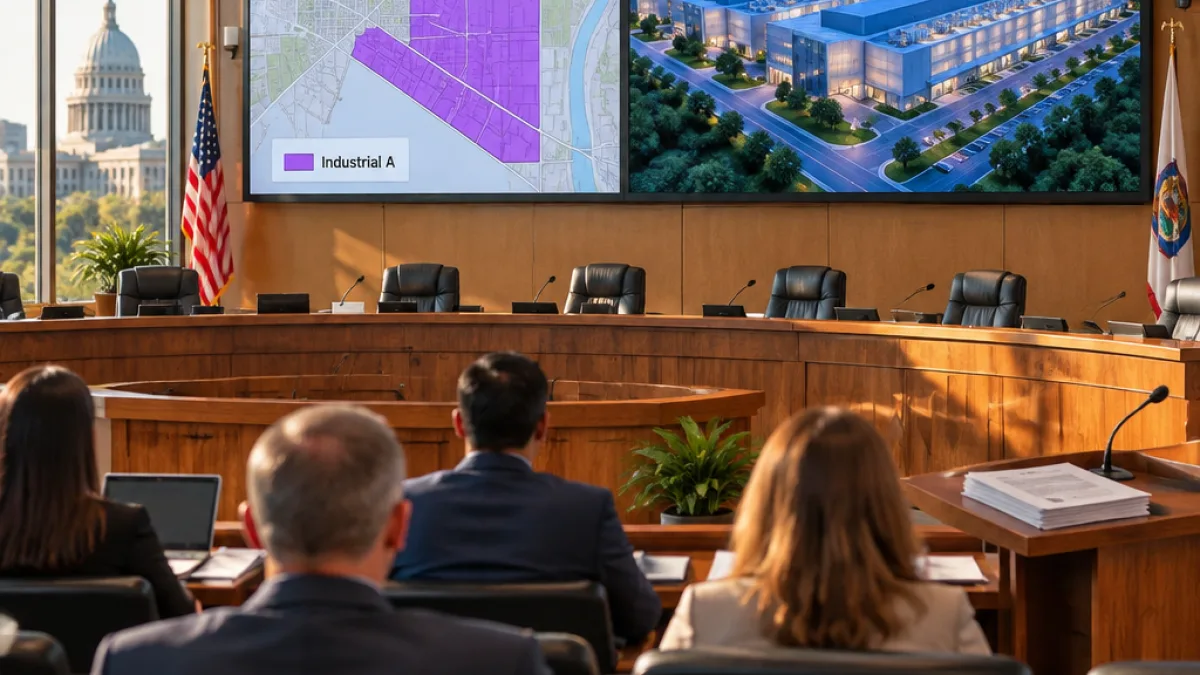
Springfield is considering a more defined set of rules for data centers as Massachusetts communities debate how to manage facilities associated with large energy demands and emerging technology uses. Under a zoning package before the City Council, data centers would be formally identified in the city’s zoning ordinance, limited to Industrial A districts and subject to a special permit from the council before construction could proceed.
Councilors did not approve the proposal this week, instead moving the vote to later in November. The delay leaves the city’s existing zoning framework in place while officials continue reviewing a package that reaches beyond data centers. The broader proposal includes changes involving riverfront construction standards, sign dimensions and the placement of dumpsters at residential properties.
A zoning response to a changing market
Deputy Planning Director Philip Dromey told councilors that some provisions are intended to correct oversights left by the city’s 2013 zoning ordinance overhaul. Other changes address land uses that were not anticipated when those rules were written. Data centers are among the newer uses now receiving specific attention, even though Dromey reported that Springfield has received few recent inquiries from companies interested in building one.
That limited level of current interest does not mean the city is approaching the question without precedent. A small data center was built on Elliot Street around 2010. The facility houses state records and operates as a backup for the primary data center, according to the report. The proposed amendments would therefore establish a clearer process for any future project rather than regulate a use that is entirely unknown in Springfield.
“The data-center provisions would give the city protection as interest in such facilities grows statewide.”
The proposed special-permit requirement would give the City Council a formal role in evaluating a data-center application. Restricting the facilities to Industrial A districts would also place them within a defined portion of Springfield’s zoning map. Together, those provisions would give developers and city officials a more specific framework than the current ordinance provides, while leaving any individual project subject to the council’s review.
Part of a broader Massachusetts debate
Springfield’s discussion comes as municipalities across Massachusetts adopt sharply different responses to data centers. A MassLive review dated Oct. 15 found that 18 communities had enacted or approved a moratorium, ban or restriction, while at least 17 more were actively discussing comparable measures. A separate tally cited by The Boston Globe put the number of communities considering or adopting such policies at more than 30, reflecting a rapidly changing policy landscape.
The statewide debate is unfolding alongside an existing data-center industry. Massachusetts has more than 40 data centers, according to the separate count cited in the report. Communities have not settled on one uniform approach: Lowell and Westfield approved outright moratoriums on new facilities, while Salem Mayor Dominick Pangallo proposed banning large artificial-intelligence data centers altogether.
For Springfield, the immediate question is narrower but consequential for future land-use decisions: whether the city should anticipate possible demand before it arrives, and how much review should be required if it does. The council’s later-November vote will determine whether data centers receive a specific place in the zoning code, whether Industrial A districts become their designated location and whether a City Council special permit becomes a prerequisite for development.
- Proposed location: Industrial A districts.
- Required approval: A special permit from the City Council.
- Next procedural step: A vote later in November.
| Issue | Proposal or current information |
|---|---|
| Data-center definition | Add the use formally to Springfield’s zoning ordinance |
| Permitted district | Industrial A |
| Existing local facility | Small center on Elliot Street, built around 2010 |