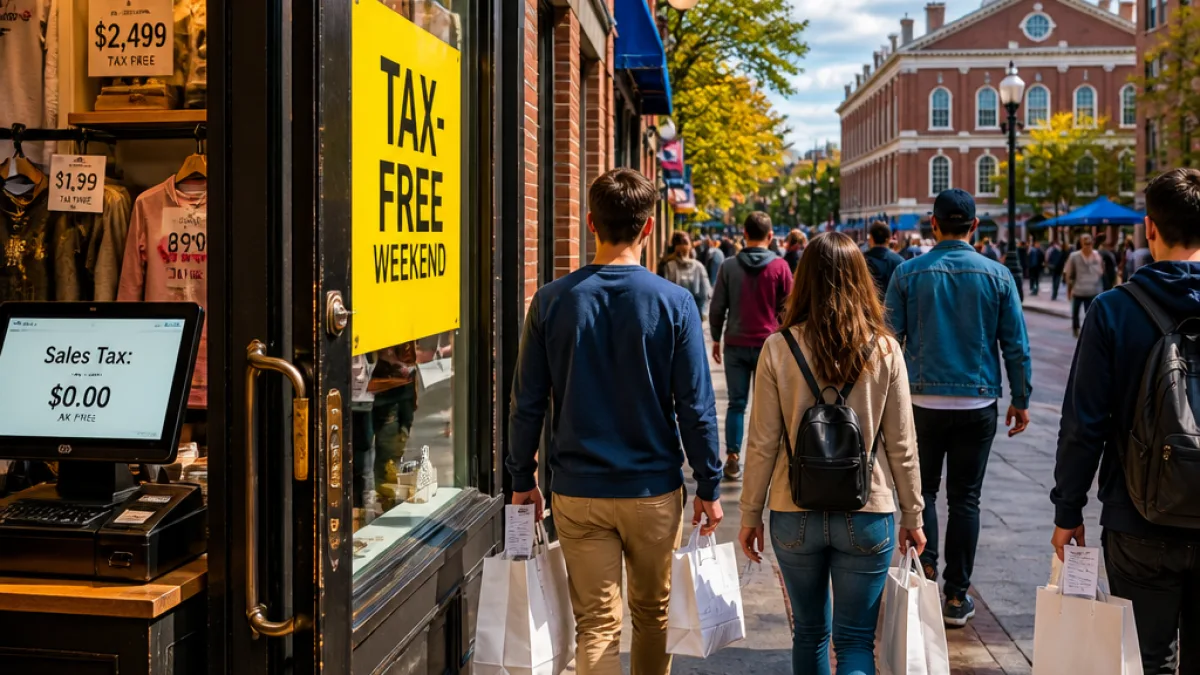
This weekend, Massachusetts shoppers can avoid the state's standard 6.25% sales tax on most retail purchases priced under $2,500, as the Legislature-authorized tax holiday takes effect for Saturday and Sunday. The exemption applies item-by-item — meaning a single item must be under the cap to qualify even if a customer's total bill exceeds $2,500 — and includes online purchases that are paid in full during the qualifying days.
How the weekend works and what’s covered
The temporary suspension is part of a law passed in 2018 and is designed to stimulate retail activity and provide consumers with a brief break from sales taxes and inflationary pressures. The mechanics are straightforward: qualifying retail items priced below the $2,500 threshold are exempt from the state sales tax for the two qualifying days.
- Sales tax rate suspended: 6.25%
- Item price cap to qualify: $2,500
- Duration: Saturday and Sunday (this weekend)
- Applies to in-store and online purchases paid in full during the two days
Retailers and customers should note the distinction between individual items and total transaction values: if you buy several items that individually fall under the limit but together exceed $2,500, each qualifying item remains exempt. Conversely, any single item priced above $2,500 will still be taxed.
Context: not tied to recent ballot confusion
This tax holiday is unrelated to the recent controversy over a proposed cut to the state income tax rate. A planned ballot question to reduce the income tax rate from 5% to 4% was removed from the fall ballot after the attorney general’s office identified a summary error. Attorney General Andrea Campbell, who reviewed other ballot questions without issue, was quoted in public remarks framing her review record lightly:
"Batting .500 is pretty good."
That separate episode drew public attention to tax policy debates in Massachusetts, but it does not affect this weekend’s sales tax suspension, which is authorized under existing state law.
Retail and tourism ripple effects
State officials and business groups have framed the measure as a tool to help local retailers compete and to encourage in-state spending. The tax-free days can be particularly appealing for higher-ticket household purchases such as appliances, electronics and air-conditioning units — items explicitly noted by shoppers preparing for late-summer needs.
There are indications that special events and international tourism are also influencing local spending patterns. A recent Bank of America survey called "On the Ball" reported that spending in host cities rose roughly 5% year-over-year, with non-local visitors increasing spending by more than 17%. The survey singled out restaurants and bars as among the clearest beneficiaries, and said hotels in Boston saw especially strong gains.
| Measure | Figure |
|---|---|
| State sales tax rate | 6.25% |
| Item price cap for exemption | $2,500 |
| Duration | Saturday and Sunday (this weekend) |
Practical guidance for shoppers and merchants
Shoppers should confirm with retailers whether specific items qualify before assuming an exemption. Online shoppers must complete payment during the qualifying days to receive the benefit. Retailers, meanwhile, should ensure their point-of-sale systems and online checkout processes are configured correctly to apply the temporary exemption and to document transactions in case of later audits.
For businesses, the holiday can bring a short-term increase in foot traffic and sales. For consumers, it provides a modest savings opportunity, particularly on big-ticket purchases that otherwise would carry significant sales-tax costs. But the relief is temporary and narrowly tailored; state and local policymakers continue to debate longer-term tax and affordability measures.
As the weekend approaches, shoppers will weigh whether immediate savings justify purchases they might otherwise delay. For retailers, the holiday offers a window to convert the incentive into sales while reinforcing local customer relationships — the explicit aim lawmakers cited when they passed the law in 2018.