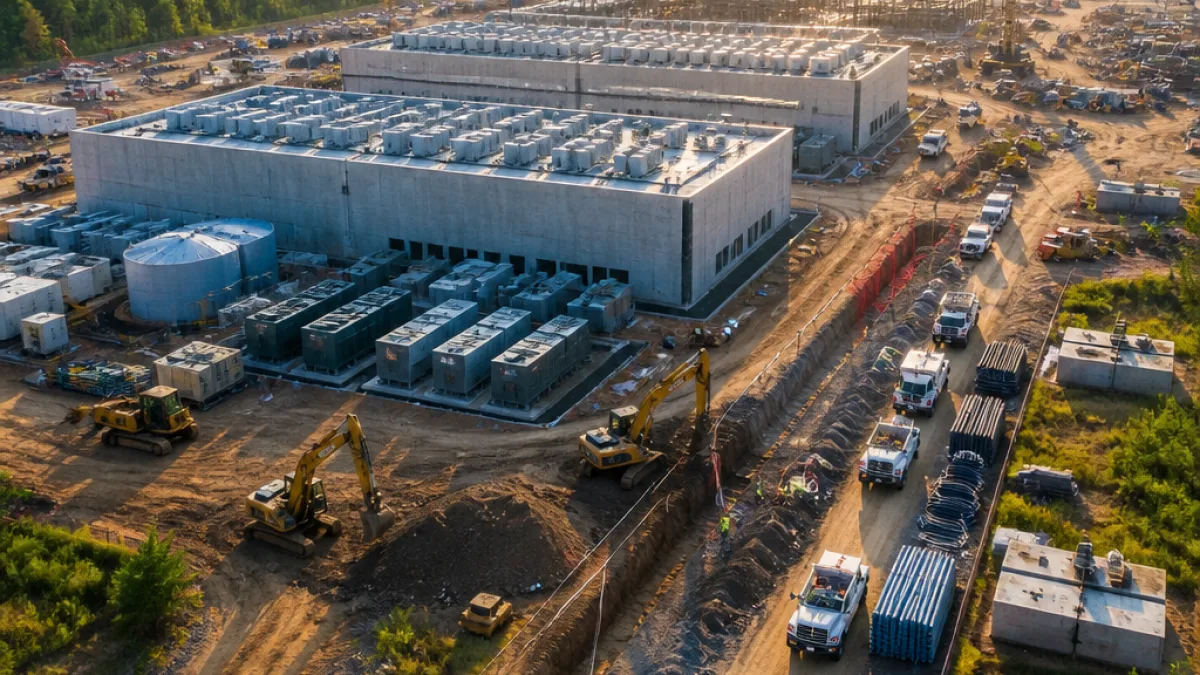
The humid heat that hangs over Shreveport in August now carries the hum of servers and construction cranes. Amazon announced it is expanding its northwest Louisiana data center footprint by $6 billion, raising the total planned investment in the region to $18 billion with a third campus at Resilient Technology Park in Shreveport.
The additional campus is expected to create 210 direct jobs, bringing Amazon’s total projected direct workforce across three northwest Louisiana campuses to as many as 750 jobs. Construction activity tied to the project is forecast to support as many as 2,250 jobs among contractors, skilled tradespeople and suppliers during build-out phases.
What the expansion includes
Amazon and partner STACK Infrastructure said they will continue developing campuses across Caddo and Bossier parishes and deepen workforce partnerships with local schools and organizations. The companies emphasized a focus on trades and technical careers: electrical work, HVAC, engineering, networking, operations and security.
- New campus: Resilient Technology Park, Shreveport
- Additional investment: $6 billion (raising total to $18 billion)
- Direct jobs from expansion: 210; up to 750 across all campuses
- Construction support jobs: Up to 2,250
Officials also outlined significant infrastructure commitments. Amazon plans to invest up to $400 million in public water infrastructure and said it will fully fund water, wastewater, energy and grid improvements necessary for its facilities. The company framed the investments as measures to avoid passing extra costs onto existing utility customers.
Cooling approach and community support
Amazon said its data centers will rely primarily on air cooling, switching to water-assisted cooling only when outside temperatures climb above approximately 85 degrees. Since the original project announcement in February, the company reports nearly $500,000 in grants awarded to 46 local nonprofits, schools and community organizations.
"Amazon pays its own way, and the communities where we operate will be better off because we're there," said Keith Klein, Amazon director of Data Center Supply Solutions.
Gov. Jeff Landry welcomed the increased investment, asserting that Amazon’s expanded commitment reflects confidence in Louisiana’s workforce and business environment. State economic officials estimate the expanded project will generate additional indirect job opportunities in the region — figures that accompany the company’s direct-hire projections.
Numbers at a glance
| Metric | Figure |
|---|---|
| New investment (additional) | $6 billion |
| Total planned investment | $18 billion |
| Direct jobs from expansion | 210 |
| Potential direct jobs across all campuses | 750 |
| Construction-related jobs (estimated) | 2,250 |
| Public water infrastructure commitment | $400 million |
For a region still feeling the aftershocks of industrial change and the ebb and flow of manufacturing, the announcement is significant. Data centers are capital-intensive projects that do not always bring large long-term payrolls, but they do draw suppliers, technicians and contractors, and they can anchor a digital economy cluster.
Local leaders say the strategy is to convert construction-era momentum into a trained technical workforce that can staff operations once buildings are complete. Partnerships with schools and workforce organizations are central to that effort, aimed at channeling students and job-seekers into credentialed trades and technical roles tied to the campuses.
Amazon’s pledge to cover utility upgrades is intended to address a common community concern: when large users require system upgrades, the costs sometimes end up spread among all ratepayers. Company officials said their plan is to fully fund the necessary upgrades so existing customers won’t absorb the expenses.
The decision to add a Shreveport campus comes less than six months after the original $12 billion announcement in February. As the work begins, local economic development officials and civic groups will be watching whether the promised jobs, workforce pipelines and infrastructure protections materialize over the coming months and years.
The promise of new, high-tech infrastructure has already prompted private and public attention across Caddo and Bossier parishes. The next chapters will depend on how quickly construction moves, how well workforce programs deliver trained candidates, and how the region manages growth without displacing existing residential and business customers.