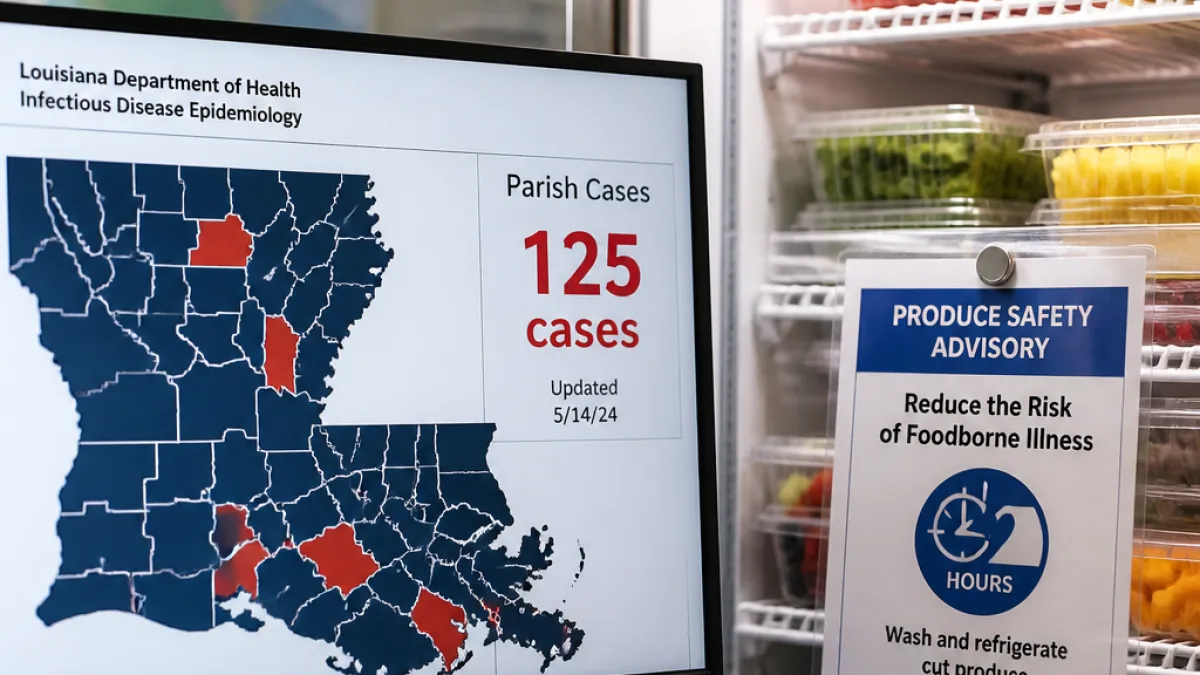
The warm, damp air that hangs over Louisiana in August seems to mirror the state’s latest public health concern: Cyclospora infections are rising. The Louisiana Department of Health confirmed this week that the state’s cumulative case count has reached 125, up from 100 just seven days earlier, and six people have required hospitalization.
What officials are tracking
The department’s new tracking dashboard, which is updated weekly on Wednesdays, provides parish-level data and will be the primary source for evolving case counts and investigation status. Health officials say several of the recently reported infections remain under investigation as epidemiologists work to identify common exposures.
State officials noted the current total stands well above recent seasonal norms. Over the past five years, Louisiana has averaged roughly 20 reported Cyclospora cases during the same period, underscoring how unusual this cluster has become for the state.
Symptoms and sources
Cyclospora is a microscopic parasite that causes intestinal illness after ingestion, most commonly from contaminated fresh produce. Typical symptoms include watery diarrhea, abdominal bloating and fatigue, though severity can vary by person and may lead to dehydration or require hospitalization in some cases.
There is no single product or supplier tied publicly to all of the state’s cases yet; investigators are still piecing together possible links among patients. Nationwide, more than 1,000 Cyclospora cases have been reported in the current surge, according to health data compiled by public health agencies.
How to reduce risk at home
Public health experts stress that while risk cannot be eliminated entirely, several practical steps can lower chances of infection when handling fresh produce:
- Scrub firm fruits and vegetables under running water before eating or preparing them.
- Refrigerate cut, peeled or cooked produce within two hours of preparation.
- Discard produce that looks or smells spoiled and follow product recalls if they are announced.
Those with persistent diarrhea, severe abdominal pain or signs of dehydration should seek medical attention. Clinicians can test for Cyclospora and prescribe appropriate treatment when indicated.
Local impact and context
In a state where produce—local and imported—plays a prominent role in daily meals, any increase in foodborne illness resonates beyond immediate health concerns. Families packing school lunches and residents shopping at farmers markets and grocery stores will be watching the LDH dashboard for parish-level updates and any public advisories that might affect where and how produce is consumed.
Hospitals and outpatient clinics may see an uptick in patients seeking evaluation for gastrointestinal symptoms, and public health investigators will be conducting interviews to track common food items, purchase locations and possible distribution links. Until clearer connections emerge, the guidance from health authorities centers on careful handling and storage of fruits and vegetables.
Numbers at a glance
| Metric | Count |
|---|---|
| Confirmed Cyclospora cases in Louisiana | 125 |
| Hospitalizations | 6 |
| Five-year average for this period | 20 |
| Reported nationwide in current surge | 1,000+ |
State health officials ask residents to check the Louisiana Department of Health’s dashboard for the most current information, including parish-by-parish breakdowns and updates to which cases remain open for investigation. The dashboard is slated to refresh each Wednesday.
The spike in cases arrives as families prepare for school routines and communal gatherings that often include shared meals. For now, careful food handling and attention to symptoms are the best defenses as investigators work to identify the sources driving this concerning rise in infections.