
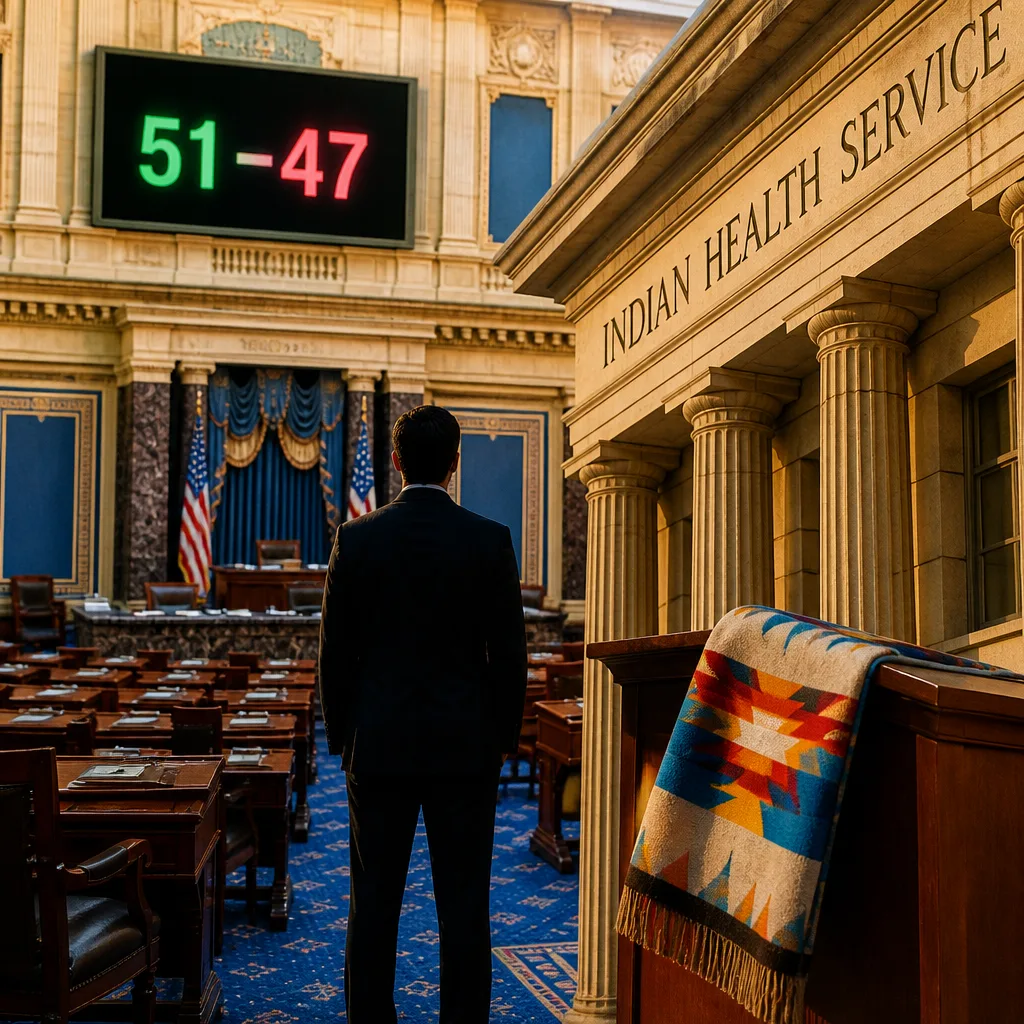
The U.S. Senate confirmed Mark Cruz on Friday to a four-year term as director of the Indian Health Service, approving his nomination by a 51-47 vote in a package that included nearly 75 other presidential nominees. Cruz, a citizen of the Klamath Tribes who grew up in Klamath Falls, Oregon, will become the 12th Senate-confirmed leader of the federal agency that provides health care to American Indian and Alaska Native communities.
Dual roles and advocacy plans
Cruz has served as a senior adviser to Health and Human Services Secretary Robert F. Kennedy Jr. on tribal matters for the last year. He told senators during his June confirmation hearing that he intends to retain that advisory role even after taking the helm at IHS, arguing the positions complement one another and will allow him to press more forcefully for tribal priorities.
“I see them as very complementary,” Cruz said during his June hearing. “The IHS director is an important advocate for Indian country within the department, and I think that both are achievable and they’re not mutually exclusive.”
The confirmation marks a continuation of Cruz’s recent federal work on tribal issues; he previously worked on similar matters at the U.S. Department of the Interior during the Trump administration. Between his stints in Washington, Cruz returned to Oregon where he held senior roles in state politics, including serving as chief of staff to then-House Minority Leader Christine Drazan and later remaining in that capacity under Minority Leader Vikki Breese-Iverson.
Implications for tribal health
As IHS director, Cruz will oversee an agency that is the principal federal health care provider and health advocate for federally recognized American Indian and Alaska Native tribes. Senate-confirmed leadership carries weight in shaping budgetary priorities, contracting and program implementation across tribal health programs, although the extent of his authority will be influenced by HHS leadership and congressional funding decisions.
Cruz framed his dual responsibilities as mutually reinforcing. During his confirmation process, he said that holding both roles would enable him to "advocate even more ferociously for tribal interests," a formulation he reiterated to senators in June.
Senate action and context
The vote took place as part of one of the Senate’s final bipartisan batches of business before an August recess. Advocates and tribal leaders will now be watching how quickly Cruz moves to address longstanding IHS challenges, which have included workforce shortages, aging facilities and disparities in health outcomes for Native communities.
- Senate vote: 51-47 to confirm Cruz to a four-year term.
- Agency role: IHS provides federal health services to American Indian and Alaska Native populations.
- Background: Cruz is a member of the Klamath Tribes and has served as an HHS senior adviser on tribal matters.
| Item | Detail |
|---|---|
| Senate-confirmed IHS directors (including Cruz) | 12 |
| Term length | Four years |
| Confirmation vote | 51–47 |
Cruz’s confirmation follows a career that has moved between federal tribal policy work and state-level political operations. His supporters say experience across agencies and state government equips him to navigate both the political and programmatic demands of leading IHS. Observers will judge the early months of his tenure by how he addresses funding needs, service gaps and partnerships with tribal governments.
With his dual appointment as an HHS adviser and head of IHS, Cruz has signaled an intention to elevate tribal concerns within federal health policymaking. How that intent translates into concrete changes in service delivery and resources for Native communities will be among the central metrics by which his leadership is evaluated.