A $20,000 grant will help the USA Health Stroke Program extend education about stroke prevention and emergency response through health fairs, schools and neighborhoods where access to health care can be limited. The effort is built around a problem program leaders identified in the community: many people could not explain how to recognize a stroke, how to reduce their risk or what to do when symptoms begin.
Emily Dahlmann, director of the USA Health Stroke Program, said the initiative’s early outreach revealed three basic questions that many people could not answer. Those questions concerned a possible stroke symptom, steps a person can take to prevent a stroke and the appropriate response when someone may be having one. The grant, provided by pharmaceutical company Chiesi USA, is intended to help the program bring that information to more people.
“All you need is one onset sign or symptom and you need to call 9-1-1.”
A short message designed for an emergency
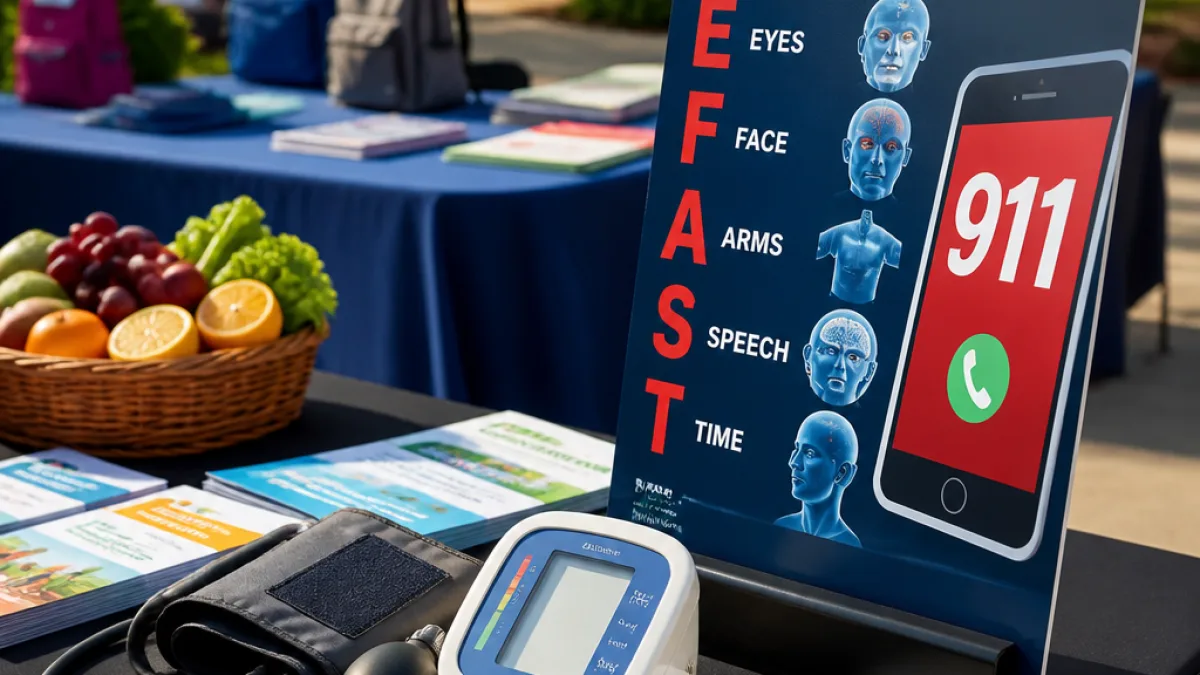
The program teaches the acronym B.E.F.A.S.T. as a way to help people remember several warning signs. The approach places particular emphasis on acting immediately. A student learning the message at school may later recognize a symptom in a parent or grandparent; a person reached at a neighborhood event may be able to respond when a friend or stranger needs help.
| Letter | Warning sign or action |
|---|---|
| B | Sudden loss of balance |
| E | Changes in eyesight |
| F | Facial drooping |
| A | Arm weakness |
| S | Speech difficulties |
| T | Time to call 911 |
Dahlmann said the program is also adding a severe headache to the symptoms it teaches people to recognize. She described it as a “thunder-clap headache,” or the worst headache of someone’s life or another terrible headache. The instruction is not to wait for several symptoms to appear. According to Dahlmann, the presence of one sudden sign is enough to call 911.
Prevention is part of the lesson
The outreach is not limited to identifying an emergency. It also focuses on actions that can lower stroke risk. Dahlmann listed managing blood pressure, stopping smoking and, for people with Type 2 diabetes, managing their A1C. She also cited eating a healthy diet, exercising, controlling cholesterol and getting adequate sleep.
- Recognize a sudden warning sign.
- Call 911 immediately rather than waiting for symptoms to pass.
- Work on modifiable risks, including blood pressure, smoking, diabetes, diet, exercise, cholesterol and sleep.
The program describes strokes as the fifth cause of death and a leading cause of disabilities. That combination gives the educational work two dimensions: helping people respond during a time-sensitive emergency and helping them understand choices that may affect their future risk. For families, the information can turn a medical warning into a clear action plan instead of a moment of uncertainty.
Barriers can delay the call for help
One of the program’s biggest challenges, Dahlmann said, is hesitation to call 911 because of concerns about cost. Her message is direct: people should not wait. Emergency crews can begin care before a patient reaches the hospital, she said, and speed may affect whether a person recovers or faces permanent disability.
By taking the lessons into schools, health fairs and neighborhoods with limited access to health care, the expanded program is putting emergency knowledge in places where it may be used by people who are not already connected to medical services. Its central instruction is simple, but the consequences are significant: recognize one sudden symptom, call for help and let emergency responders begin the response as quickly as possible.