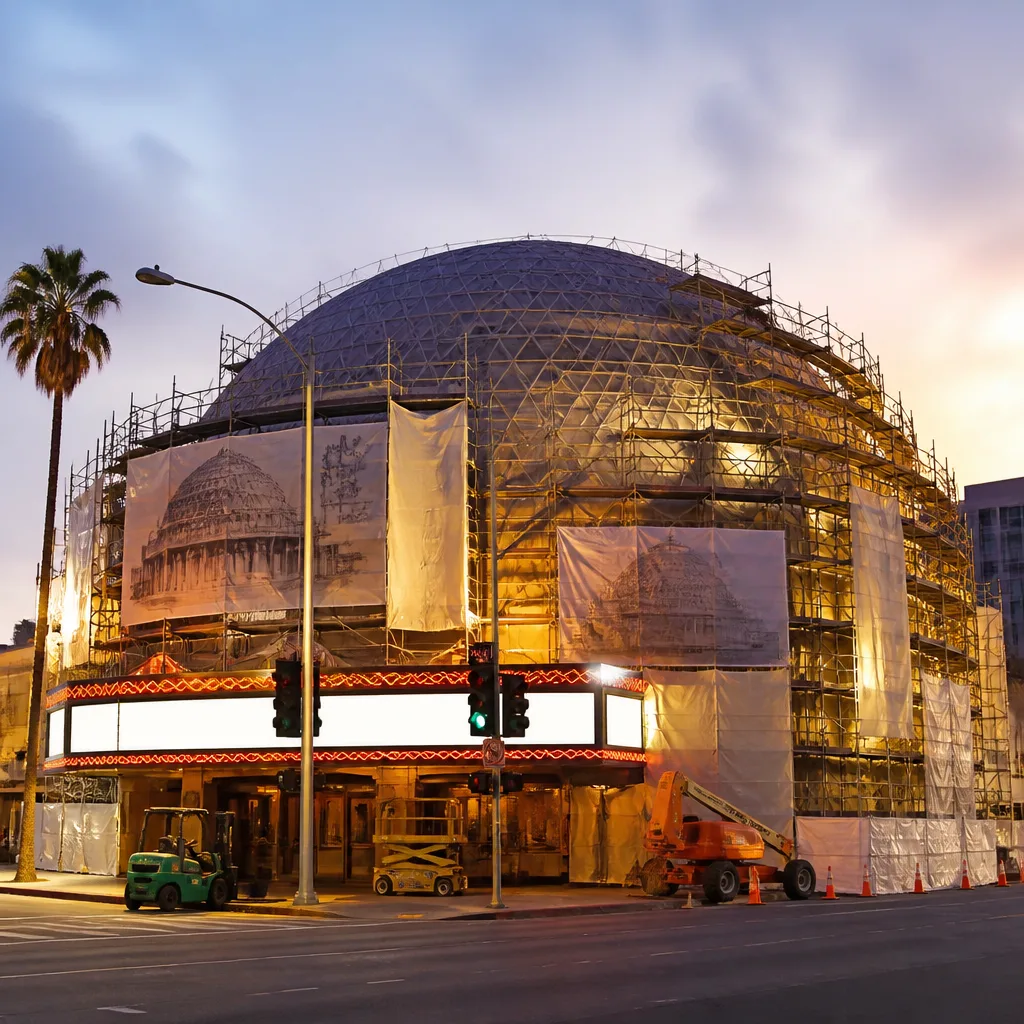
The historic Cinerama Dome on Hollywood’s Sunset Boulevard will reopen in 2028 after a restoration announced Wednesday by Sony Pictures Entertainment. The dome, a distinctive curved-screen landmark that shuttered permanently amid pandemic losses in 2021, will be renovated beginning in August and operated by Alamo Drafthouse Cinema, a Sony subsidiary.
What Sony and Alamo promise
Sony said the Dome’s exterior look and its “historic legacy” will be preserved while upgrades prepare the venue for modern film presentation and programming. The 86-foot-wide screen — built to accommodate large-format and 70mm projection — will remain a focal point of the renovation.
"There is no moviegoing destination anywhere in the world that commands the affection, history, and cultural significance of the Cinerama Dome. It represents the kind of singular experience we value and champion," said Ravi Ahuja, chairman and CEO, Sony Pictures Entertainment.
While Alamo Drafthouse is best known for in-theater dining, Sony said the Dome will not convert to a dine-in model; it will retain a more traditional concession setup but adopt Alamo's specialty programming approach, which includes curated events, retrospectives and special screenings.
Why it matters
The Dome opened in 1963 and became beloved by cinephiles for its sweeping architecture and capacity to show 70mm film — a format associated with immersive, high-resolution presentations. Its closure in 2021 marked one of several pandemic-era losses that reshaped the theatrical exhibition landscape. Restoring the Dome signals both a commitment to preserving cinema history and a bet on premium, appointment-driven moviegoing.
- Opening year: 1963
- Closed: 2021
- Reopening: 2028 (renovations start in August)
- Screen width: about 86 feet; 70mm-capable
| Item | Detail |
|---|---|
| Operator | Alamo Drafthouse (subsidiary of Sony) |
| Concessions | Traditional (no dine-in) |
| Programming | Alamo-style special events and screenings |
For Hollywood, the Dome's return provides a symbolic restoration of a storied moviegoing ritual at a time when audiences are selectively returning to theaters for premium experiences — from IMAX and 70mm to special-event screenings. Preserving the Dome’s silhouette on Sunset Boulevard also carries cultural weight: it’s an architectural piece of Los Angeles film history that doubles as a marketing asset for studios seeking a theatrical showcase for prestige releases.
Details on seating capacity changes, specific technical upgrades, ticketing strategy and a slate of reopening events have not been released. But Sony’s pledge to maintain the building’s look and the Dome’s capability for large-format projection suggests filmmakers and distributors will again have a high-profile venue for roadshows and retrospective programs.
Restorations like this can be delicate: balancing modernization with historic preservation, and marrying the economics of movie exhibition with cultural stewardship. If handled well, the Dome’s relaunch could reaffirm the value of theatrical events — and remind a streaming-heavy industry why some pictures still demand a big, reverent room.