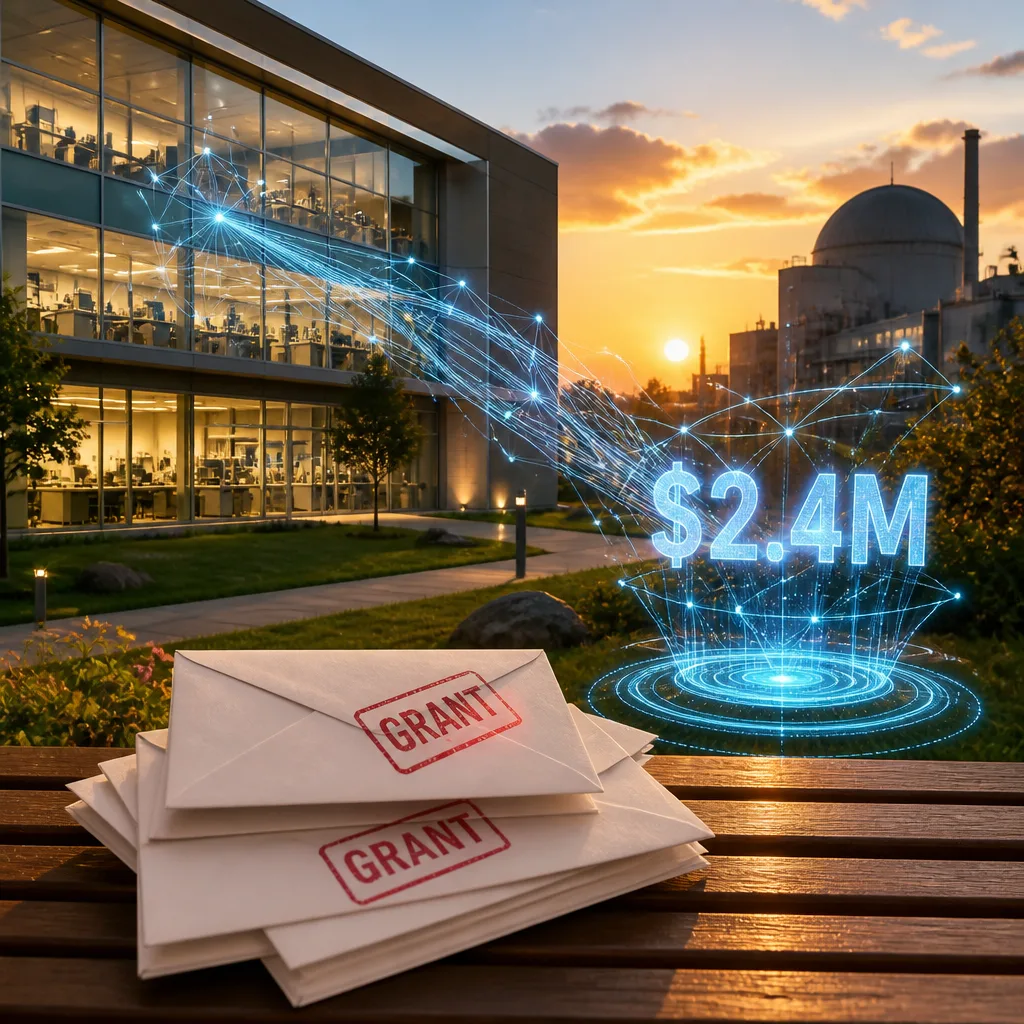
The U.S. Department of Energy’s new Genesis Mission awarded six inaugural grants that will channel more than $2.41 million into artificial intelligence–driven scientific projects connected to Stony Brook University. The funding is intended to accelerate discovery across areas such as quantum technologies, materials, atmospheric science and advanced computing, and to deepen partnerships between universities and national laboratories.
Funding and partnerships
Stony Brook investigators will either lead or participate in projects that collaborate with major national labs and other institutions. Three principal investigators at Stony Brook — Jan C. Bernauer, Emre Salman and Shikui Chen — are leading efforts that will route about $1.68 million directly to the university and include coordinated work with Brookhaven National Laboratory, Argonne National Laboratory, Sandia National Laboratories, Indiana University and GE Vernova.
In addition to those lead projects, Stony Brook faculty received subawards to join multi‑institution efforts:
- Nengkun Yu is part of an AI-enabled computational physics project led by Johns Hopkins University.
- Anatoly Frenkel received a subaward for AI work on catalytic reaction mechanisms.
- Daniel Knopf obtained a subaward, in collaboration with Brookhaven, to develop an automated, AI-assisted cloud chamber to better constrain cloud microphysics in Earth system models.
Why this matters
The Genesis Mission is a national initiative to apply machine learning and related AI tools to hard scientific problems. By funding multidisciplinary teams that combine university research with national-laboratory capabilities, the DOE aims to shorten the path from data and models to validated scientific insight — a priority for energy innovation, national security and climate science.
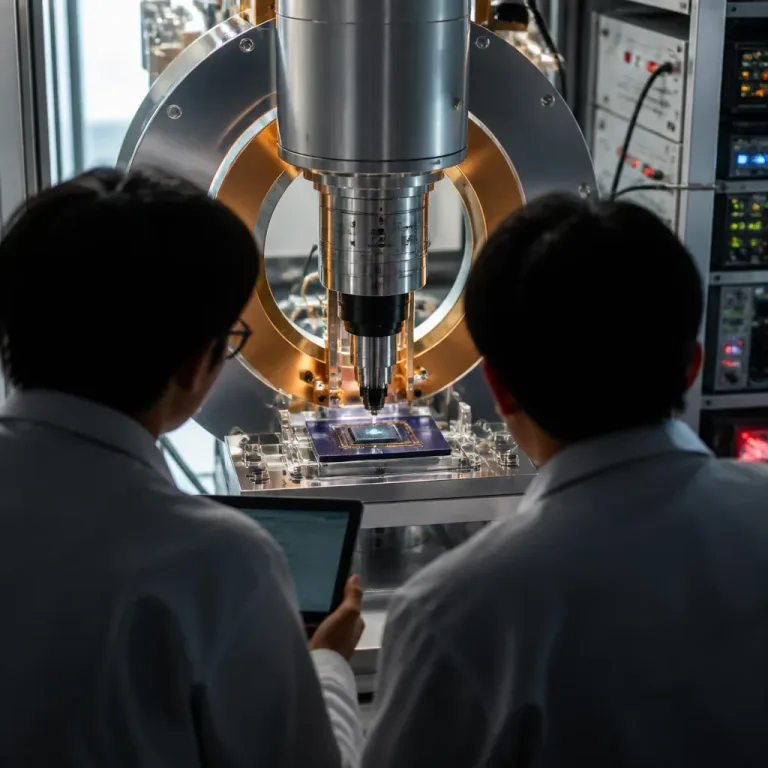
For Stony Brook, the awards reinforce an expanding footprint in AI research and computational science. The projects span fundamental physics, materials and atmospheric modeling — areas where improved AI methods could yield faster simulations, new interpretability of experimental data and automation of complex experimental apparatus.
Collaboration and capacity
The awards were announced at the Genesis Mission Summit held July 22 at the Capital Hilton in Washington, D.C., where DOE officials, congressional staffers, national lab directors, university leaders and industry partners gathered to launch the initiative. The emphasis at the summit was on building ecosystems that combine campus-based talent with national-lab infrastructure and industry resources.
| Metric | Value |
|---|---|
| Total Stony Brook-related funding | $2.41M |
| Direct to Stony Brook (three projects) | ~$1.68M |
| Notable lab partners | Brookhaven, Argonne, Sandia |
Officials at participating institutions say the combination of AI methods and laboratory-scale experiments or high-performance computing can help tackle problems that are otherwise intractable. The Stony Brook awards illustrate how the Genesis Mission is distributing seed capital to forge such cross‑institutional teams.
As these projects proceed, their outputs — improved algorithms, automated experimental platforms and refined models — could influence energy technologies, materials discovery and climate projections, demonstrating how targeted federal investment in AI-for-science may reshape research practice.