Major coastal wetland work starts in South Oceanside
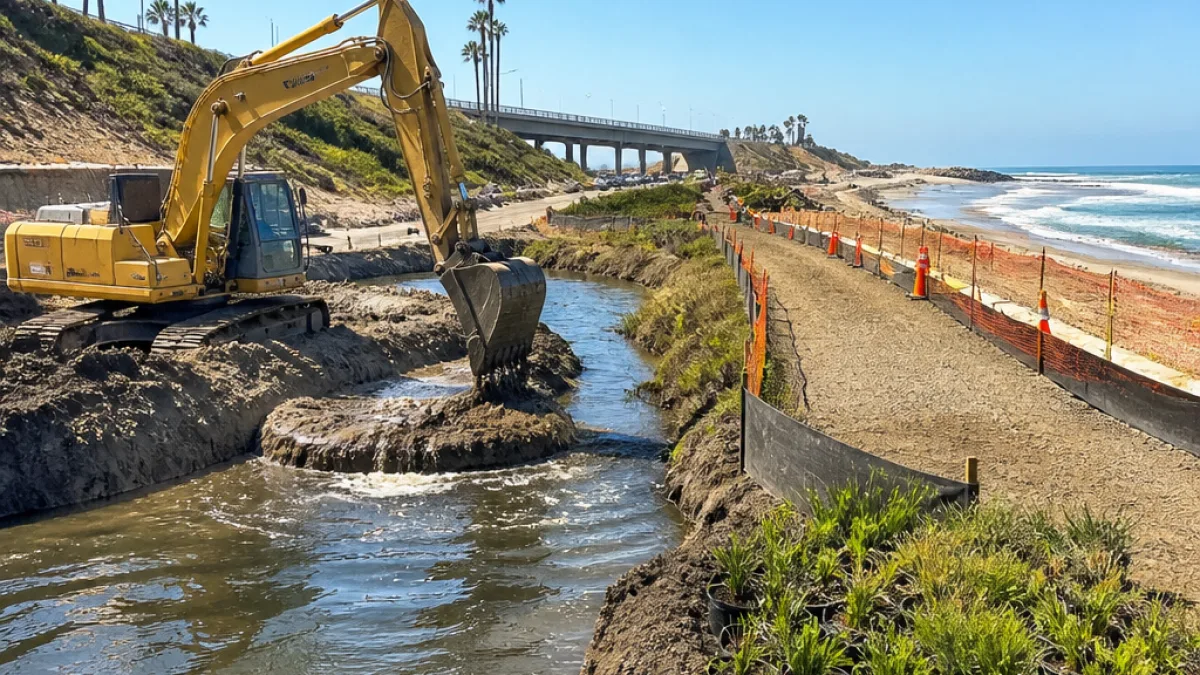
Crews are moving earth in South Oceanside this summer as the city launches a multi-year effort to rebuild a diminished coastal estuary at the mouth of Loma Alta Creek. The $6 million Loma Alta Slough Wetlands Enhancement Project began construction in June and is scheduled to continue through April 2027, city officials said July 29.
The effort targets a 5.8-acre footprint at the slough near Buccaneer Beach. The project combines shoreline engineering, invasive plant removal and habitat plantings with new public access features designed to reconnect people with the coast while improving water quality for downstream beaches.
Why the slough matters to Oceanside
The Loma Alta Slough sits at the outlet for a roughly 6,300-acre watershed. Over the past century, development, roads and urban fill reduced the historic marsh from about 44 acres to under 10 acres. That loss of marsh area has weakened the slough’s ability to filter stormwater, store floodwater and sustain sensitive wildlife.
- Size of restoration area: 5.8 acres
- Watershed served: ~6,300 acres
- Project cost: $6 million (state and federal grants)
- Construction timeline: June start through April 2027
Engineers will lower parts of the site by removing layers of historic urban fill to allow tidal waters to reach more of the marsh platform. The design includes gently sloped transition zones so the wetland can migrate inland over time as sea level rises, and targeted plantings of native species to replace invasives.
Habitat, water quality and public access
The slough provides habitat for several sensitive species, including the federally endangered tidewater goby and the uncommon light-footed Ridgway’s rail. Restoring tidal exchange and native marsh vegetation is intended to improve conditions for those species while also increasing the site’s capacity to trap sediment and pollutants before they reach the ocean.
Planners are also building a new nature trail — about 1,050 feet long — with educational signage. The trail will connect South Coast Highway to Buccaneer Beach and is intended to tie into future segments of the Coastal Rail Trail, giving South Oceanside residents and visitors a safer, more informative route to the shoreline.
| Item | Detail |
|---|---|
| Restoration area | 5.8 acres |
| Historic marsh size | ~44 acres |
| Current marsh size (approx.) | <10 acres |
| Projected completion | April 2027 |
Funding and related investments
The restoration is financed through a combination of state and federal grants, including awards from the U.S. Fish and Wildlife Service, the State Coastal Conservancy, the National Fish and Wildlife Foundation and the Ocean Protection Council.
The project builds on earlier federal and local work aimed at protecting the Loma Alta corridor. In 2022, federal legislation allocated $3.453 million for a separate initiative to move a sewer main out of the creek bed and onto adjacent roadway — a preventative measure intended to reduce pollution risks and infrastructure failure during high flows.
City officials say the expanded wetland will not only bolster habitat but will serve practical functions for the community: filtering pollutants, capturing sediment, and absorbing storm runoff during heavy winter rains. Work near the beach will temporarily affect access and staging areas as crews operate in the corridor, and the city has signaled it will provide updates on closures and detours as work advances.
For South Oceanside, the project represents both ecological repair and an investment in coastal resilience. Restored wetlands act as living infrastructure — buffering neighborhoods from flooding, slowing and cleaning runoff, and giving imperiled species a better shot at survival in a rapidly changing coastline.