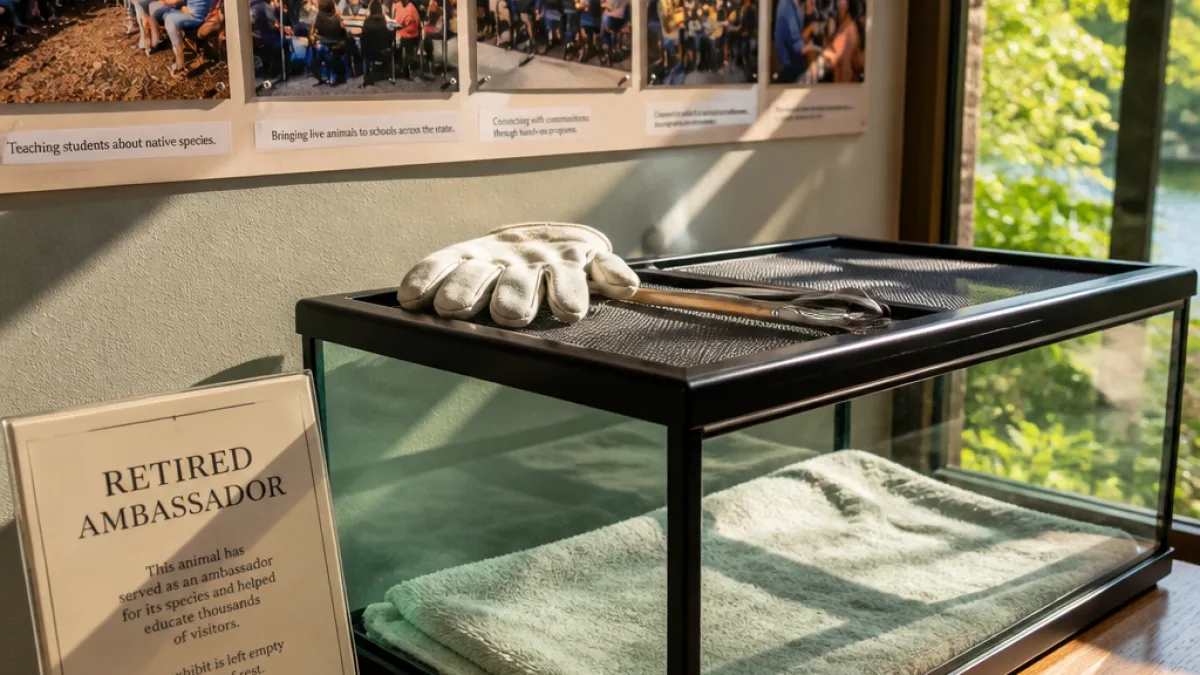
JACKSON, Miss. — After nearly 20 years as a public face of Mississippi’s native reptiles, Elvis, a speckled kingsnake, is retiring from appearances and educational programs at the Mississippi Museum of Natural Science.
From injured wild snake to trusted educator
Elvis arrived at the museum in 2008 after being discovered injured in the wild. Staff rehabilitated him and — discovering a calm temperament and tolerance for handling — put him to work teaching the public about snakes, conservation and ecology.
Museum officials say Elvis helped “hundreds of thousands” of visitors replace fear with curiosity about reptiles and played a quiet yet persistent role in public education across Mississippi. He took part in on-site exhibits, school outreach visits and community events, meeting audiences who in many cases had never had a close encounter with a snake.
"Elvis has been one of our most beloved animal ambassadors for many years," said Angel Rohnke, museum director.
Why the retirement now?
The museum emphasized that Elvis’ withdrawal from public programming is part of a long-established process to ensure the well-being of aging animal ambassadors. As animals mature, caretakers monitor health and behavior closely and alter routines to reduce stress and increase comfort.
"One of the most important responsibilities we have is providing lifelong care for the animals that serve as ambassadors for conservation," Rohnke said, according to the museum. Retirement allows Elvis to enjoy a quieter lifestyle while remaining under professional care.
- Species: Speckled kingsnake (nonvenomous constrictor)
- Arrival at museum: 2008
- Role: Animal ambassador for education and outreach
- Reason for retirement: Age and welfare-focused care
What kingsnakes mean to Mississippi ecosystems
Speckled kingsnakes are native to Mississippi and are notable for their resistance to the venom of pit vipers such as copperheads, cottonmouths and rattlesnakes. That biological trait makes them an important part of local ecosystems, both as predators and as a check on venomous snake populations.
Through up-close encounters and curator-led talks, Elvis served as a living example of those ecological roles. Museum educators said he helped demystify snakes and emphasize that nonvenomous species are a valuable part of the state’s biodiversity.
Ongoing care and the museum’s commitment
The museum reiterated that animal welfare is its top priority. Retirement from public appearances does not mean Elvis will be neglected; rather, staff will adapt his routine and environment to suit reduced activity and promote comfort.
As with all Museum Animal Ambassadors, Elvis remains under the care of trained staff who oversee diet, veterinary check-ups and habitat management. The retirement process is framed as a continuation of that duty of care, ensuring the snake’s needs are met for the rest of his life.
| Item | Detail |
|---|---|
| Species | Speckled kingsnake (nonvenomous) |
| Arrival | 2008 (found injured in the wild) |
| Service length | Nearly two decades |
| Retirement status | Removed from public programs; remains under museum care |
Local impact and what visitors should know
For many museumgoers — children and adults alike — Elvis offered a first, controlled encounter that shifted attitudes about snakes. That personal, tactile education is difficult to replace, and the museum will continue outreach with other animal ambassadors and programming aimed at fostering understanding of native wildlife.
Visitors hoping to see Elvis should note that the museum has not scheduled him for public appearances going forward. Those interested in learning about speckled kingsnakes and other native species can still take advantage of museum exhibits, scheduled programs and school visits featuring other ambassadors.
Elvis’ retirement is a reminder of the responsibilities conservation institutions hold: not only to educate the public but to provide lifelong, humane care for the animals entrusted to them.
The Mississippi Museum of Natural Science did not announce plans to name a formal successor to Elvis. Museum staff say their commitment is to continue teaching about the state’s natural heritage while adapting to the changing needs of their animal residents.