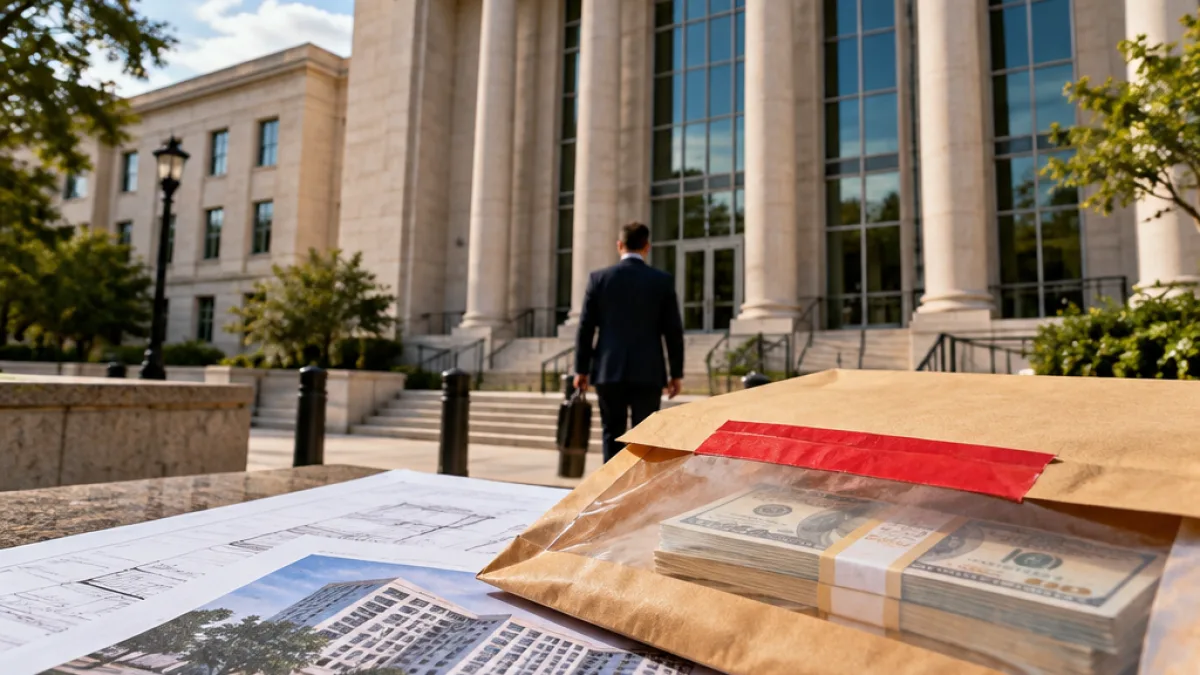
Former Jackson Mayor Chokwe Antar Lumumba was sentenced Friday to 37 months in federal prison, closing a devastating chapter in a political career that had been tied to the city’s future and now stands defined by a federal corruption case. The sentence was imposed by U.S. District Judge Daniel P. Jordan III at the Thad Cochran United States Courthouse in Jackson.
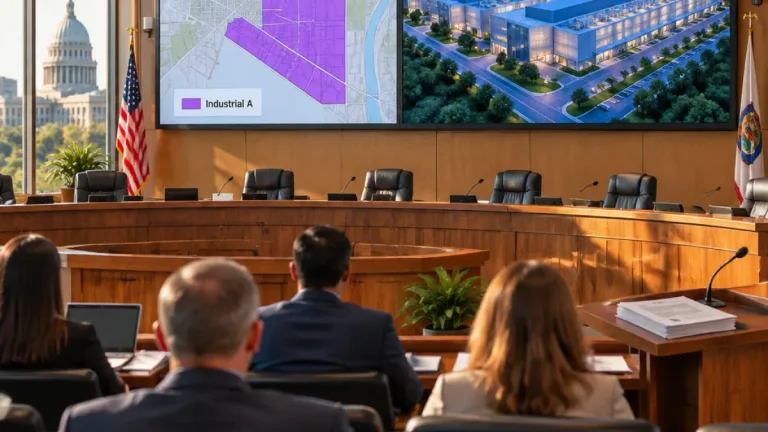
Federal prosecutors’ undercover operation presented agents as real estate developers seeking to build a hotel near the downtown convention center. According to the case described in court, Lumumba accepted $50,000 in campaign contributions from the undercover agents. The sentencing marks the federal punishment for his role in the conspiracy and brings the legal consequences of the case into the center of the city he once led.
A courtroom apology and a judge’s warning
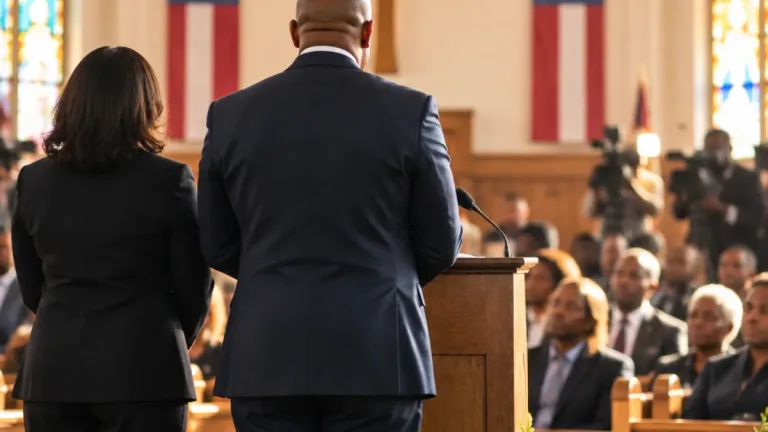
Lumumba spoke solemnly before the sentence, acknowledging the damage caused to the community and to his family. He said his conduct had placed an unfair burden on his wife and children. In a statement that captured the personal weight of the hearing, Lumumba told the court:
“My failures have become unbearable.”
His wife, Ebony Lumumba, family members and supporters accompanied him to the courthouse. Several supporters wore white as they gathered around the former mayor. The scene carried the visual language of loyalty and grief, but the judge’s responsibility was narrower and harder: to determine the punishment while weighing the damage corruption does beyond the individual defendant.
Jordan cites corruption in Mississippi’s capital
Jordan said he admired many of Lumumba’s qualities and believed the former mayor was unlikely to commit another crime. That assessment did not erase the need for a prison term, the judge said. Jordan pointed to the requirement that courts consider general deterrence, as well as the scope of corruption reflected in the case record.
The judge specifically addressed public officials in Mississippi’s capital city, saying a sentence had to communicate that corruption would carry consequences. He referred to convictions in and around Jackson over the past two decades and described the level of corruption represented in the record as deeply disturbing. His remarks placed Lumumba’s conduct within a longer, troubling history rather than treating the case as an isolated fall.
- Sentence: 37 months in federal prison.
- Money at issue: $50,000 in campaign contributions.
- Undercover scenario: FBI agents posed as developers pursuing a hotel near the downtown convention center.
- Sentencing judge: U.S. District Judge Daniel P. Jordan III.
A wider political reckoning
The investigation also ensnared other Democratic politicians from Jackson. Former Hinds County District Attorney Jody Owens and former Jackson City Councilman Aaron Banks were each sentenced earlier this month to more than three years in state prison. Their cases deepen the political consequences for a city already forced to confront persistent questions about leadership, public resources and the obligations that come with elected office.
| Person | Position | Outcome reported |
|---|---|---|
| Chokwe Antar Lumumba | Former Jackson mayor | 37 months in federal prison |
| Jody Owens | Former Hinds County district attorney | More than three years in state prison |
| Aaron Banks | Former Jackson City Council member | More than three years in state prison |
For Jackson residents, the consequences are not confined to the courthouse. The proposed hotel, the convention center and the city’s continuing need for investment formed the backdrop to a case about the misuse of political access. Development can be presented as progress, but the process loses legitimacy when private interests and campaign money are intertwined with public decision-making. The city is left to reckon with both the immediate absence of a former mayor and the slower damage inflicted when residents doubt whether government decisions are made for them.
Lumumba’s sentencing also leaves a permanent mark on Jackson’s political history. His admission of failure, the judge’s warning and the punishment itself now form a public record that will outlast the courtroom gathering. The convenient story would be to call this one politician’s collapse and move on. The harder truth is that the case has forced Mississippi’s capital to examine the networks of influence surrounding its government and to ask whether accountability arrives only after trust has already been spent.