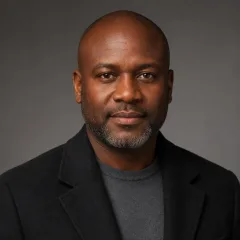
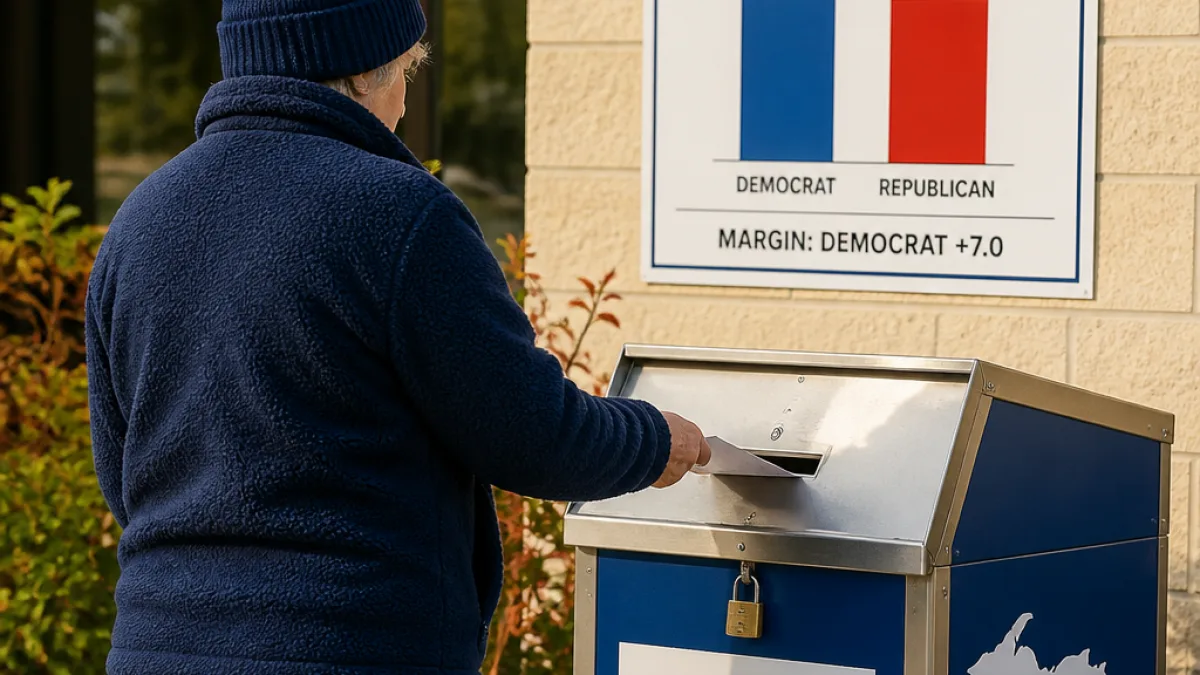
Democratic U.S. Senate nominee Abdul El-Sayed holds a seven-point lead over Republican Mike Rogers in a new statewide poll of likely Michigan voters, giving El-Sayed an advantage as the Nov. 3 election enters its final stretch.
The Mitchell Research & Communications survey, conducted Oct. 26-27 for CBS Detroit and other Michigan television stations, found El-Sayed supported by 51% of likely voters and Rogers by 44%. Three percent remained undecided, while third-party candidates each received 1% or less.
The result represents a wider margin for El-Sayed than the same pollster recorded earlier this month. In the Oct. 1 survey, El-Sayed led Rogers 45.6% to 41.4%, a difference of 4.2 percentage points. The newer numbers show the Democrat gaining ground while the Republican remains within striking distance, but the race is not decided by a poll.
A lead, not a verdict
The latest survey included 636 likely voters and carried a margin of error of plus or minus 3.9 percentage points, according to the research company. It was conducted using online panels and survey links sent to randomly selected registered voters' cellphones. The results were weighted by demographic characteristics and by the outcomes of the 2022 and 2024 elections to estimate the likely composition of the 2026 electorate.
That margin of error matters. While the poll places El-Sayed ahead, the range around each candidate's result means the survey should be read as a measurement of the race at one moment, not as a guarantee of the final vote. Turnout, late decisions and the remaining vote-counting process can all affect the outcome. The pollster reported the results at a confidence level of 95% or higher.
“El-Sayed is in the driver's seat for a big victory on November 3rd,”
the researchers said in their assessment of the poll. That characterization is stronger than the numerical result itself, which shows a clear lead but also leaves a substantial share of the electorate either undecided or potentially available to third-party candidates.
Independents move toward El-Sayed
The survey's movement among independent voters is one of its more consequential findings. Independents favored El-Sayed over Rogers 52% to 38% in the late-October poll. In the earlier survey, that split was 46% to 34%. The Democratic nominee's advantage among independents therefore widened, even as both candidates' overall support also depends on how completely they bring their party's voters to the polls.
The poll found El-Sayed had consolidated 94% of Democratic voters, compared with Rogers' 91% of Republicans. That gap offers one explanation for the Democrat's overall lead: El-Sayed was performing somewhat better with his party's base while also holding an advantage among voters who do not identify with either major party.
- El-Sayed: 51% of likely voters
- Rogers: 44% of likely voters
- Undecided voters: 3%
- Third-party candidates: 1% or less each
Voting has already begun
The survey also reflects a Michigan electorate that is no longer waiting for Election Day to participate. In late October, 28% of respondents said they had already voted or were voting absentee, up from 11% in the early-October poll. The first survey was conducted shortly after absentee voting began, while the second came just after Michigan's early in-person voting period started.
That timing adds a practical complication to any late poll. Some respondents have already cast ballots, meaning their choices cannot change even if the campaign's final messages alter the opinions of voters who remain undecided. At the same time, the survey's likely-voter model must estimate who will participate in person, who will vote by mail and who will not vote at all.
An open seat draws national attention
Michigan's Senate contest is an open election to replace Democratic Sen. Gary Peters, whose seat is being vacated. Because no incumbent is running, the campaign has national significance and no sitting senator's established advantage to shape the contest. Rogers, a former congressman, is challenging El-Sayed in a race that has drawn attention beyond Michigan.
Michigan Public has also interviewed El-Sayed about his campaign priorities. He has discussed lowering everyday costs, strengthening unions and addressing tariffs and war-related economic pressures. Those policy arguments now compete with the central question confronting voters in the closing days: which candidate can turn support into actual ballots.
The latest Mitchell survey gives El-Sayed the stronger position, particularly among Democrats and independents. It does not erase the uncertainty built into a race with a 3.9-point margin of error, nor does it account for every event that could influence voters before Nov. 3. For Michigan voters, the poll is best understood as a snapshot of a contest nearing its deadline — and as a reminder that the remaining decisions, and the act of voting itself, still matter.