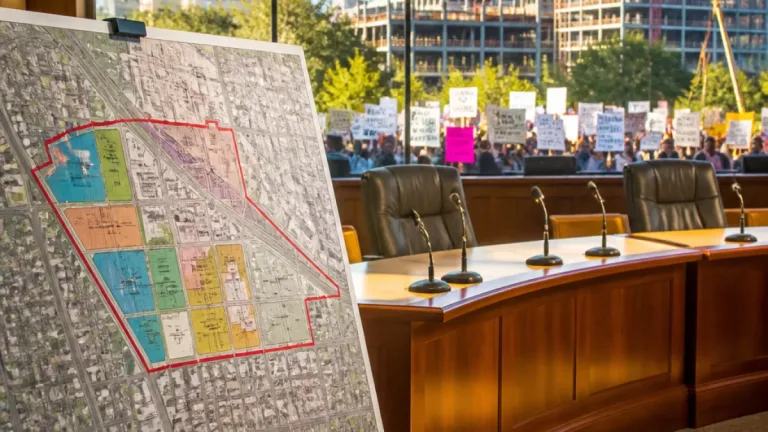
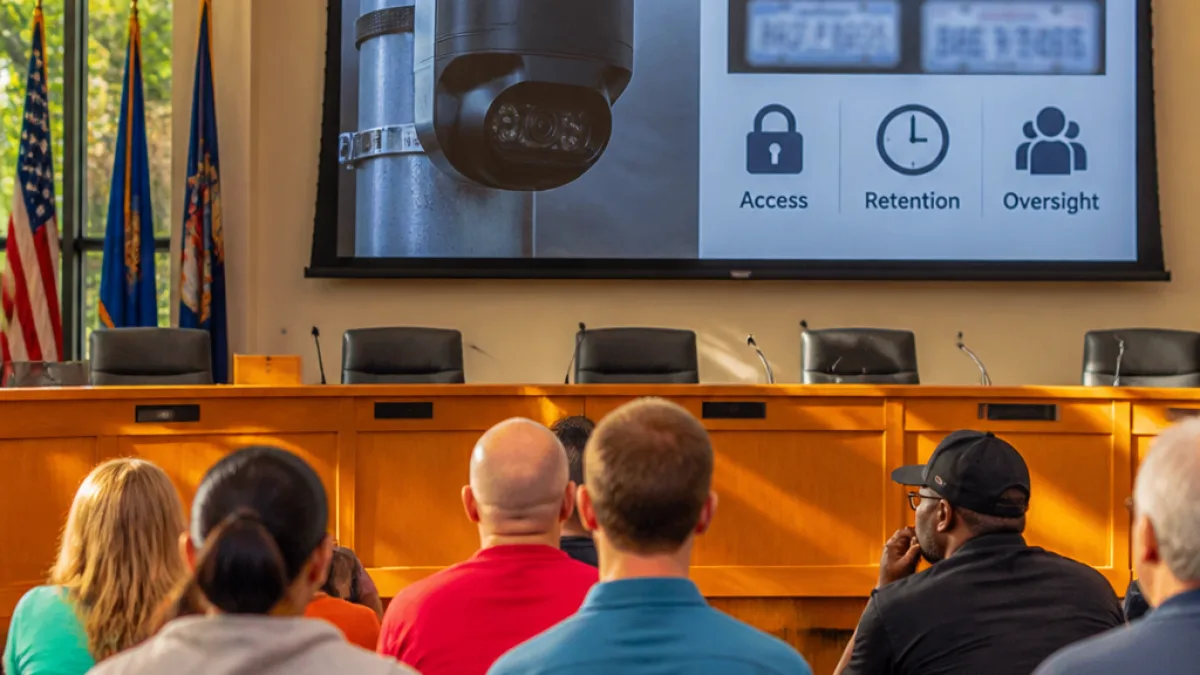
The Sterling Heights City Council opened a fresh, tense chapter in the city's ongoing conversation about surveillance, privacy and law enforcement when residents and council members demanded clearer answers about the automated license plate reader program run with Flock Safety cameras.
Residents voice privacy concerns, council seeks answers
At last Tuesday's public comment period, several residents expressed worry that the Flock cameras — devices that automatically scan and record license plates — amount to a form of constant monitoring without adequate safeguards. Speakers cited fears that records of their and family members' movements are being stored and could be misused.
"I don't like being surveyed without use of warrants, or it doesn't seem like it abides by the Fourth Amendment,"
Other speakers made the point personal: "I know my data's in there, my son's data is in there, my wife's data is in there," and "I have a lot of questions," underscoring the anxiety driving turnout at the meeting.
Council members press for transparency; an opponent speaks out
Sterling Heights Councilman Michael Radtke, who has opposed the city's use of Flock cameras since deployment began four years ago, said the meeting illustrated a wider unease about digital tracking and artificial intelligence. While acknowledging the technology can assist law enforcement, he warned of potential abuses, including stalking or tracking of political activity.
"Yes, it can catch criminals. It can also be used for abuse — stalk your ex-girlfriend, follow political activists," he said, framing the council's demand for clarification as a response to those risks.
What the police transparency page says
The Sterling Heights Police Department's Flock transparency webpage states the system detects only license plates and vehicles and does not detect or analyze faces, people, gender or race. That distinction formed a focal point of the council's questions: what data exists, who can access it, how long it is retained, and what policies govern searches.
- Primary concern: who has access to plate-read data and under what circumstances it is shared.
- Public records and retention: residents asked how long readings are stored and when data becomes available to outside agencies.
- Policy clarity: requests for written rules about warrants, audits and oversight.
| Detected | Not Detected |
|---|---|
| License plates | Facial recognition |
| Vehicles | People, gender, race |
City officials have not yet released a comprehensive timeline of follow-up actions after the meeting. But the public pressure signals that council members will likely pursue formal requests for policy documents and data-access logs in coming weeks.
Local consequences and the wider debate
The debate in Sterling Heights mirrors a broader national conversation about how municipal governments deploy sensor networks and analytic tools. For residents, the questions are immediate and practical: what privacy trade-offs are being made, who holds the keys to the data, and what legal protections exist if data are used beyond crime fighting.
For the council, the issue merges public safety with governance. Demands for transparency aim to create boundaries: written policies about retention, who may run queries, third-party access and auditability. Until those boundaries are clearly articulated and published, skepticism from the public and some council members is likely to intensify.
City hall now faces a choice: provide detailed documentation and public oversight mechanisms that address the specific concerns aired at the meeting, or defend the existing program without satisfying calls for greater openness. How the administration responds will shape public trust over a surveillance tool that sits, quite literally, at the intersection of traffic, crime prevention and everyday life in Sterling Heights.