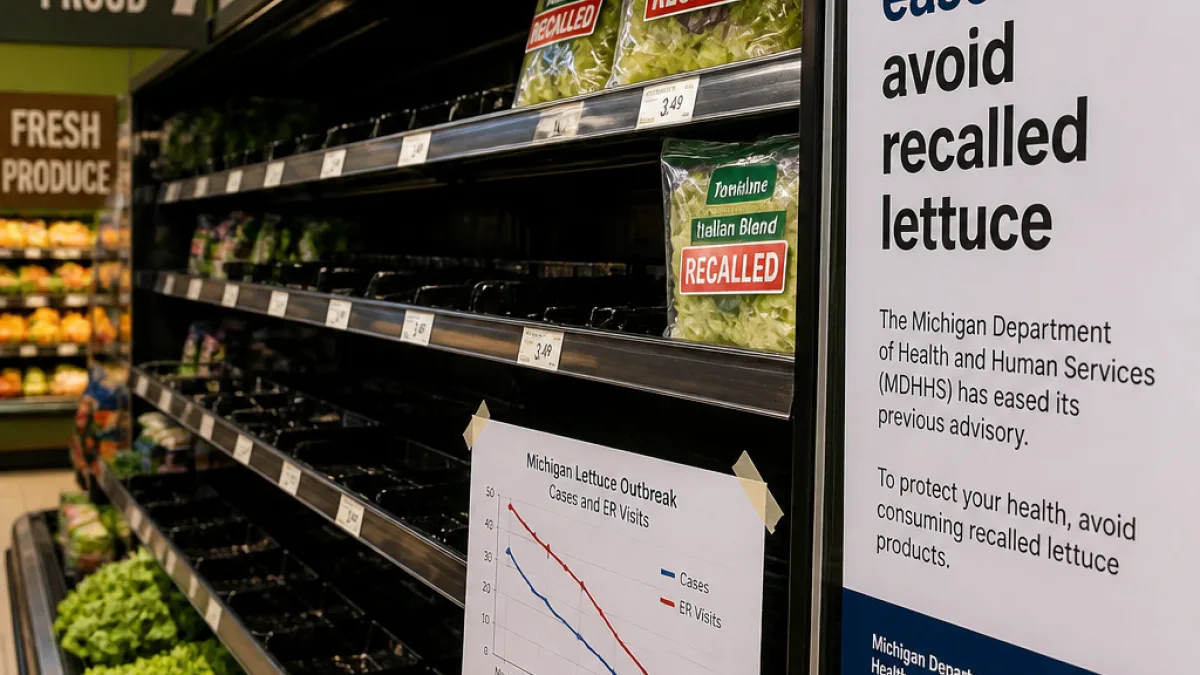
Michigan health officials announced Friday that new reports of cyclospora infections are tapering and that emergency department visits for diarrhea are trending downward, prompting them to lift a broad advisory that had urged residents to avoid bagged salad mixes. The state, which has borne the brunt of the national outbreak, said most of the contaminated produce is likely no longer available to consumers.
Outbreak scale and ongoing warnings
To date, Michigan investigators have linked the outbreak to more than 12,000 reported illnesses and two deaths since June. State officials emphasized that while they were easing the general warning against bagged salad mixes, they continue to advise people not to consume the specific lettuce products recalled by Taylor Farms de Mexico that were sourced from central Mexico.
The decision to narrow the advisory reflects what public health authorities described as improving indicators: fewer newly reported cases and a decline in diarrhea-related hospital and emergency department visits. The state’s announcement suggested the supply chain contamination that once posed an ongoing risk has moved through the marketplace.
What consumers should know now
Health authorities urged residents to remain cautious and to check their refrigerators and pantries for any product that matches the Taylor Farms de Mexico recall. Consumers experiencing persistent gastrointestinal symptoms — particularly watery diarrhea that lasts several days — were advised to seek medical attention, especially if dehydration or severe symptoms develop.
- Do: Check labels and the recall list for Taylor Farms de Mexico lettuce sourced from central Mexico.
- Do: Contact your health care provider if you or a household member have prolonged diarrhea or signs of dehydration.
- Don’t: Assume all bagged salads are safe without checking for recall information.
Local impact and public health response
The outbreak prompted widespread public concern and consumer behavior shifts across Michigan this summer, with many residents avoiding ready-to-eat salads and prepared greens. Michigan’s public health apparatus worked with federal partners and food distributors to trace the source and remove recalled products from stores.
Officials said the bulk of the contaminated produce likely moved through retail channels in the weeks following contamination and that the reduction in newly reported cases is consistent with the recalled items being largely off shelves and out of consumers’ homes.
| Metric | Figure |
|---|---|
| Reported illnesses in Michigan | More than 12,000 |
| Confirmed deaths in Michigan | 2 |
| Outbreak start | June |
What experts say about cyclospora
Cyclospora is a parasite that can contaminate fresh produce and cause prolonged bouts of watery diarrhea, often accompanied by stomach cramps and fatigue. While many people recover without hospitalization, vulnerable populations — including the elderly and those with weakened immune systems — can experience more severe illness.
Public messaging has focused on identifying recalled products, proper food handling, and seeking care when symptoms persist. The narrowing of the advisory does not mean the risk has been declared over; rather, it reflects the current assessment that the most likely sources of contamination have been removed from the consumer supply.
Practical steps for residents
Residents should take straightforward steps to reduce risk: verify product sources against recall notices, discard any recalled items, and consult health care providers if symptoms appear. Retailers and distributors are continuing to cooperate with public health authorities to ensure recalled items are removed and to track any residual supply chain concerns.
The easing of the broad recommendation provides cautious relief for consumers and retailers alike, but health officials warned against complacency. Surveillance will continue as investigators monitor for any new clusters and follow up on remaining leads tied to the outbreak’s origin.
As officials refine guidance, consumers should stay informed through state health department updates and the recall notices posted by food safety agencies and manufacturers.