DETROIT — Rep. Haley Stevens has turned a bitter Michigan Democratic primary into a full-scale rupture, endorsing Republican Senate candidate Mike Rogers after losing the party’s nomination to Abdul El-Sayed.
Stevens announced her decision Nov. 1, saying she remained “a very proud Democrat” while arguing that the Senate contest represented a defining test for Michigan. Her endorsement came just as Democrats were attempting to consolidate support behind El-Sayed in a race that could help determine control of the U.S. Senate.
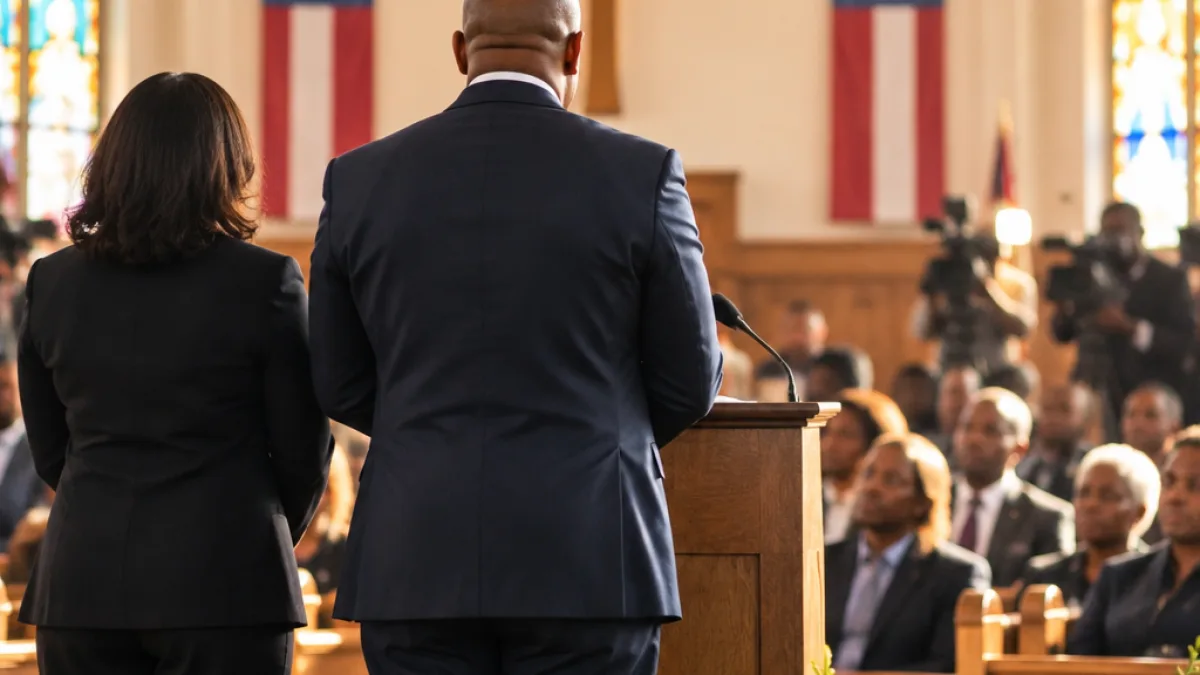
The move was not a quiet departure from the campaign trail. Stevens attended a church service with Rogers and his wife at Perfecting Church on Detroit’s east side, after El-Sayed’s campaign asked her not to participate in last-minute events connected to his campaign. The appearance placed the former primary rivals in opposing political camps only days after Stevens publicly criticized the Democratic nominee.
“I don’t belong in Abdul’s campaign,” Stevens said in a video posted to social media. “This is the conscience of the Senate right now and our Michigan moment.”
The endorsement landed after negotiations over a joint appearance had already become a political liability for Democrats. Stevens and El-Sayed had been expected to attend a Nov. 1 church event with Democratic Rep. James Clyburn of South Carolina. Instead, the planned show of party unity gave way to a public disagreement over whether Stevens should appear at El-Sayed’s events.
Stevens had released an extensive statement Oct. 30 demanding that El-Sayed condemn an advertisement from an outside political action committee. The source material describes the dispute as involving Israel and allegations of antisemitism, though it does not provide the advertisement’s full text or detail the specific allegations. El-Sayed’s campaign’s request that Stevens stay away from its final campaign appearances preceded her appearance with Rogers.
For Michigan Democrats, the political shock was compounded by the timing and by Stevens’ history inside the party. Friends and party leaders who had supported her during the contentious August primary were reportedly stunned. The account also says Stevens had told House Democrats she planned to keep a low profile rather than attend the El-Sayed event after being asked not to participate.
Senate Minority Leader Chuck Schumer, D-N.Y., condemned the endorsement in unusually forceful terms. Schumer called it a “despicable betrayal” and said Senate Democrats were united behind El-Sayed because they believed he would fight for the economic interests of Michigan working families.
Former Rep. Susan Wild, a Pennsylvania Democrat who previously lived with Stevens, said the endorsement appeared inconsistent with Stevens’ longtime identity as a staunch Democrat. That contrast is central to the political impact of the decision: Stevens did not present herself as someone leaving the Democratic Party, but she nevertheless chose to back its Republican opponent in a contest with national stakes.
The immediate political picture is now defined by an unusual split between party affiliation and candidate support:
- Haley Stevens: Democratic representative who lost the August primary and endorsed Rogers.
- Abdul El-Sayed: Democratic nominee for the Senate seat and Stevens’ former primary rival.
- Mike Rogers: Republican nominee who received Stevens’ endorsement and appeared with her at the Detroit church service.
The endorsement also drew attention beyond Michigan. NBC News reported that former President Donald Trump praised Stevens and said he would like her to join the Republican Party, adding that he believed such a move might happen. Trump’s comments elevated a Michigan campaign rupture into a national discussion about Stevens’ political future and the value Republicans see in her support.
| Development | Date or timing | Political effect |
|---|---|---|
| Stevens loses Democratic Senate primary | August 2026 | El-Sayed becomes the party’s nominee |
| Stevens challenges an outside-group advertisement | Oct. 30 | Relations with El-Sayed’s campaign deteriorate |
| Stevens endorses Rogers and appears at Perfecting Church | Nov. 1 | Democratic effort to project unity is disrupted |
What remains unresolved is how the endorsement will affect voters rather than party officials. The available account does not provide polling, fundraising totals or an estimate of how many Democratic voters might follow Stevens. It does show, however, that the race’s closing message has been pulled away from the economic concerns Democrats hoped to emphasize and toward a dispute over loyalty, identity and the boundaries of party politics.
That shift carries particular weight in a battleground state. A contest described as potentially decisive for Senate control has now absorbed a highly visible break by a sitting Democratic representative. El-Sayed’s campaign must answer the challenge without allowing Stevens’ decision to define its nominee, while Rogers’ campaign has gained a moment of unmistakable contrast and national attention.
Michigan voters are therefore confronting more than a routine endorsement. They are watching a former Democratic primary candidate reject her party’s nominee while insisting she remains a Democrat, as Republican leaders welcome her intervention. The episode does not settle the Senate race, but it has made the campaign’s final stage less predictable and far more personal.