Council holds tax rate steady, but city will collect more as property values and development grow
The Olathe City Council on Tuesday evening adopted the city’s 2027 fiscal year budget that keeps the property tax rate unchanged while authorizing the collection of more property tax revenue than in the prior year. The measure passed on a 5-1 vote, with Councilwoman Robyn Essex the lone dissenting vote.
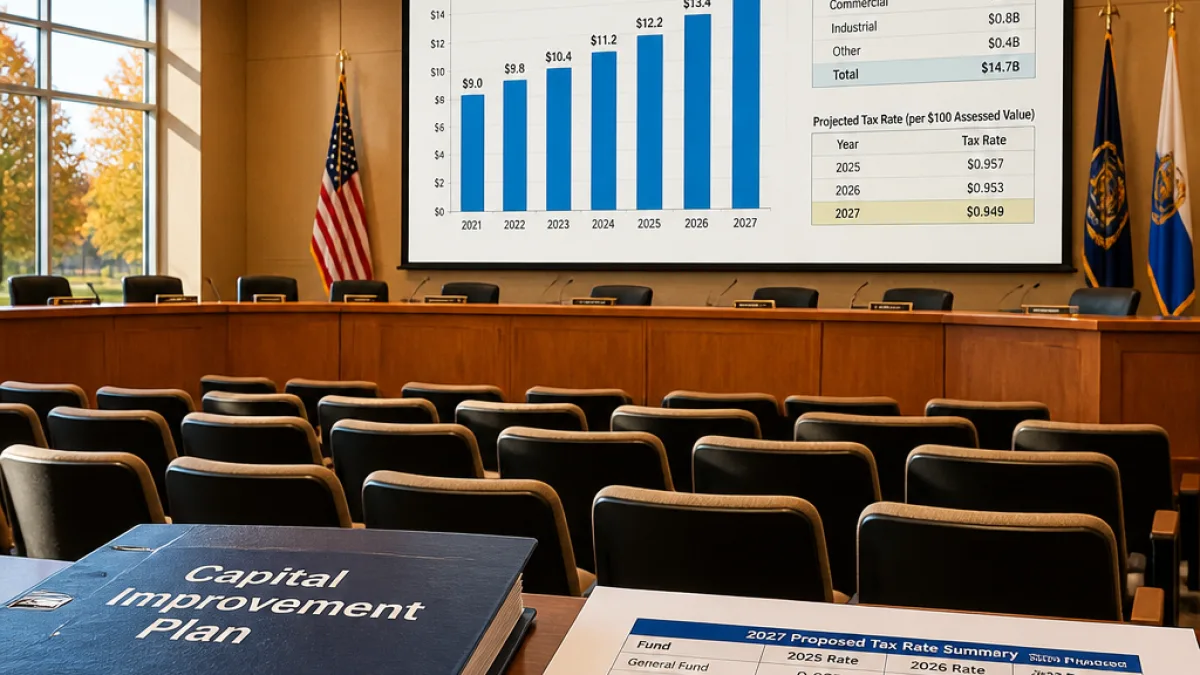
The approved total 2027 budget across all funds is $657,597,627. Within that, the general fund — the account that pays for core municipal services such as police, fire, parks and administration — is set at $247,922,665, including reserves. At the same meeting the council also unanimously adopted the city’s Capital Improvement Plan (CIP) through 2031, with a five-year CIP budget of $757,351,911.
Why residents may pay more even with the same tax rate
Keeping the mill levy and tax rate unchanged does not guarantee identical tax bills for homeowners. Under state property tax rules and local practice, unchanged rates applied to higher assessed values produce higher bills. City budget documents and the discussion at the public hearing made clear the city’s authority to collect more than last year’s property tax revenues stems from increases in commercial and residential construction as well as changes in individual property appraisals.
“The goal with the 2027 budget was to provide ‘exceptional city services and the community’s highest priorities at the lowest sustainable tax rate,’”
The comment from the mayor framed the council’s approach: maintain service levels and deliver on capital projects while avoiding a higher tax rate. But for many homeowners the practical effect is an increase in what they pay if their property valuation rose during the last assessment cycle.
Revenue-neutral threshold and public concern
During a public hearing last week, residents expressed concern about balancing rising costs with maintenance of city services. The council’s vote to exceed the so-called revenue-neutral level means the city will collect more in property taxes than it did the prior year, even though the rate itself was not raised.
City officials said that exceeding the revenue-neutral level allows Olathe to broaden revenue streams and position itself to benefit from new business sales tax revenues tied to growth. Councilman Jeff Creighton acknowledged trade-offs in the budget process, saying he would have preferred not to delay some projects but understood the adjustments that were necessary.
Councilwoman Essex said her no vote reflected constituent concerns about rising property taxes and a reluctance to approve any measure that increases the city’s property tax take.
What this means for city projects and services
The council’s unanimous approval of the CIP commits Olathe to a slate of projects through 2031. The five-year CIP budget — more than three-quarters of a billion dollars — will fund capital priorities that city staff and elected officials say are necessary to support a growing community, from infrastructure and public facilities to parks and stormwater projects.
- 2027 total budget (all funds): $657,597,627
- 2027 general fund including reserves: $247,922,665
- 2027–2031 CIP budget: $757,351,911
| Fund | 2027 Budget |
|---|---|
| All funds | $657,597,627 |
| General fund (incl. reserves) | $247,922,665 |
| 5-year CIP (2027–2031) | $757,351,911 |
For homeowners and businesses, the immediate takeaway is simple: if the city’s assessed value of a property rose, the same mill levy will produce a larger tax bill. That dynamic has become an increasingly familiar part of municipal budgeting across growing suburban cities, where development activity and reassessments can expand tax bases without a change in rates.
The council’s vote illustrates the tension local governments face between limiting tax-rate increases and meeting growing needs. The budget preserves current service levels, funds reserves and pushes forward a sizable capital program; whether that balance satisfies residents who are feeling the squeeze of higher property valuations will likely be a subject of continued debate in council chambers and at the ballot box in years to come.
Residents who want further detail on line items, project timing or reserve levels can review the city’s budget documents on the Olathe website or contact the city finance department for explanations of specific assessments and how valuation changes affect individual tax bills.