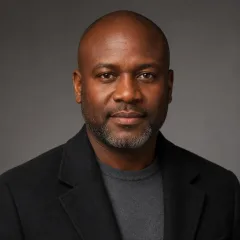
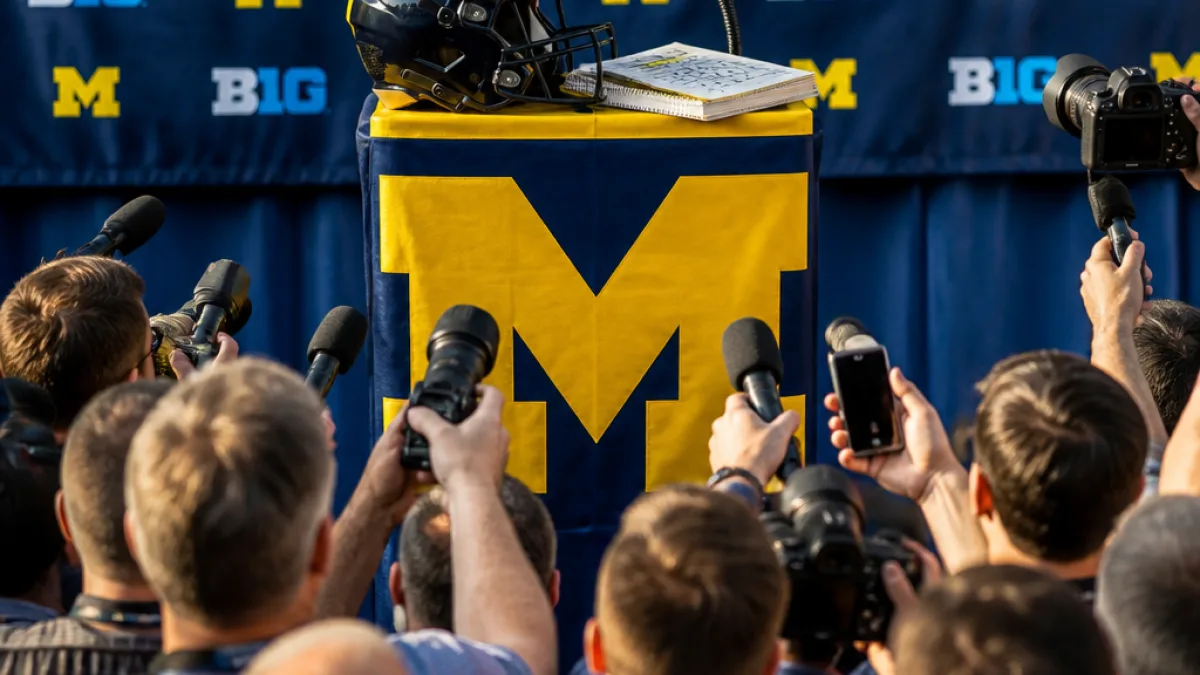
CHICAGO — Kyle Whittingham arrived in Ann Arbor this summer with an unmistakable message: Michigan football should be talked about for what happens on the field, not what happens off it.
Coach says it's time to 'put the drama to bed'
Speaking Thursday at the Big Ten's media event, Whittingham cataloged a series of high-profile problems that have dogged the program in recent years — from NCAA probes and suspensions related to coaching and recruiting, to banned scouting and alleged sign-stealing, to criminal charges faced by a former assistant and the firing of a top assistant over an inappropriate relationship.
"They've been through a lot the last four or five years," Whittingham said. "But hopefully we can put the drama to bed and just get back to being student-athletes and having a great college experience."
Those comments came as the coach outlined what he described as a reset in priorities: winning football games, graduating players and returning daily emphasis to the elements that define a college program.
Players welcome a change in tone
Whittingham’s arrival coincided with several veteran players on hand at the conference event. Quarterback Bryce Underwood, running back Jordan Marshall and defensive tackle Trey Pierce joined Whittingham on the Big Ten stage. Of the three, only Pierce was on the roster when sign-stealing allegations surfaced in 2023.
- Bryce Underwood — quarterback representative
- Jordan Marshall — running back representative
- Trey Pierce — defensive tackle and veteran presence
Pierce, who has been in Ann Arbor for a national championship run and subsequent seasons that fell short of expectations, said the program's tolerance for off-field problems has dropped under Whittingham.
"I'm super-excited," Pierce said, adding that Whittingham has "raised the attention to detail" and matched the program’s maturation with higher standards. Pierce framed the shift as an evolution: more experience across the roster and clearer accountability under new leadership.
Backdrop: a string of controversies
The coach did not dwell on specifics during the media session, but the issues he alluded to are well-documented and have repeatedly put Michigan in the national headlines. They include investigations into analyst coaching and recruiting restrictions during the pandemic dead period, bans related to scouting and alleged sign-stealing, a federal arrest of a former offensive coordinator and the dismissal of a prominent assistant after an inappropriate relationship surfaced.
| Issue | Nature |
|---|---|
| NCAA investigations | Analyst coaching and recruiting violations tied to pandemic-era dead period |
| Banned scouting & sign-stealing | Allegations and penalties related to prohibited scouting practices |
| Criminal charges | Federal arrest of a former offensive coordinator |
| Personnel dismissal | Assistant coach fired over an inappropriate relationship |
Those episodes have compounded into a narrative that, until now, has often eclipsed on-field results and recruiting developments in coverage of the program.
Aiming for normalcy and focus
Whittingham framed his approach bluntly: treat the current roster as student-athletes first, strip away distractions and concentrate on fundamentals and team development. His message aims to reassure alumni, fans and current players that the program’s priorities will be clarified and enforced.
He also emphasized institutional aims beyond the scoreboard: the coach specifically mentioned graduating players as part of the return to basics, signaling that academic outcomes and player welfare will be part of the program reset as much as wins and losses.
For veterans like Pierce, the new tone is tangible. For the broader fan base and university community, the test will be whether the program can translate Whittingham’s intent into consistent practice and visible results on and off the field.
Whittingham’s public remarks at Big Ten media day were measured but pointed — an early sign that the leadership transition aims to move Michigan away from controversies and back toward the ordinary arc of college football seasons: recruiting, preparation, competition and graduation.
How quickly that shift will be apparent — in locker-room culture, NCAA compliance, or on-field performance — remains a developing story heading into the next season.