The Sacramento City Council committee on Tuesday unanimously advanced a financing package designed to unlock infrastructure work in the city’s sprawling Railyards District, a 240-acre development site adjacent to downtown that city leaders call one of the nation’s largest urban infill opportunities.
What the plan does
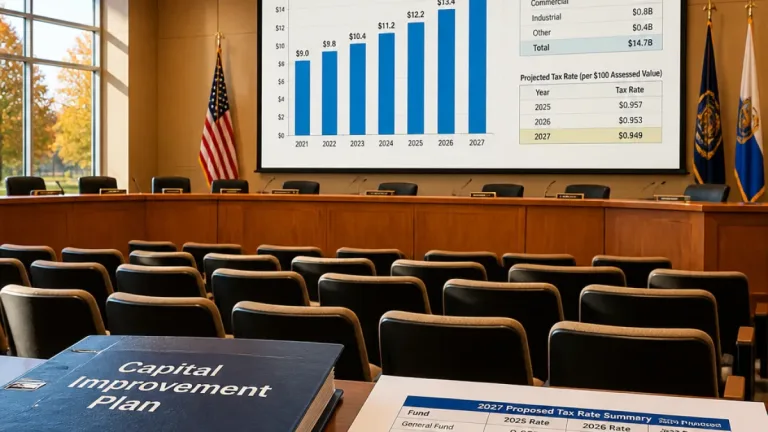
The proposal would create an enhanced infrastructure financing district (EIFD) that uses projected increases in property tax revenue — the so-called tax increment — to repay developers for roads, sewer hookups and other public infrastructure needed for construction. City officials argue the financing vehicle is essential to move forward on a slate of large projects that have been on hold for years because of environmental cleanup obligations and funding gaps.
- District size: 240 acres adjacent to downtown Sacramento.
- Projects tied to development: Kaiser Permanente’s planned hospital, LDK Ventures’ concert venue and retail buildings, Sacramento Republic FC’s new soccer stadium, and earlier-built projects such as two apartment complexes and the Tani G. Cantil-Sakauye Sacramento Courthouse.
- Financing tool: EIFD using future property tax growth to reimburse infrastructure costs.
Controversy that delayed the plan
The financing item ran into an unexpected pause last summer after residents of two Railyards apartment complexes — the Wong Center and the A.J. Apartments — mounted organized opposition. The effort, led by Unite Here Local 49, delivered a majority of formal protests. Under a relatively new state statute, the formal protests triggered a one-year moratorium on the city’s EIFD process, requiring officials to halt and later rework the plan.
When the moratorium expired and the committee resumed consideration in late July, the matter was briefly delayed again for administrative reasons before Tuesday’s unanimous advancement.
“Residents were being ‘silenced,’”
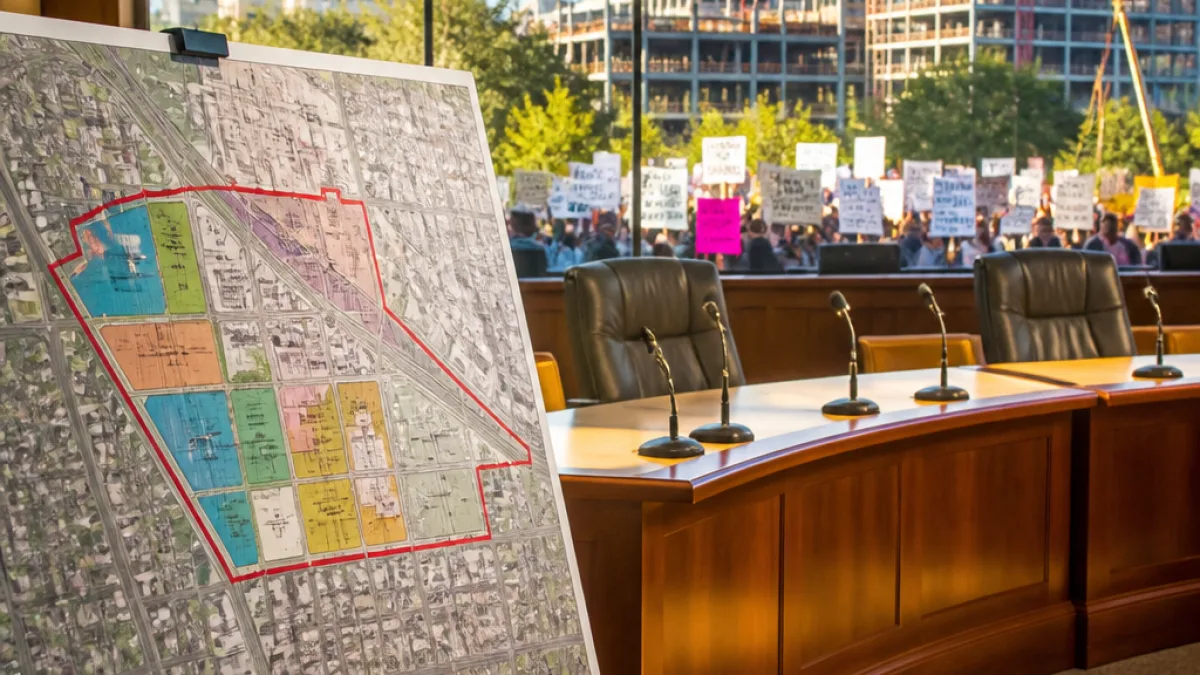
The move to redraw the EIFD map has been central to the renewed dispute. City staff removed the two apartment complexes that had filed protests from the revised taxing district map. Representatives for Unite Here Local 49 and four residents spoke against the revised map at Tuesday’s hearing, arguing the change stripped those tenants of the formal protest mechanism and reduced their leverage over affordable housing requirements in the district. Pamela Freemon, who opposed the agreement last year, told the committee that residents were being “silenced.”
Local stakes: jobs, housing and public investment
Beyond the procedural fight, the outcome carries concrete consequences. Supporters of the EIFD say the financing is needed to support essential infrastructure that will enable multiple large-scale projects — including a hospital and a stadium — that bring jobs, tax revenue and activity to a long-vacant swath next to downtown. Opponents contend that relying on tax increment financing without stronger affordable-housing protections or community benefits risks shifting costs onto other taxing agencies and leaving existing residents behind.
| Element | Notes |
|---|---|
| EIFD purpose | Reimburse developer costs for public infrastructure using future property taxes |
| Notable developments | Kaiser hospital, LDK concert venue, Sacramento Republic FC stadium, Tani G. Cantil-Sakauye Courthouse |
| Opposition | Unite Here Local 49 and residents of Wong Center and A.J. Apartments; affordable housing concerns |
City officials say they revised the EIFD boundaries to address the legal constraints imposed by the protests and the moratorium, moving forward with a map that excludes the protesting apartment complexes. The committee’s unanimous advancement represents a procedural victory for the city’s plan, but substantive questions remain about inclusion, housing policy and the distribution of benefits across Sacramento.
Next steps and what to watch
With the committee’s action, the EIFD proposal moves closer to final approval, though additional hearings and formal votes remain. Community advocates and the union have signaled they plan to keep scrutinizing the plan’s details, particularly any provisions tied to affordable housing and community benefits. Observers will also watch timelines for the major projects tied to the district, including when ground will break on the hospital, venue and stadium — the practical measures of whether the EIFD unlocks the promised construction.
The Railyards site has been a long-running test of Sacramento’s development capacity: once a busy rail hub, largely vacant since rail operators left in the 1990s, it has faced environmental cleanup and financing hurdles for decades. Whether the city’s revised financing approach resolves those problems while addressing residents’ concerns will shape the next chapter in one of Sacramento’s most consequential redevelopment efforts.