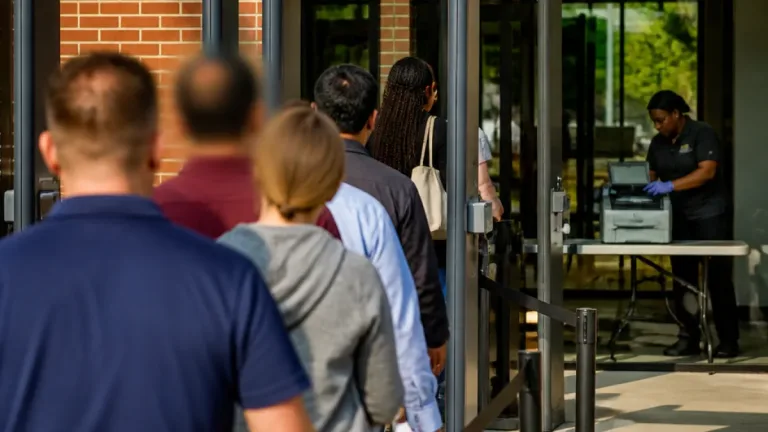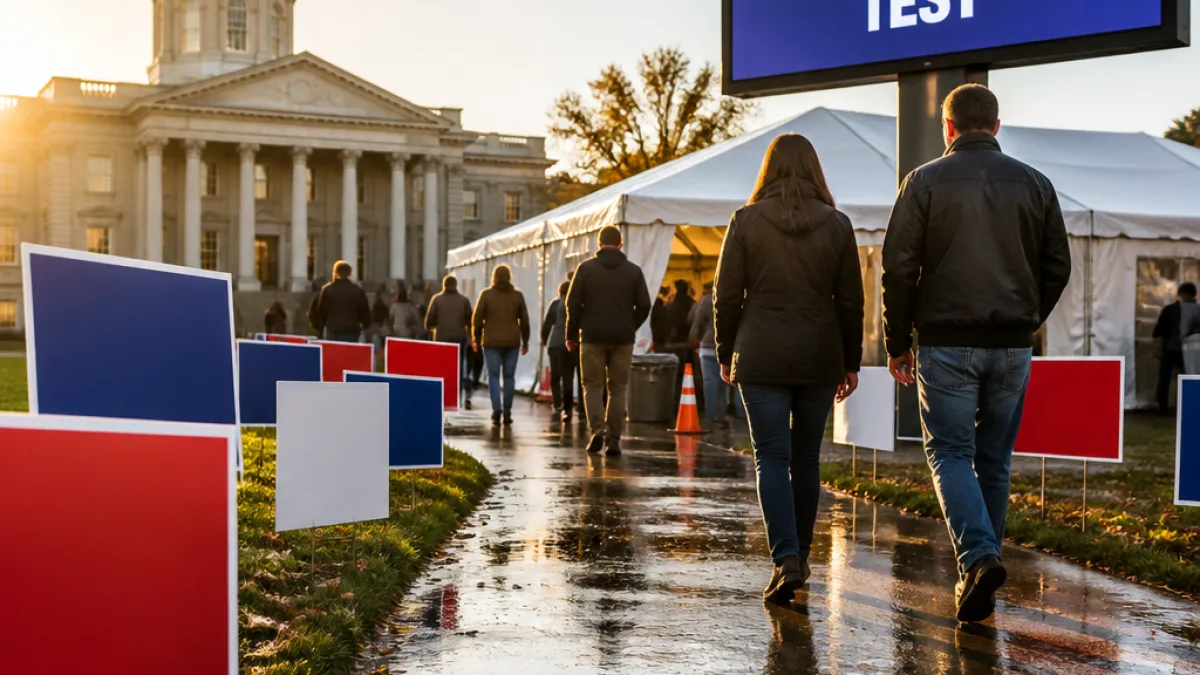
COLUMBIA, S.C. — South Carolina Republican voters returned to the polls Tuesday for a runoff that will determine who replaces the late Sen. Lindsey Graham on the November ballot. The matchup — between Sen. Darline Graham, the sister appointed to her brother’s seat, and Rep. Ralph Norman — has become a high-profile test of President Donald Trump’s influence inside the party.
Why this runoff matters
The race is the product of a truncated calendar and an unexpected vacancy. Lindsey Graham won the GOP primary in June for a fifth term but died July 11 of a heart condition, creating an opening for a special intra-party contest. Gov. Henry McMaster appointed Darline Graham to fill the remainder of her brother’s term, and she emerged first in the Aug. 11 special primary but fell short of the threshold needed to avoid a runoff.
What makes this contest unusual is the degree of national attention and the president’s hands-on approach. Trump personally encouraged Darline Graham to run, endorsed her and campaigned on her behalf at a rally in Myrtle Beach on Aug. 21. In addition, his super PAC, MAGA Inc., has invested significant funds on her behalf — more than $827,000, according to reporting.
"I'm doing this to honor Lindsey. That's why I'm here. So, Darline, we got to win that race,"
The president’s involvement elevates the stakes beyond South Carolina. The outcome will be read nationally as either confirmation or a rebuke of Mr. Trump’s ability to move Republican voters in a state that has been reliably conservative but also where local dynamics and personal loyalties carry weight.
Local roots, national reach
Darline Graham’s candidacy is rooted in the immediate aftermath of her brother’s death and the governor’s appointment — an unusual sequence that folded a family name and institutional incumbency into the already crowded GOP field. Ralph Norman, a sitting member of Congress, offers a different appeal: a more traditional House-to-Senate trajectory and an established conservative record.
Analysts and party operatives have framed the runoff as a collision between nationalized politics—driven by presidential endorsements and outside money—and the long-running local currents that have shaped South Carolina’s Republican electorate for decades.
- Test of presidential endorsement power in a down-ballot primary
- Implications for GOP unity and message heading into the general election
- Whether name recognition and incumbency via appointment can overcome a challenger with a congressional base
For voters here, the choice is immediate and personal. For political observers, it is a case study in how national actors influence, but do not always dictate, local outcomes.
Calendar of key events
| Date | Event |
|---|---|
| June (primary) | Lindsey Graham won the Republican primary for a fifth term |
| July 11 | Lindsey Graham died of a heart condition |
| Aug. 11 | Special Republican primary; no candidate cleared threshold to win outright |
| Aug. 21 | President Trump campaigned for Darline Graham in Myrtle Beach |
The compressed timeline left little room for a prolonged primary contest, and the runoff condensed the choice to two candidates with distinct advantages. Trump’s public campaigning and the financial backing from MAGA Inc. represent an atypically large top-down push for a Republican primary at this stage of the cycle.
Still, South Carolina voters have their own patterns and priorities. The state’s political history includes moments when local sentiment diverged from national expectations. Whether that happens again — and whether it will be interpreted as a local preference or a referendum on Trump’s sway — will be evident once votes are tallied.
As results come in, party strategists on both sides will parse turnout, geographic splits and margins as signals ahead of November’s general election. For now, the runoff offers a snapshot: a state balancing its own political traditions against a nationalized Republican landscape.