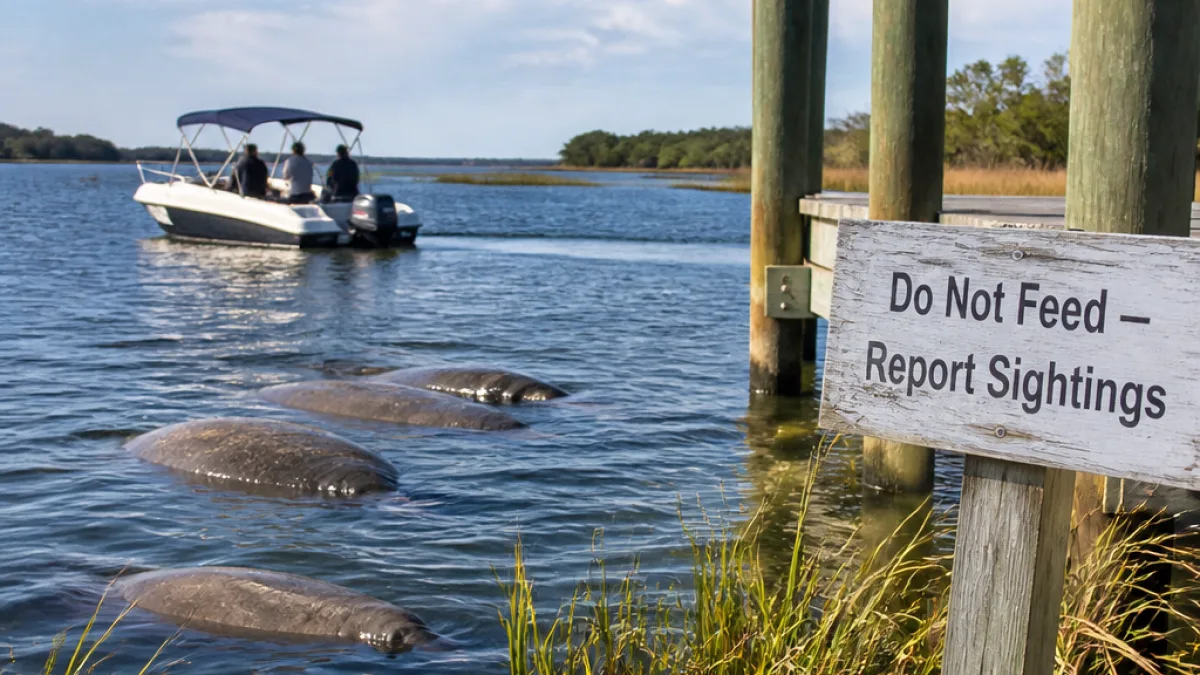
Several Florida manatees have been sighted in South Carolina waters this summer as warmer coastal temperatures draw the animals north in search of abundant aquatic vegetation, state wildlife officials reported.
What officials are seeing and why it matters
The sightings, documented by the South Carolina Department of Natural Resources, follow a familiar seasonal pattern: when ocean and estuary waters warm, manatees—normally associated with Florida—move northward to feed. Biologists say tracking those movements helps them understand where manatees congregate and how human activity may affect them while they are outside their typical range.
Although officials have not provided an exhaustive list of locations tied to these particular reports, the broader pattern is clear: South Carolina’s coastal waterways offer the seagrass and other aquatic vegetation that manatees seek. That concentration of food and suitable habitat can bring marine mammals into closer contact with boats, docks and swimmers—situations that increase the potential for injury or death for animals and for property damage or danger to people.
State guidance for people who spot a manatee
The SCDNR is encouraging South Carolinians to take a cautious, conservation-minded approach if they encounter a manatee. Officials emphasized that human behavior can directly influence manatee safety and that public reporting helps wildlife managers build a clearer picture of manatee distribution.
- Observe from a distance so you do not disturb the animal.
- Never give fresh water or food to manatees; doing so is illegal and considered harassment.
- Wear polarized sunglasses to better see manatees beneath the water’s surface.
- Check around boat motors before starting engines—manatees may be nearby.
- Report sightings to the SCDNR to assist biologists and conservation efforts.
These steps are designed both to protect the animals and to limit risky engagements that can lead to boat strikes or habituation—where animals lose their natural caution of humans because they have been fed or repeatedly approached.
Conservation and enforcement
The SCDNR noted that providing water or food to manatees is not merely discouraged; it is illegal because it constitutes harassment under wildlife protection rules. The agency also framed reporting as a scientific tool: each sighting contributes data that helps researchers refine their understanding of manatee behavior, migration corridors and the locations where animals are most vulnerable.
| Recommended action | Reason |
|---|---|
| Observe from a distance | Reduces stress and risk of injury to the manatee |
| Do not feed or give fresh water | Prevents habituation and is legally considered harassment |
| Check near boat motors | Helps avoid boat strikes and injury |
Over the years, manatee sightings north of Florida have drawn attention from wildlife advocates and boaters alike. As populations and ocean conditions change, state agencies across the Southeast have increasingly found themselves balancing recreational and commercial water uses with the needs of migratory and resident marine life.
Practical steps for coastal residents and boaters
For people who live along or recreate in South Carolina’s coastal waters, heeding the SCDNR’s guidance is straightforward but necessary. Using polarized lenses, moving slowly and keeping a safe distance when an animal is present are simple measures that reduce the likelihood of harm. For boaters, checking the area visually and reducing speed in shallow, vegetated waterways can be decisive in preventing fatal collisions.
Biologists say that accumulating reliable reports from the public assists in creating more effective conservation responses. The SCDNR has indicated that sighting reports can be submitted directly to the agency, and officials urge anyone who encounters a manatee to report what they see.
As South Carolina’s coastline attracts wildlife seeking seasonal resources, the responsibility for coexisting safely rests with people on land and water. The SCDNR’s call for distance, restraint and reporting is meant to preserve that delicate balance—keeping the animals wild and the public safer.