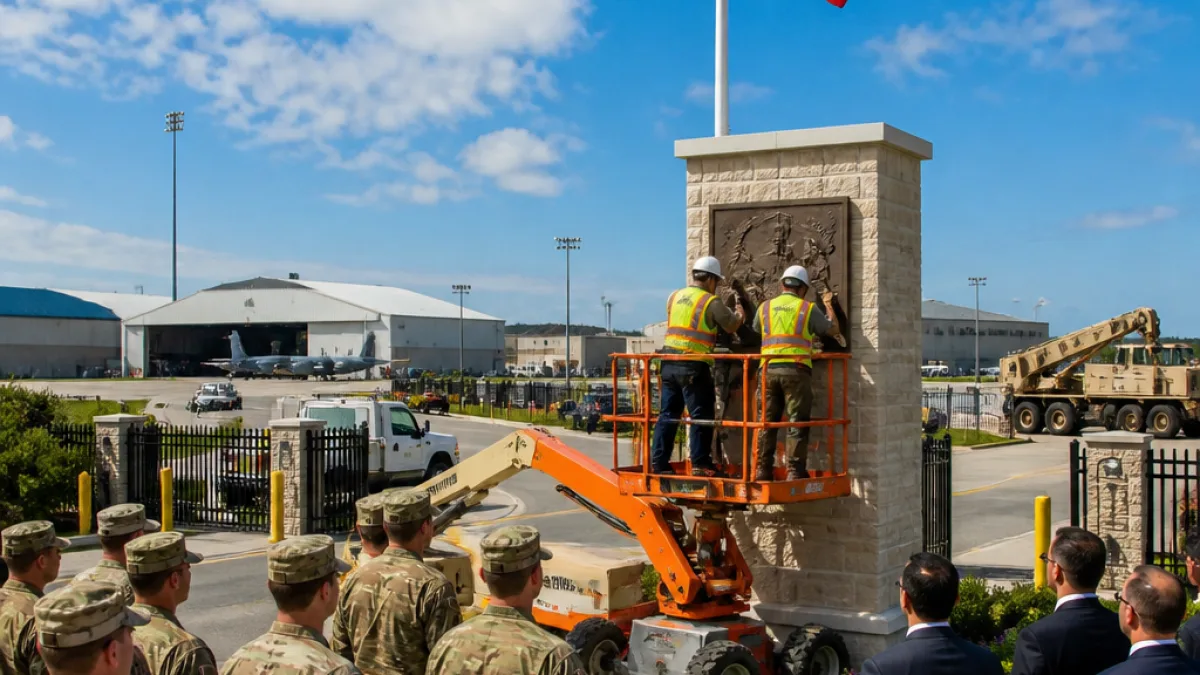
The Air Force has moved to rename Joint Base Charleston after the late U.S. Sen. Lindsey Graham, a South Carolina lawmaker whose decades of advocacy steered federal money and projects to the installation that straddles the state line. A letter attributed to Secretary of the Air Force Troy Meink dated July 28 instructed officials to take "all necessary and appropriate actions" to begin the renaming process, according to Charleston’s Post and Courier.
What the Air Force said
"[Graham's] steadfast advocacy was instrumental in modernizing our military infrastructure and enhancing aviation security, ensuring that Joint Base Charleston remains as one of America's premier military installations,"
The statement from Meink frames the change as recognition of Graham’s long-running support for the base and the services that operate there. The announcement coincided with a congressional tribute ceremony in the U.S. Capitol Rotunda honoring Graham following his death earlier this month.
Graham’s ties to the base and his military service
Graham, who died July 11 at age 71 from an aortic dissection, had a lengthy record of involvement with military affairs both as an elected official and as a service member. He served in the U.S. Air Force and the South Carolina Air National Guard, retiring as a colonel in 2015. Over more than 15 years in Congress, Graham helped direct hundreds of millions of dollars in federal funding to missions and Coast Guard efforts centered at Joint Base Charleston, the Post and Courier reports.
That funding and advocacy extended beyond operations funding. Graham was active in attracting industrial partners to the installation; he pushed for Boeing to utilize the site for construction of its 787 Dreamliner, a move that has had lasting implications for local jobs and aerospace infrastructure.
Why the renaming matters locally
- Operational identity: A new name formally ties the installation to Graham’s legacy and could influence how federal and state leaders reference the base in future planning and budget requests.
- Economic signaling: The base is a regional economic engine; naming it for a high-profile senator underscores the intertwined nature of federal investment and local industry, especially the aerospace and Coast Guard missions noted in the Post and Courier.
- Political symbolism: The move signals a formal, institutional acknowledgment of Graham’s role in shaping military policy and infrastructure in South Carolina, which may prompt discussion about the practice of naming federal facilities for living or recently deceased officials.
Timeline and context
| Year / Date | Event |
|---|---|
| 2010 | Defense Department reorganized installations, creating the current Joint Base Charleston configuration |
| 2015 | Lindsey Graham retired from the South Carolina Air National Guard as a colonel |
| Over 15 years | Graham directed hundreds of millions in federal funding to base missions and Coast Guard efforts |
| July 11, 2026 | Graham died from an aortic dissection at age 71 |
| July 28, 2026 | Letter from Secretary of the Air Force Troy Meink announced intent to rename Joint Base Charleston |
Joint Base Charleston’s present form dates to a Pentagon reorganization of installations in 2010. Over the past decade and a half, the base has grown into an important hub for flight operations, logistics and Coast Guard activity — all areas in which Graham exerted influence as a member of Congress.
Practical considerations and next steps
The letter signals the start of an administrative process to change the base’s name, but it does not outline a publicly posted timeline for completion. Renaming a federal installation typically involves internal coordination among Defense Department offices, public affairs plans for signage and documentation updates, and in some cases consultation with local authorities and stakeholders.
For Charleston-area residents and businesses, the immediate effects are likely to be symbolic — new signage and references — but the long-term significance lies in how the renaming frames future federal engagement with the region. The base’s role in employment, contracts and local supply chains means any change that draws renewed federal attention could have material impacts.
As the process unfolds, local officials, military leadership and members of the community will be watching for the timetable and for any outreach about ceremonies, signage changes and cost responsibilities. The Post and Courier, which first reported the letter, will likely provide continuing local coverage as Defense Department officials formalize the change.
Renaming a military installation after a recently deceased senator who actively shaped its fortunes is a notable move. It cements a particular narrative about the base’s recent history and about the political stewardship that helped secure its present capabilities — an embodiment of how federal priorities, local economies and military strategy intersect in South Carolina.