LAREDO — Federal prosecutors announced an indictment Friday charging 11 people in connection with the deaths of six migrants whose bodies were found inside a rail cargo container in May in Laredo, the U.S.-Mexico border city where trade and freight pass through daily.
What investigators say happened
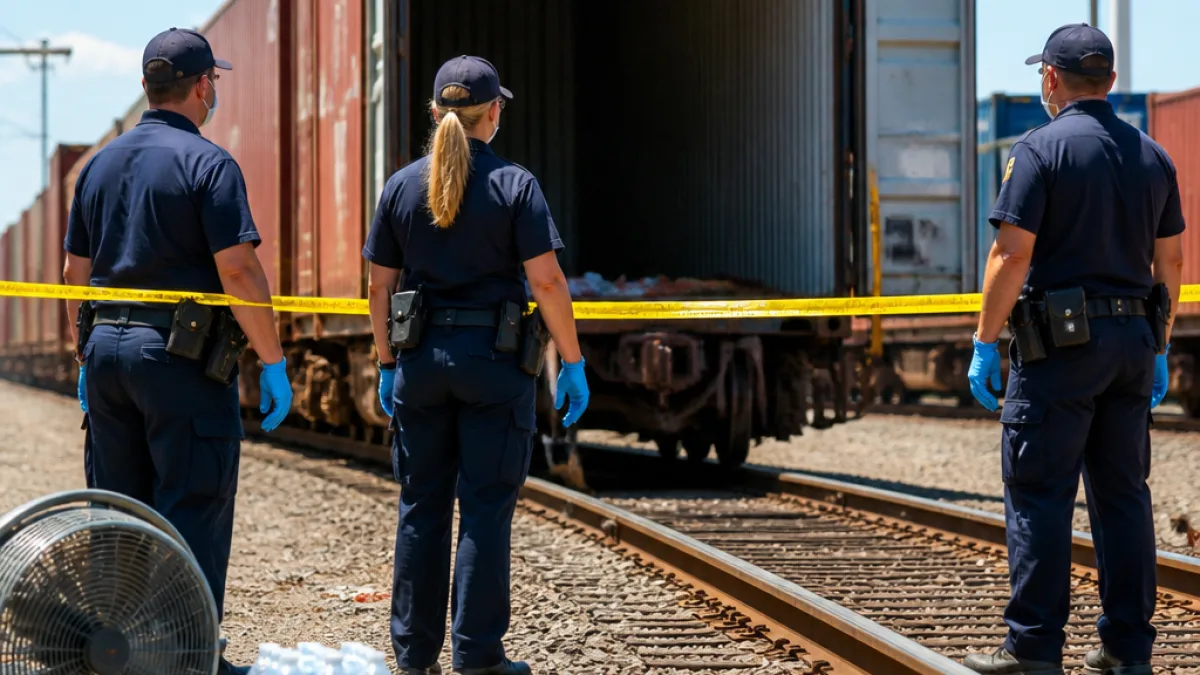
Authorities say the six victims — citizens of Honduras and Mexico and including a 14-year-old boy — were discovered in a shipping container in a rail yard after the container arrived in Laredo. The Webb County medical examiner concluded the deaths were likely caused by hyperthermia, or heatstroke, an outcome experts have long warned can strike people trapped in unventilated rail cars and containers.
“It’s very hard to survive in an un-air-conditioned, sealed container with … the temperature being what it was on that day,”
The comment came from the U.S. attorney for the Western District of Texas, Justin Simmons, as officials detailed elements of the indictment. Prosecutors say the accused were involved in a smuggling operation that placed the migrants in the sealed container while it was carried on freight trains.
Why trains pose special dangers
Train-based smuggling presents particular risks because trains often slow or stop before crossing into the United States, giving smugglers and migrants opportunities to board or hide. Once inside a sealed container or boxcar, those hidden have little chance to escape rising temperatures and suffocating conditions.
Paul Nixon, a retired teacher and volunteer with a humanitarian group that encounters migrants in the border region, said desperate travelers sometimes view trains as an alternative to a brutal overland trek through cartel-controlled territory. Nixon also warned that climate change is exacerbating already extreme conditions.
“But people will get into a boxcar and somebody will close the door and just forget that they’re there,”
Local impact and broader context
Laredo, home to one of the busiest land ports between the U.S. and Mexico, sees tens of thousands of commercial rail and truck movements. That commerce creates both the logistical possibility for smuggling and the opportunity for discovery by rail workers or law enforcement.
The indictment elevates questions about how human-smuggling networks exploit freight systems, and how freight operators, rail employees and federal authorities can better detect and prevent people from being hidden in cargo. Union Pacific employees originally found the bodies, authorities said.
Victims and charges
Federal prosecutors have identified the victims only by nationality and age range; the youngest was a 14-year-old boy and the oldest was 56. Authorities have not released the names of the deceased pending notification of family members and further investigation.
| Detail | Information |
|---|---|
| Number of victims | 6 |
| Nationalities reported | Honduras, Mexico |
| Age range | 14 to 56 |
What comes next
The 11 people named in the indictment face federal charges tied to smuggling that resulted in death. Federal prosecutors will move the case through the U.S. District Court in the Western District of Texas, where pretrial matters and, if they plead not guilty, a possible trial will be scheduled. The announcement underscores how federal authorities are treating deadly smuggling incidents as criminal enterprises that can be prosecuted at the national level.
- Safety risk: Unventilated containers and high temperatures make survival unlikely.
- Freight vulnerability: Slow or halted trains near the border create opportunities for stowaways.
- Legal response: Federal indictments treat deadly smuggling as prosecutable criminal conduct.
The deaths in Laredo are part of a grim pattern that has periodically surfaced along the border: people hidden in vehicles or rail cars who die from heat, asphyxiation or other causes. The case also highlights the mixed pressures at play in border communities, where a daily flow of commerce sits beside humanitarian crises and criminal networks.
Investigators continue to gather evidence and pursue those charged. Local officials and advocates say preventing future tragedies will require a mix of enforcement, improved detection by freight companies and broader policies addressing the drivers of migration — conditions that push people to take extreme risks in hopes of reaching the United States.
As federal proceedings move forward in Laredo, the indictment is a reminder that commercial supply lines and human smuggling can collide with deadly consequences.