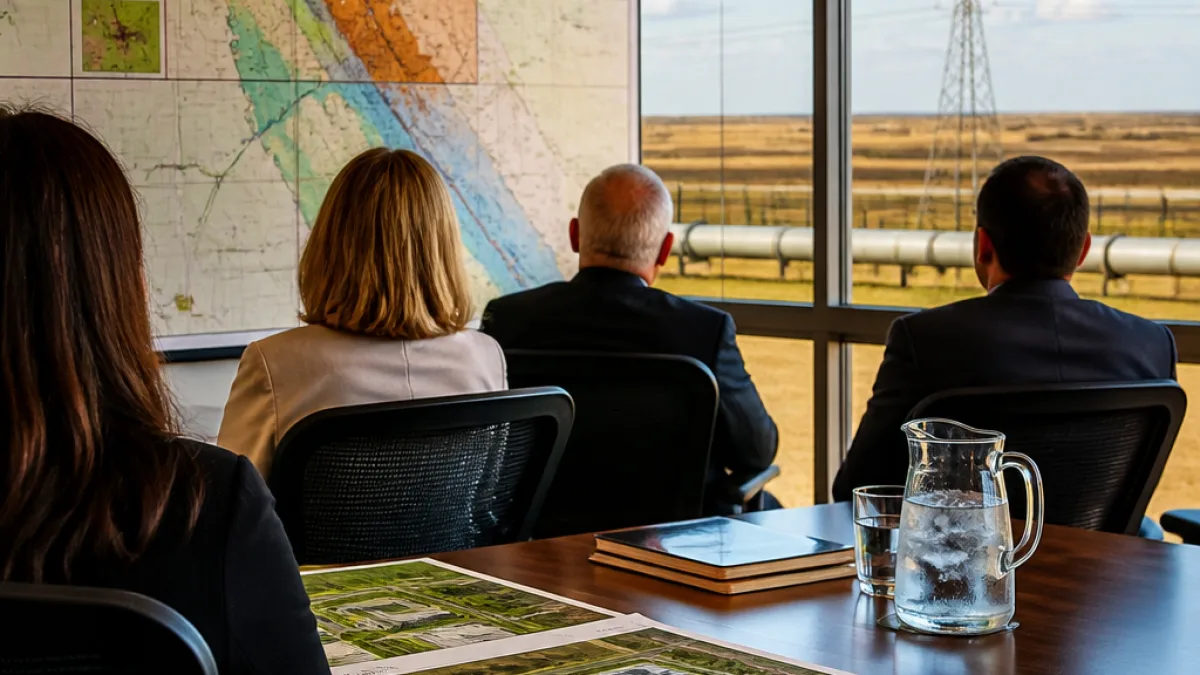
ODESSA, Texas — Conversations are underway between the Odessa Chamber of Commerce and companies interested in building data centers in the Permian Basin, but local leaders say any proposal must protect residents’ wallets and water, and fit into West Texas’ energy landscape.
What leaders say and what residents worry about
Tom Manskey, director of economic development for the chamber, said many people misunderstand what data centers do and why they want to locate where they do. He emphasized the everyday nature of the services these facilities support — from email to online accounts — and the amount of infrastructure required to host that data.
“We don’t realize how much of our life now is tied to all of this and if you’ve got a Gmail account or outlook, yahoo, you name it, that stuff is being stored somewhere,”
Manskey listed three main concerns voiced by residents: electricity rates, water usage and noise. He said improvements in cooling technology and design have reduced water needs compared with just a few years ago.
- Water demand cited for data centers has fallen from a previous industry high to lower daily totals.
- Electricity availability and cost are central to both developers and local officials.
- Noise and other local impacts remain a point of focus for community acceptance.
Numbers in focus
Manskey referenced shifts in reported water consumption, putting the newer daily figures far below earlier industry estimates and drawing a local point of comparison: some car washes in Odessa use more water individually than the current daily numbers being discussed for data centers.
| Metric | Figure cited |
|---|---|
| Earlier industry water use (approx.) | 30,000 gallons (per minute figure previously quoted in industry discussions) |
| More recent daily estimate mentioned by chamber | 20,000–24,000 gallons |
| Estimated long-term jobs from a local project | About 200 positions |
Beyond construction work, Manskey said a completed facility could bring roughly 200 long-term jobs to the area. That kind of payroll could be a meaningful boost in a city whose economy has long been tied to energy and oilfield services.
Energy, flaring and state oversight
West Texas’ abundant natural gas supply is an attraction for developers. Manskey suggested that using gas that is currently being flared at oil production sites to help power data centers could be a local sustainability win.
“We’re flaring gas out in the fields everyday, there’s not a highway you can drive down and not see flares go off,”
At the state level, Gov. Greg Abbott has instructed the Public Utility Commission and ERCOT to audit data centers before they connect to the Texas power grid. The governor has said that any AI or data center coming to Texas should bring its own financing and power and should reuse its own water so that electricity costs for Texans do not rise.
“Any AI data center even thinking of coming here, they got to bring their own money, bring their own power, reuse their own water, and do it in a way that reduces the cost of electricity for residents across our state,”
Manskey said the chamber supports that cautious approach and wants to ensure any development is beneficial for Odessa and Ector County residents.
Next steps and local review
Chamber members plan to travel to the Dallas area this week to tour a data center, a step Manskey framed as part of due diligence before committing to any local project. Officials emphasized they will continue to weigh community concerns and state-level conditions as discussions progress.
For Odessa, the prospect of data centers brings a familiar mix of opportunity and scrutiny: potential new jobs and investment tempered by questions about resource use and long-term impacts on families who pay the utility bills. City and county leaders, along with the chamber, appear determined to keep community safeguards front and center as talks continue.