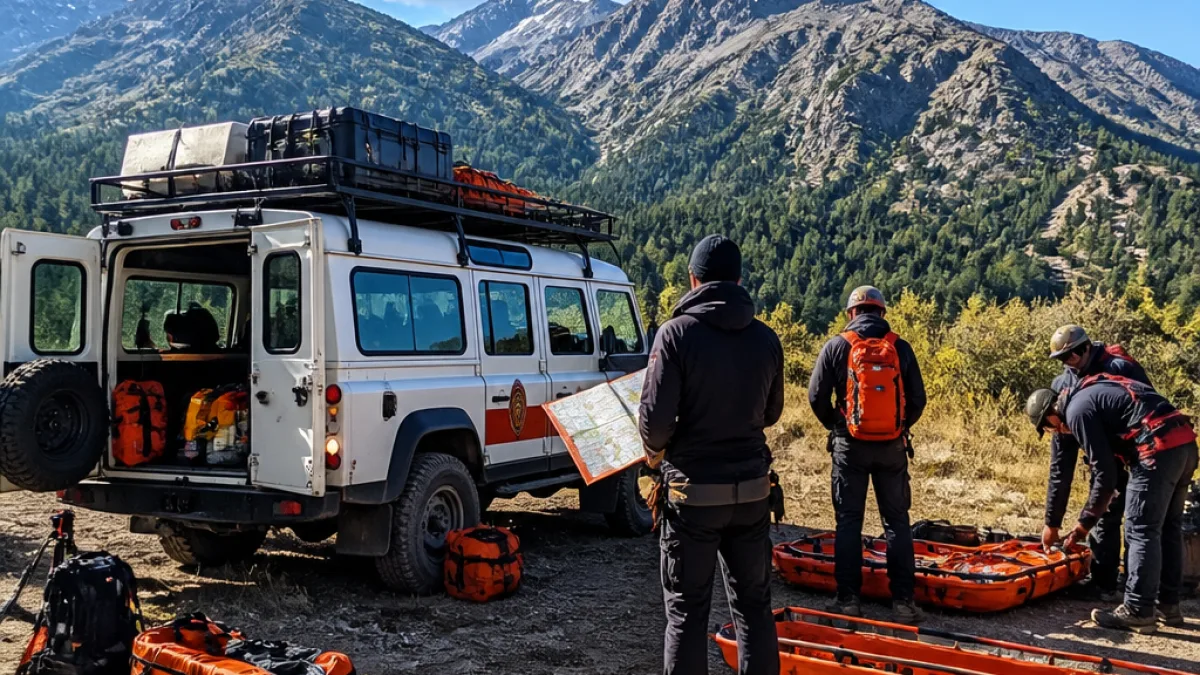
BASIN, Wyo. — When volunteers for Big Horn County Search and Rescue answer a call, they head into a county that is large, remote and popular with recreationists. The department — entirely volunteer-staffed — now finds itself a national finalist for a prize that could provide a much-needed vehicle and cash to help sustain operations.
Underdog team draws national attention
The Basin-based organization is one of five finalists nationwide for the 2026 Land Rover Defender Service Awards. The top prize includes a customized Land Rover Defender 130 SUV and $30,000 in cash. For a team that operates on donated time and limited equipment, that windfall would be significant.
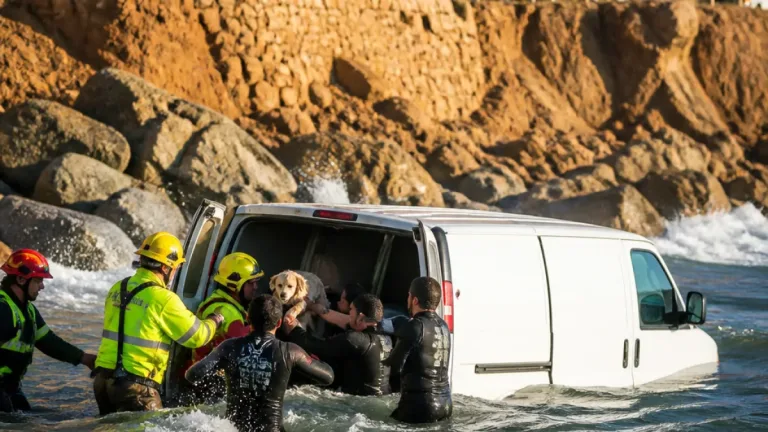
The department is split into two squads — north and south — and is staffed by about 60 volunteers. They cover more than 3,100 square miles of Big Horn County, a largely rural area with fewer than 15,000 residents. Volunteers respond to mountain rescues, vehicle crashes, swift-water incidents, technical rope rescues and helicopter hoist operations, all while holding full-time jobs outside search and rescue work.
“Everybody in the organization right now is a volunteer, 100%. They all have day jobs outside of Search and Rescue. We all do this to give back to our communities,”
The team’s workload has risen as visitation to the Bighorn Mountains has climbed. Volunteers estimate that more than 1 million people visit the mountain range each year — an influx that brings more hikers, campers and other outdoor users who sometimes end up needing rescue services.
Strain from more calls, fewer resources
Big Horn County Search and Rescue saw a record-setting year recently, including a search that lasted nearly a month for a missing hiker. Volunteers described the situation as the kind of sustained pressure that exhausts people and eats equipment life. The team now hopes national recognition — and the prize package — could help them rebuild capacity after budget reductions.
Longtime volunteer Kyle McClure framed the team as the underdog in a competition where some entries have large social followings. “Some of these teams, from my understanding, have more followers on their social media than we have residents in Big Horn County,” he said. “We're the underdog here.”
What the award would mean locally
Volunteers say the Defender 130 — tailored for rescue work — and the cash prize would:
- Replace or supplement aging vehicles used to reach remote incidents.
- Purchase specialized rescue gear that extends capabilities for technical and water rescues.
- Offset operational costs that volunteers currently absorb personally.
Officials did not provide a detailed inventory of current equipment or an exact list of purchases that would be made with the award. Still, the combination of a modern vehicle and targeted funding is widely seen by the team as a practical way to reduce response times and improve safety for both rescuers and those they help.
| Metric | Figure (as reported) |
|---|---|
| Volunteer roster | ~60 |
| County area | >3,100 sq. miles |
| Resident population | <15,000 |
| Annual visitors to Bighorn Mountains | >1,000,000 (estimate) |
| Competition finalists (national) | 5 |
| Top prize | Land Rover Defender 130 + $30,000 |
Volunteers, remoteness and tourism
Big Horn County presents a particular challenge: it is both sparsely populated and a high-traffic recreation destination. That combination magnifies the consequences when something goes wrong. Volunteers describe arriving at scenes after long drives, often across rough terrain, and then working through complex rescues that can require rope systems, water operations and coordination with aerial assets.
“People just underestimate what Big Horn County is as a whole and the remoteness of our area,” a volunteer said. The rise in tourism since 2020 has meant more people unfamiliar with backcountry risks and longer seasons of outdoor activity — each adding to the team’s call volume.
Community stakes and next steps
Award winners will be determined nationally; the Big Horn County volunteers are competing for recognition and support that could blunt the effects of recent budget cuts. Regardless of the outcome, the situation underscores the fragile, volunteer-dependent nature of emergency services across much of rural Wyoming.
For residents and visitors alike, the capacity of teams like Big Horn County Search and Rescue is a quiet public-safety backbone — one that, for now, depends on donated time, local goodwill and the hope that a national prize can translate into practical help.