Real-time tracking, license-plate readers cited in arrest
Chandler police announced Wednesday that Chalina Harrison has been arrested and booked on multiple felonies after two separate robberies in the city earlier this month, including an armed robbery at an ampm convenience store.
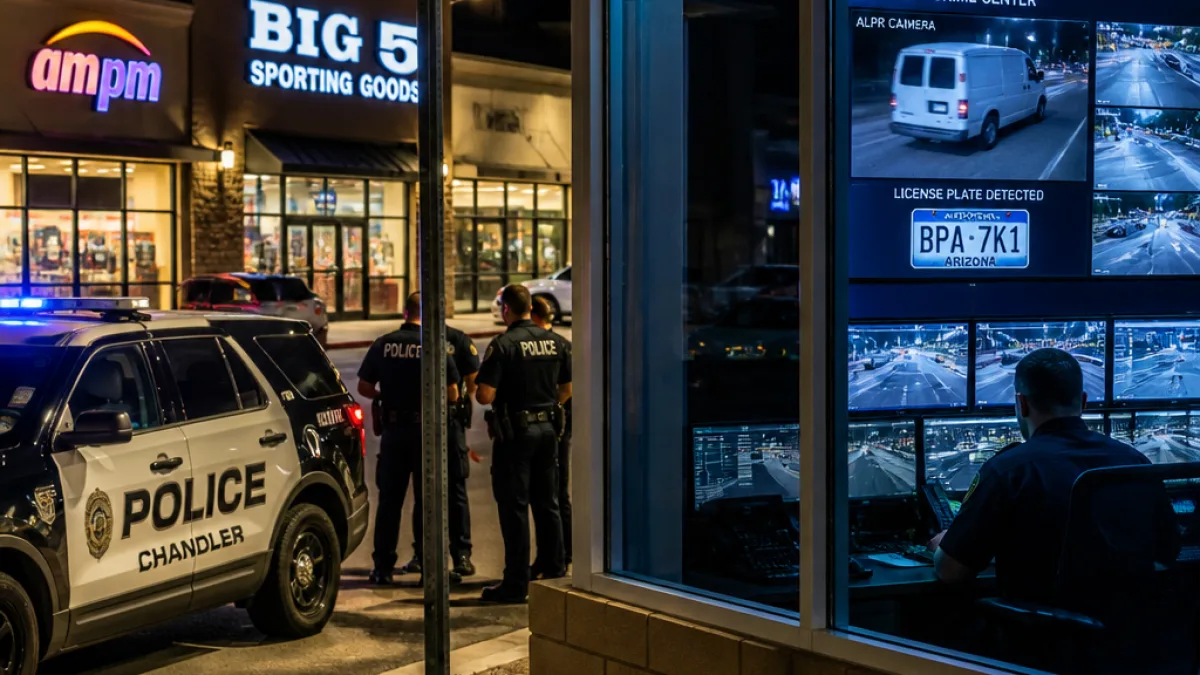
According to the Chandler Police Department and local news reports, the first incident occurred on July 4 when Harrison allegedly entered the ampm, pointed a firearm at an employee and demanded money. Officers say the department’s Real Time Crime Center was able to track the suspect’s van moments after that robbery.
Police released video showing the suspect pointing a gun at an employee and tracking the vehicle through the Real Time Crime Center.
Three days later, license plate recognition technology reportedly alerted officers that the same vehicle had returned to Chandler. Investigators say Harrison then committed a second robbery — this time at a Big 5 Sporting Goods store on Arizona Avenue — and was taken into custody following that incident.
Charges and custody status
Harrison is charged with:
- Two counts of armed robbery
- Two counts of aggravated assault with a deadly weapon
She is being held on a $150,000 bond, according to the reporting agency. The Chandler Police Department released surveillance footage and vehicle-tracking images to the public on social media as part of the investigation.
What tools were used and what they mean locally
The department cited two investigative tools in its account: the Real Time Crime Center and automated license-plate recognition (LPR). The Real Time Crime Center is a technology hub some police departments use to correlate surveillance video, 911 calls and other live data streams. LPR systems scan and compare license-plate information against lists or alerts generated by investigators.
For Chandler residents, those systems are intended to speed officer response and improve the chances of identifying suspects quickly. Civil liberties advocates sometimes raise concerns about scope and retention for LPR and other surveillance tools; however, the police account in this case stresses the technologies were used to track a vehicle linked to violent crimes.
Timeline
| Date | Event |
|---|---|
| July 4 | Alleged armed robbery at an ampm convenience store; vehicle tracked via Real Time Crime Center. |
| July 7 | License-plate recognition alerts officers to the vehicle returning to Chandler; alleged robbery at Big 5 Sporting Goods on Arizona Avenue; arrest follows. |
Local impact and next steps
Robberies at gas stations and retail outlets can heighten community concern because of their visibility and potential for violence. Chandler police have not released additional details about evidence or whether any weapons were recovered, and the case will proceed through the criminal-justice system with arraignments and potential hearings to follow.
Residents with tips or who may have relevant surveillance footage are typically asked by police to contact the department. In similar cases, investigators rely on additional video, witness statements and forensics to build the prosecution’s case.
This arrest underscores how modern investigative tools are increasingly part of routine police work in the East Valley. For people who live and work in Chandler, the episode is a reminder of both the risks of retail crime and the role technology now plays in law enforcement responses.
Authorities have provided public-facing video and images as part of their announcement; any further updates, including charging documents or court dates, are expected to be released through official channels as the case moves forward.