A large Category 5 dust storm moved through the Phoenix metro area and parts of Southwest Arizona after thunderstorms overnight Monday, creating unhealthy air conditions that lingered through much of the day and prompted an Air Quality Alert from the National Weather Service.
What happened and why it matters
Thunderstorms that developed overnight produced strong, gusty winds that picked up vast amounts of dust and carried it across the region for at least 12 hours. While the strongest winds have eased, the dust did not immediately settle out, and officials reported elevated levels of coarse particulate matter (PM-10) — particles large enough to aggravate heart and lung disease, especially among older adults, children and people with asthma.
The storm was described as a Category 5 event on the Phoenix Dust Storm Scale, a local measure that ranks dust storms by intensity and impacts. The combination of persistent dust and sensor readings put the Phoenix area at the top of national air-quality rankings during the event.
Health guidance and monitoring
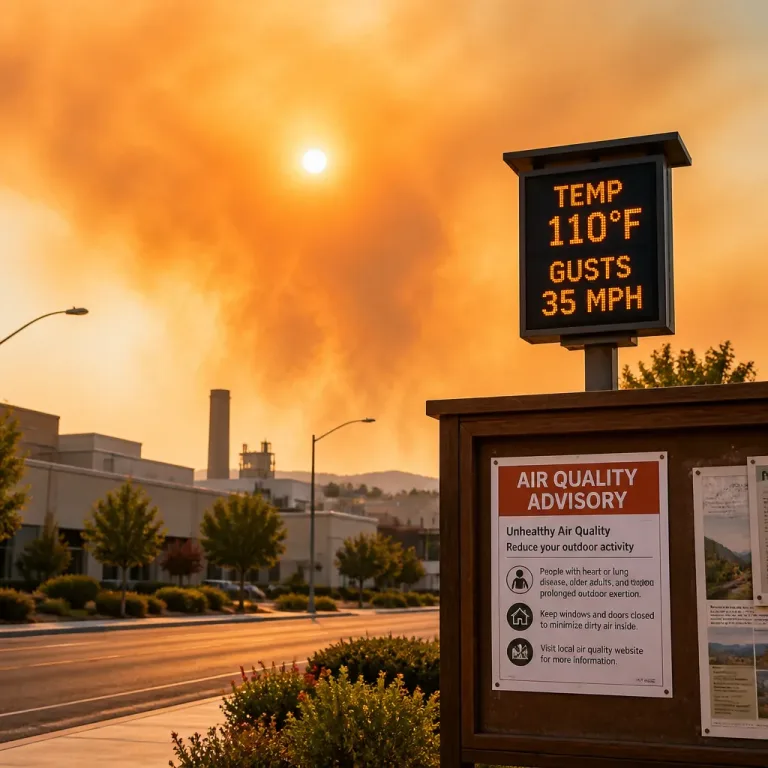
The National Weather Service issued an Air Quality Alert because sustained winds continued to stir dust and could maintain elevated PM-10 concentrations. Public-health guidance during such episodes focuses on limiting exposure, particularly for sensitive groups.
- Check local air-quality monitors that measure coarse particulate matter (PM-10) rather than relying solely on smoke-based indices.
- Limit outdoor exertion if you are older, have heart or lung disease, or have asthma; consider staying indoors with windows closed and air filtration if available.
- Be prepared for a possible repeat event: forecasters noted there was a chance another dust storm could form overnight.
"One important thing to note is that the dust particle is larger than a smoke particle. The sensors used for measuring dust vs. smoke do differ and because of this, if you look at particulate matter sensors for smoke, the air quality appears low."
The distinction matters because some common air-quality displays and apps emphasize fine particulate matter (PM-2.5) associated with wildfire smoke. Dust storms elevate PM-10, which can pose serious short-term health risks even when PM-2.5 readings look moderate.
Local effects and practical steps
Residents across the metropolitan area reported the sky turning an orange-brown color as dust filled the air. Visibility can drop sharply during these events, increasing the hazard for drivers. While emergency response information focused on air quality, dust storms also can reduce roadway safety and complicate travel.
Simple steps can lower risk during and after a dust storm:
- Reduce driving or pull over until visibility improves; use headlights and hazard lights if necessary.
- Keep doors and windows closed; run central air on recirculation if your system allows.
- Use high-efficiency filters in HVAC systems where available, and avoid outdoor exercise or strenuous work.
| Key fact | Why it matters |
|---|---|
| Category 5 dust storm | Indicates an intense event with widespread dust and significant air-quality impacts |
| PM-10 elevated | Can aggravate heart and lung disease; affects older adults, children and people with asthma |
| Possibility of additional storm overnight | Residents should stay alert to updated forecasts and air-quality alerts |
Officials and weather services urged Arizonans to monitor local air-quality data that specifically measures coarse particles and to heed the Air Quality Alert until conditions improve. For many in the valley — particularly those with respiratory conditions — the storm served as a reminder that summer monsoon dynamics can rapidly create hazardous airborne dust across urban and rural areas.
As conditions evolve, local agencies and weather forecasters are expected to update guidance. Residents should check official channels for the latest air-quality alerts and advisories before planning outdoor activities.