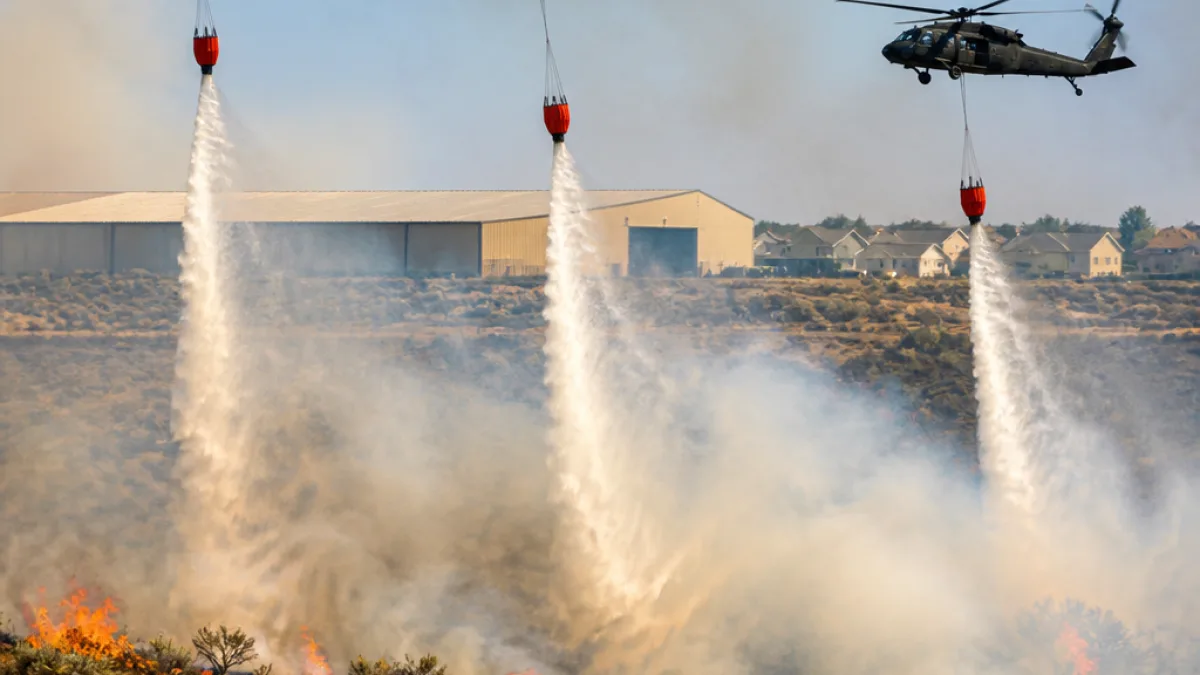
PENDLETON, Ore. — Oregon Army National Guard HH-60M Black Hawk crews carried out concentrated aerial water‑bucket missions Aug. 9 and 10 to help contain the Hagen Fire in Umatilla County, the Oregon Military Department said Friday. The unit delivered more than 500,000 gallons of water over steep, smoke-filled terrain in operations coordinated with Cal Fire and local ground crews.
How the Guard joined the fight
Pilots, crew chiefs and Oregon National Guard maintainers staged out of Army Aviation Support Facility #2 in Pendleton for the two days of missions. Video and photos released by the state show bucket drops from the Black Hawks onto spots where the fire had moved into unburned areas, with crews working alongside Cal Fire military helicopter managers to support firefighters on the ground and protect nearby homes.
Oregon Military Department images credit Maj. W. Chris Clyne, Oregon National Guard public affairs, and highlight members of Golf Company, 1st Battalion, 189th Aviation, including U.S. Army Staff Sgt. Kyle Sanders, Chief Warrant Officer 4 Nathaniel Carter, Chief Warrant Officer 3 Noelan Smith and military liaison Joe Carstensen.
Scale and local impact
The water delivered by the helicopters — characterized by the Guard as more than a half million gallons — is intended to slow the forward progress of the blaze, create defensible space around at‑risk structures and give ground crews a better opportunity to apply direct suppression tactics. Photos show helicopters returning to the Pendleton facility after completing drops and assessing burn scars to determine where follow‑up missions were needed.
- Dates of operations: Aug. 9–10, 2026
- Aircraft used: HH‑60M Black Hawk helicopters
- Primary goals: spot drops on unburned terrain, protection of homes, support for ground crews
Coordination with state firefighting agencies
The operation underscores how military aviation assets are often integrated into wildfire response in the West, particularly when terrain or smoke conditions make other suppression tactics hazardous or impractical. National Guard aircrews typically work with state and local incident commanders; in this instance, the photos and captions refer to liaison efforts with Cal Fire military helicopter managers and Oregon Department of Forestry staffers in the Eastern Oregon area.
| Item | Detail |
|---|---|
| Fire | Hagen Fire |
| County | Umatilla |
| Facility | Army Aviation Support Facility #2, Pendleton |
| Aircraft | HH‑60M Black Hawk |
| Volume of water dropped | More than 500,000 gallons |
What residents should know
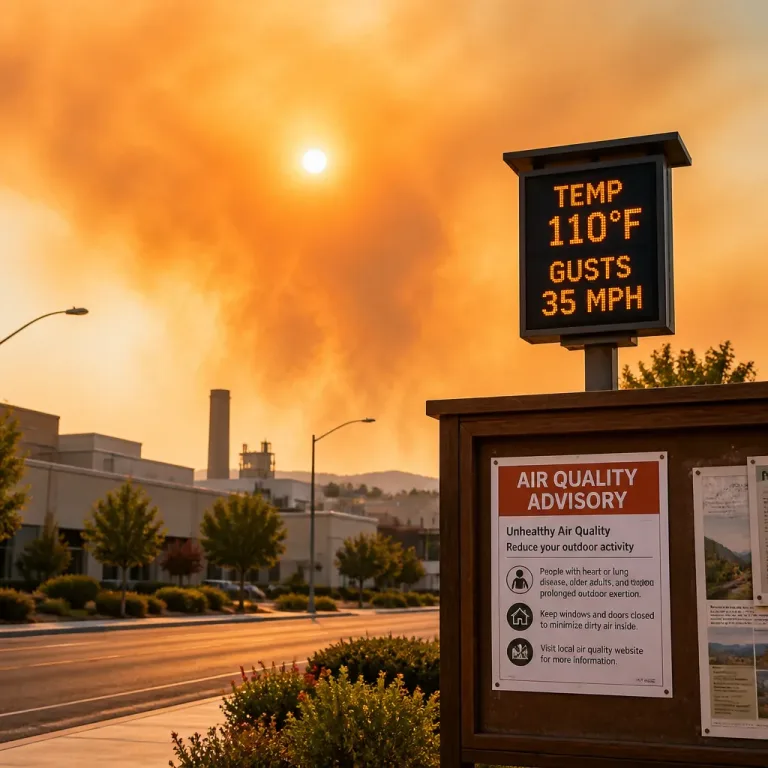
For people living near the Hagen Fire footprint, the Guard’s aerial drops can reduce immediate risk to structures and provide breathing room for ground crews to strengthen containment lines. Still, aerial support does not replace evacuations or other public-safety directives issued by local incident commanders. Residents should follow guidance from Umatilla County emergency officials and check local alert systems for evacuation notices, road closures and air-quality advisories.
Photos published by the Oregon Military Department offer a rare, close-up view of the logistics and personnel involved in military aviation firefighting: crew chiefs peering into dip sites, helicopters returning to base and maintenance crews preparing aircraft for repeat sorties. The images are a reminder that wildfire response is a patchwork of aircraft, engines, hand crews and planners, often drawn from multiple agencies and jurisdictions.
As air operations continue to be a key tool in Oregon’s wildfire toolbox, state and federal leaders will keep balancing rapid aerial interventions with long-term investments in prevention, fuels treatment and community preparedness — all while responding to the immediate threat the Hagen Fire poses to Eastern Oregon residents.