Smog meets smoke: what Salem residents need to know
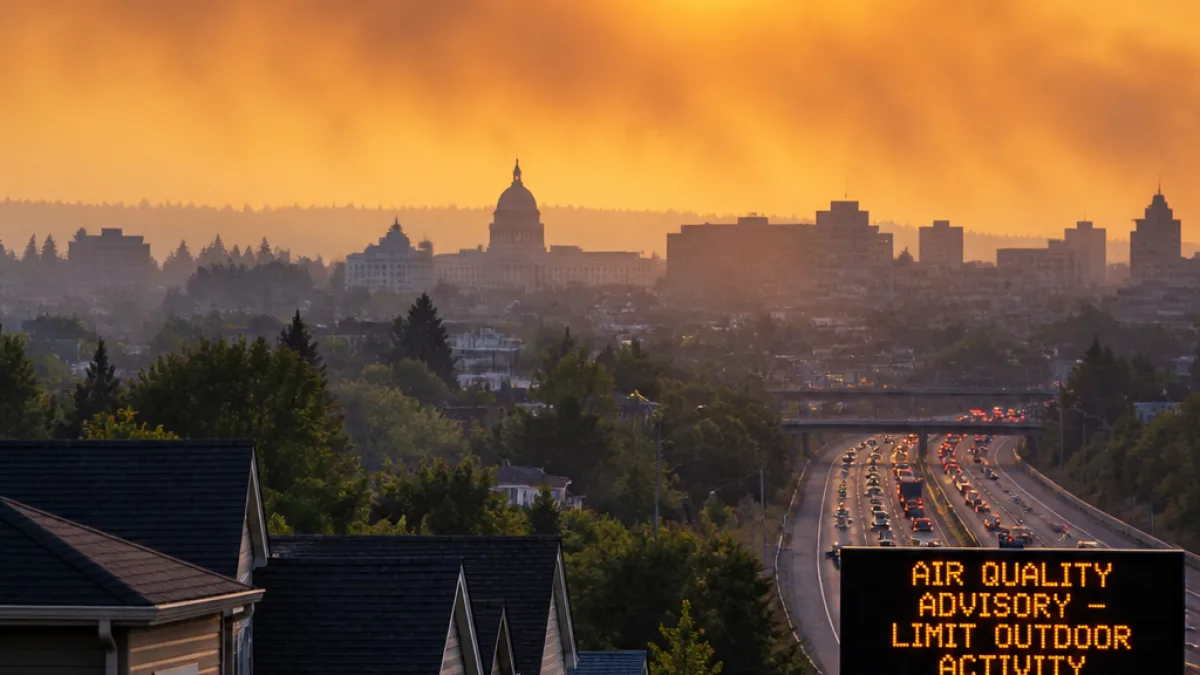
Salem woke to a layered air problem on Aug. 5, 2026: wildfire smoke that has lingered over the Willamette Valley for days is now being joined by rising ozone (smog) levels, prompting the Oregon Department of Environmental Quality to issue an air-quality advisory for the city and several other population centers.
The DEQ advisory, issued Aug. 5 and expected to last through 10 p.m. on Aug. 6, names Salem alongside the Portland metro area, Medford-Ashland, Hermiston and Ontario. The Washington Southwest Clean Air Agency issued a similar smog advisory for the Vancouver metro area in Clark County. The advisories come after winds shifted on Aug. 3, pushing smoke west of the Cascades and maintaining unhealthy particulate levels across much of the Willamette Valley for several days.
Ozone forms differently than smoke, but the two combine to deepen public-health risks. DEQ explains that hot temperatures and light winds allow pollution emitted from vehicles, gas-powered equipment, and chemical solvents in paints and aerosols to react in sunlight and produce ozone. That process can raise afternoon and early-evening ozone concentrations even when morning monitors look relatively benign.
DEQ warned the ozone pollution could be "unhealthy for sensitive groups," including children, pregnant people, older adults and people with heart or respiratory conditions.
Practical steps and local impacts
Health officials offer targeted guidance for people most at risk and for residents who can help reduce emissions that feed smog formation. Key recommendations include:
- Keep windows and doors closed at home and use a filter that removes fine particulate matter (PM2.5) if possible.
- Avoid strenuous outdoor activity during high pollution periods — particularly afternoons and early evenings when ozone tends to peak.
- Those with asthma, heart disease, pregnant people, small children and older adults should stay indoors or leave affected areas until conditions improve.
- Reduce contributions to smog: limit driving, use public transit or carpool, avoid engine idling, refuel vehicles in cooler evening hours, and postpone painting, aerosol projects and yard work with gas-powered equipment.
DEQ provides near-real-time conditions via an online map and a mobile app (search OregonAir), which Salem residents should check frequently because ozone and smoke concentrations can change through the day.
Local data at a glance
| Area | Advisory | Expected through |
|---|---|---|
| Salem | Smog/ozone advisory; concurrent unhealthy smoke in Willamette Valley | 10 p.m., Aug. 6, 2026 |
| Portland metro | Smog/ozone advisory | 10 p.m., Aug. 6, 2026 |
| Medford-Ashland | Smog/ozone advisory | 10 p.m., Aug. 6, 2026 |
Short-term exposure to wildfire smoke and ozone can aggravate breathing problems and irritate eyes and noses; the most harmful component of smoke is the fine particulate matter (PM2.5), which can penetrate deep into lungs and enter the bloodstream. Ozone, meanwhile, is a secondary pollutant — produced by reactions in heat and sunlight — that intensifies during warm, calm afternoons.
For many Salem residents this advisory is a reminder of a recurring contradiction: even as communities take steps to cut emissions, summers of high heat and distant wildfires can tip local air from merely unpleasant to hazardous. The practical result is familiar — school and exercise plans altered, outdoor workers taking precautions, and an added strain on people with chronic conditions.
City agencies and health providers typically monitor such advisories and may issue additional guidance if conditions worsen. In the meantime, DEQ’s monitoring tools and the simple steps above are the best, immediate defenses against a day when the air both looks and feels wrong.
Residents with questions or concerns about local conditions can consult the DEQ map at https://oraqi.deq.state.or.us/home/map or download the OregonAir app for push updates.
Reporting from Salem. This item is based on the DEQ advisory and local monitoring through Aug. 5, 2026.