
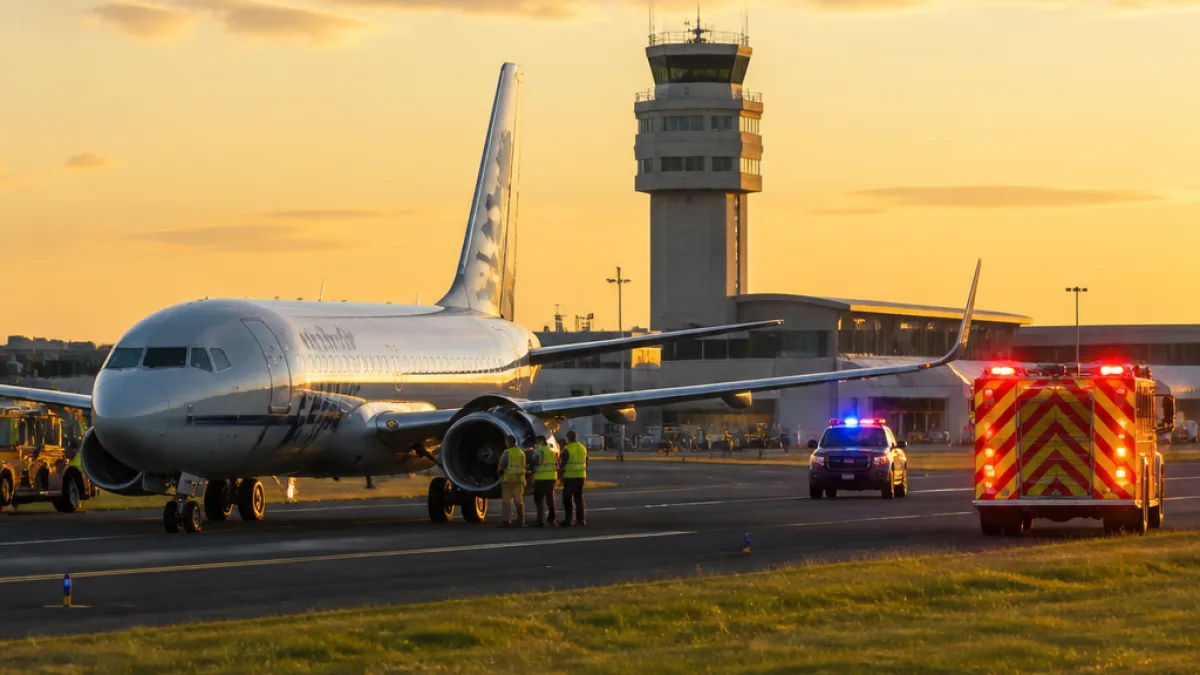
An Alaska Airlines Boeing 737-800 en route from southern California to Seattle made an unscheduled landing at Eugene Airport (EUG) on July 23 after the flight crew shut down a left-hand engine midflight following an oil warning.
What happened in the air
The aircraft, registered N563AS, was cruising at about 36,000 feet (FL360) when, roughly 90 nautical miles south-southeast of Eugene, the crew received a "
low oil quantity and pressure warning" for the left-hand CFM56 engine. Pilots followed procedures and powered the affected engine down as a precaution, then diverted to Eugene.
The flight, operating as AS471 from Santa Ana, California, to Seattle, Washington, was carrying 161 passengers and six crew members at the time. With the right-hand engine still operating, the crew continued to a safe single-engine landing on Runway 34L about 25 minutes after initiating the diversion.
Aftermath at Eugene Airport
No injuries were reported among passengers or crew. The affected aircraft was taken out of service at Eugene for inspection and maintenance to determine the cause of the low oil indication. Passengers were transferred to a replacement Boeing 737-800, registered N597AS, and continued to Seattle roughly four hours later than originally scheduled.
The event highlights the design and certification standards for twin-engine jets such as the 737-800, which are able to continue flight safely on a single engine. Eugene's runway and handling facilities served as the diversion airport, allowing the crew to land and mechanics to begin inspections without further risk to passengers.
- Flight: Alaska Airlines AS471 (Santa Ana to Seattle)
- Aircraft: Boeing 737-800 (N563AS), left CFM56 engine shut down
- Occupants: 161 passengers, 6 crew
- Location of event: ~90 nmi SSE of Eugene, cruising at FL360
- Outcome: Landed safely on Runway 34L; replacement aircraft arrived ~4 hours late
Local context and implications
For Eugene, diversions like this are uncommon but not unprecedented. The airport’s ability to accept the 737-800 and accommodate an unscheduled maintenance event matters to airlines and regulators; it prevents aircraft from being forced to attempt longer single-engine flights to larger hubs. Airport operations personnel and local maintenance crews were briefly mobilized to support the aircraft on the ground.
From a passenger perspective, the incident demonstrates the redundancy built into commercial jets and the emphasis on conservative decision-making by flight crews: when instruments indicate a potential lubrication problem, the safe choice is to shut the engine down and land rather than press on. The precautionary shutdown cost passengers time but avoided greater risk.
| Item | Detail |
|---|---|
| Origination | Santa Ana, California |
| Destination | Seattle, Washington |
| Diverted to | Eugene Airport (EUG) |
| Passengers/Crew | 161 / 6 |
| Delay to final arrival | Approximately 4 hours |
Investigations into the exact mechanical cause will be conducted by the airline and maintenance personnel; the aircraft was withdrawn from service for those inspections. Meanwhile, Eugene Airport operations returned to normal once passengers were reboarded and the disabled aircraft was secured.
The episode is a reminder that even routine-sounding warnings — in this case, an oil pressure and quantity indication — can quickly change a scheduled flight into an unscheduled diversion. For travelers and the local community, the outcome was the best possible under the circumstances: a safe landing and orderly continuation of the journey.