North Texas’ run as a World Cup host was less a solo sprint and more a relay, local officials told a Fort Worth Chamber panel Tuesday — and the handoffs worked.
Coordination across agencies created a playbook
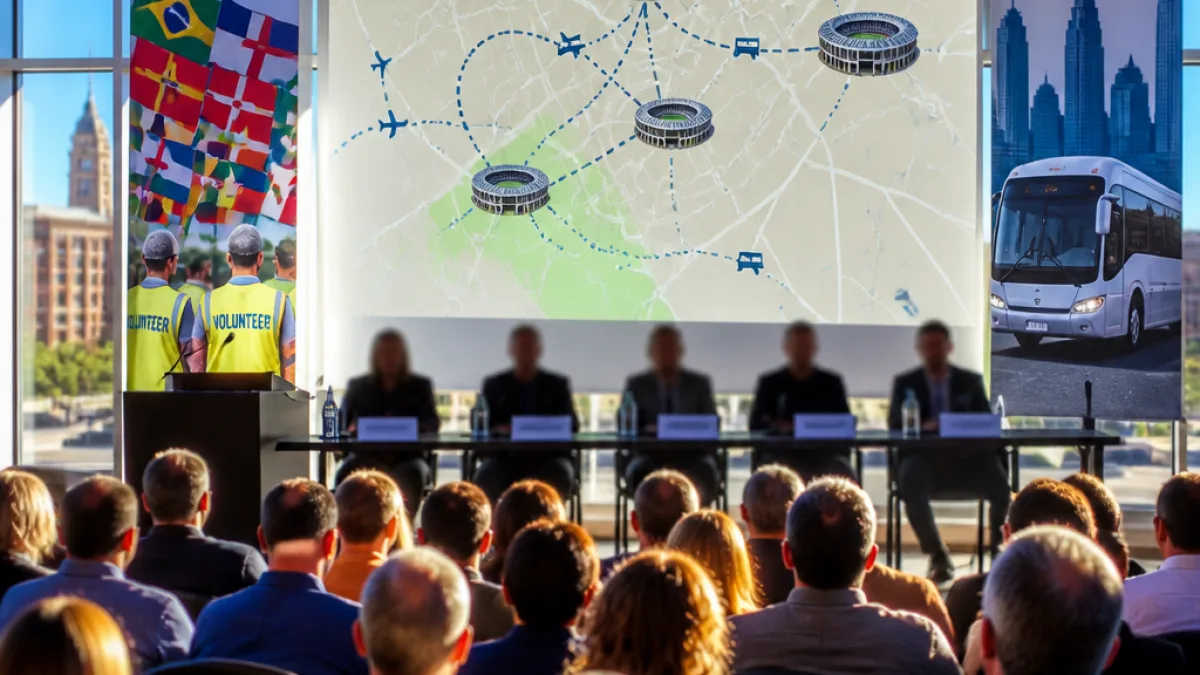
Panelists who helped organize the region’s nine World Cup matches in June and July described an unprecedented level of coordination between cities, airports, federal and state agencies and the business community that, they said, made the tournament run smoothly.
Monica Paul, president of the North Texas FIFA World Cup Organizing Committee and executive director of the Dallas Sports Commission, said the planning process built relationships that did not exist before the event. Those ties paid off once the matches began and large numbers of international visitors arrived.
“This is a process that didn’t exist,”
The remark captured a recurring theme: organizers treated the World Cup as an opportunity to create durable systems for transportation, security and funding rather than a one-off event.
Airport operations and hospitality both got high marks
Jerome Woodard, chief operating officer of Dallas Fort Worth International Airport, emphasized that hospitality was as important as logistics. He said staff and volunteers worked to welcome fans from around the world, a tone that complemented the nuts-and-bolts efforts of moving people efficiently through terminals and into shuttle services.
Drew Hays, executive director of the Fort Worth Sports Commission, described how Tarrant County communities rallied behind a locally branded effort to greet visitors. Fort Worth tourism officials launched the “Howdy” campaign, which dozens of area businesses embraced to give fans a consistent, visible welcome across the county.
Local businesses pitched in — and saw the benefit
The panelists highlighted how the hospitality push extended into the private sector.
- About 180 Fort Worth area businesses participated in the “Howdy” campaign with welcome banners and window clings.
- Watch parties and fan zones, including events at Sundance Square and the Fort Worth Stockyards, amplified the visitor experience.
- Volunteer teams provided both practical support and a friendly local face that organizers said mattered to international guests.
Those efforts, panelists argued, produced tangible effects: smoother traffic flows to match venues, fuller hotel occupancy for parts of the tournament and visible community engagement that showcased North Texas hospitality.
Key takeaways and who led them
Organizers distilled several practical lessons from the experience — many of which can be applied to future large-scale events in the region.
| Takeaway | Lead organization |
|---|---|
| Establish federal, state and local agency relationships early | Dallas Sports Commission / North Texas FIFA World Cup Organizing Committee |
| Prioritize hospitality and volunteer engagement | DFW Airport & Local Tourism Offices |
| Create unified local branding for visitor-facing efforts | Fort Worth Tourism ("Howdy" campaign) |
Longer-term benefits may outlast the final whistle
Panelists said the relationships and processes set up for the World Cup will outlive the tournament itself. Establishing clear lines of communication among city and state agencies, federal partners and private businesses created what Monica Paul characterized as a new regional planning infrastructure.
For travel and event managers, that infrastructure could translate into faster decision-making and more reliable resource sharing when future events arrive. For local businesses that invested in signage and watch-party programming, the payoff came through increased exposure to international visitors and stronger community ties.
What comes next
Organizers did not lay out a formal list of next steps during the panel, but the discussion suggested priorities: codifying the relationships that emerged during World Cup planning, documenting operational lessons for transportation and security teams, and converting the goodwill of volunteer programs into recurring community-engagement initiatives.
For North Texans who turned out to cheer or work the events, the panel offered a simple message: the region’s success was intentional and collaborative. As one organizer put it, the process might not have existed before — but it does now.
That matters because large international events have a habit of coming back around. When they do, North Texas officials said, they will be less likely to improvise and more likely to draw from the playbook they wrote this summer.