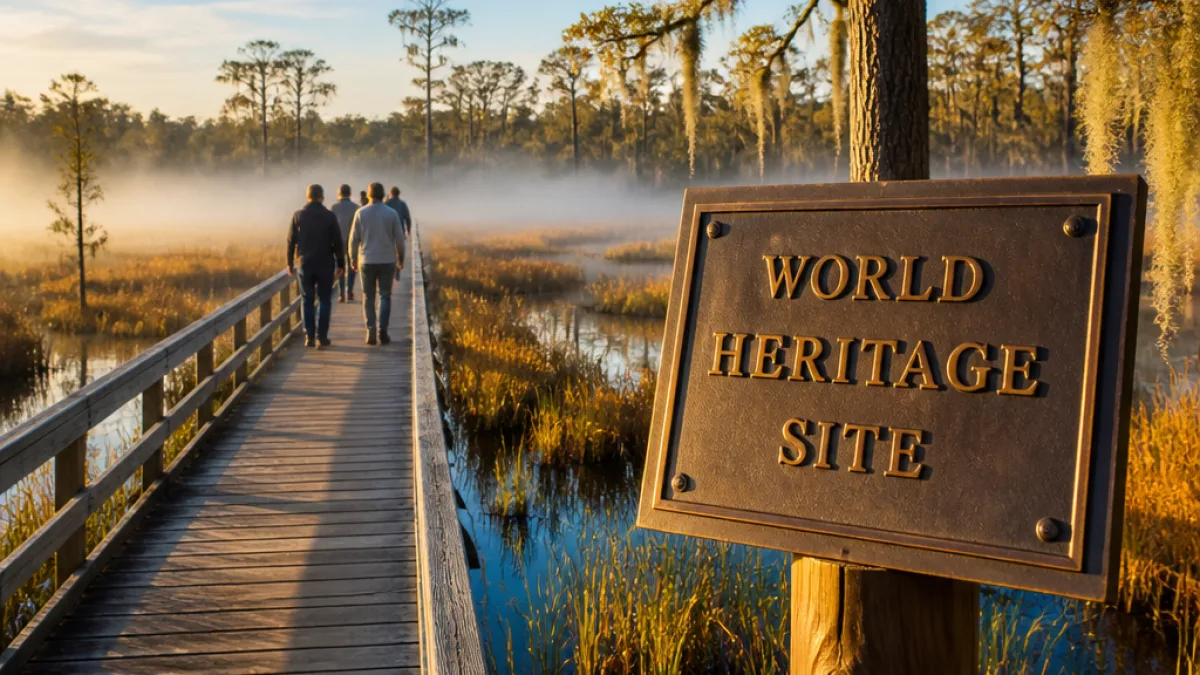
FOLKSTON, Ga. — The Okefenokee Swamp has received a global conservation honor, joining UNESCO’s World Heritage list as the United States’ 27th site and marking several firsts for the state and the refuge system.
Historic recognition after decades-long effort
Officials announced Saturday that the Okefenokee National Wildlife Refuge has been inscribed as a World Heritage Site. The designation is the first for a property managed by the National Wildlife Refuge System, the first World Heritage Site located in Georgia, and only the second that spans Georgia and Florida. It is also the first natural site added to the U.S. World Heritage list in more than 30 years.
The recognition crowns what refuge officials described as a 44-year effort supported by partners, community investors and refuge staff who steward the landscape.
Why the Okefenokee qualifies
The Okefenokee is a 438,000-acre wetland — described in local and national reporting as the largest intact ecosystem of its kind in North America — and hosts more than 1,200 unique species of plants and animals. It contains the largest remaining undisturbed peat deposit on the North American Coastal Plain, a feature that contributed to its global significance.
Advocates and scientists have long argued the swamp’s combination of biodiversity, intact hydrology and cultural significance — including ancestral connections for Muskogean peoples — make it a rare landscape on a global scale. Supporters say the designation will increase protections, attract research interest and expand sustainable tourism.
Local leaders and lawmakers weigh in
“For generations, Georgians have enjoyed all that the Okefenokee National Wildlife Refuge has to offer as a valued natural treasure,”
— Gov. Brian Kemp, in a statement on the UNESCO announcement.
U.S. Sen. Jon Ossoff and a bipartisan group of Georgia members of Congress pushed the Department of the Interior in 2023 to pursue UNESCO recognition. Ossoff said the designation will help protect the swamp, strengthen surrounding rural communities and promote economic growth through increased visitation.
What the designation means on the ground
World Heritage inscription does not change land ownership or automatically create new regulations, but it carries international recognition that typically brings:
- Heightened conservation visibility and potential for international research partnerships.
- Increased tourism interest from national and international visitors.
- Potential economic benefits for nearby towns through outdoor recreation and hospitality services.
Refuge managers said the inscription was possible because of long-term partnerships and local investment in stewardship. They stressed that increased visitation must be managed carefully to protect fragile peatlands, rare habitats and cultural sites.
Quick facts
| Feature | Detail |
|---|---|
| Size | 438,000 acres |
| Species | 1,200+ unique plant and animal species |
| U.S. World Heritage rank | 27th site |
| Notable firsts | First site in Georgia; first National Wildlife Refuge System property listed; first U.S. natural site added in 30+ years |
Balancing opportunity and protection
Local leaders and conservation groups have framed the designation as an opportunity to bolster Southeast Georgia’s economy while deepening protections for an ecologically sensitive landscape. At the same time, managers caution that international attention can lead to visitor pressures that, if unmanaged, could threaten the wetland’s peat soils, water chemistry and wildlife.
Advocates hope the UNESCO label will channel additional resources for monitoring, habitat restoration and community-led stewardship initiatives. They also say it could enhance educational programming that emphasizes the swamp’s natural and cultural heritage.
Looking ahead
As the Okefenokee moves from campaign to stewardship under the World Heritage banner, the challenge for local and federal partners will be to translate global recognition into sustained funding, careful visitor management and stronger protections that respect both ecological limits and the needs of nearby rural communities.
For Folkston and the surrounding counties, the designation is a milestone in local reinvention — an opportunity to build on natural assets while safeguarding the swamp that has long defined the region’s landscape and identity.