The Okefenokee Swamp in southern Georgia was formally inscribed on the UNESCO World Heritage List Saturday during meetings in Busan, South Korea, elevating the sprawling peatland and wildlife refuge to the same roster that includes some of the world’s best-known natural and cultural sites.
International recognition for a vast freshwater ecosystem
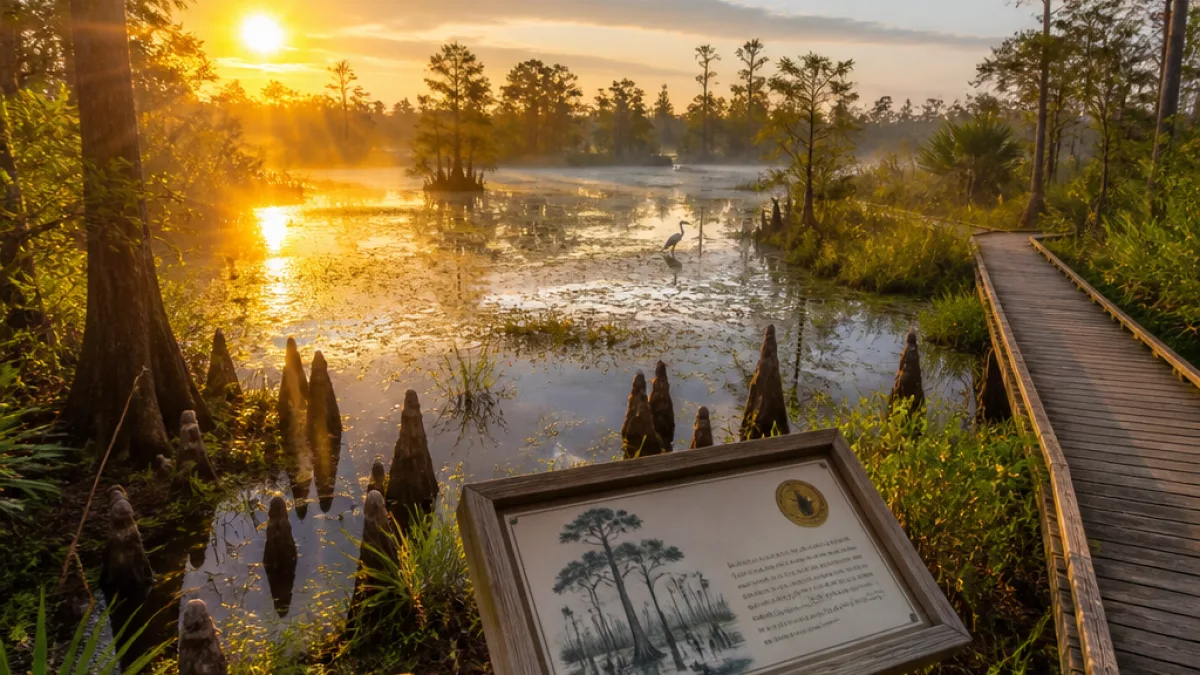
UNESCO cited the Okefenokee as one of the globe’s largest freshwater ecosystems, characterized by an extensive network of wetlands that sustain notable biodiversity and function as the headwaters for two major rivers. The agency highlighted the swamp’s largely intact peat beds, which preserve a roughly 5,000-year record of environmental change, making the landscape both ecologically significant and scientifically valuable for long-term climate and environmental study.
What the designation means locally
For communities near the Okefenokee National Wildlife Refuge, the UNESCO decision is likely to reshape conversations about stewardship, visitation and regional identity. Inscription on the World Heritage List typically raises a site’s global profile, which can lead to increased visitation, new conservation funding opportunities and international partnerships. At the same time, some local residents have expressed concerns about perceived increases in outside involvement in how the swamp is managed.
"We accept this inscription not as a finish line, but as a commitment to keep the Okefenokee wild, resilient, and thriving for generations to come,"
Kim Bednarek, executive director of the nonprofit Okefenokee Swamp Park, which worked with federal officials on the refuge’s nomination, framed the designation as a motivation to strengthen conservation work rather than an end point.
How the swamp compares on the World Heritage List
The UNESCO committee’s session in Busan also added a range of other sites from around the world, underscoring the international scale of the nomination process. Among those inscribed at the same meeting were a 13th-century Buddhist temple in Thailand and coastal tidal flats in western South Korea.
| Site | Country | Type |
|---|---|---|
| Okefenokee Swamp | United States (Georgia) | Natural |
| Wat Phra Mahathat Woramahawihan | Thailand | Cultural |
| Tidal flats | South Korea | Natural |
Practical implications and local priorities
Designations such as this often prompt a series of practical next steps at the state and federal levels. Managers of the refuge and partner organizations will likely review and, where necessary, bolster plans for visitor management, habitat protection and scientific monitoring to meet the expectations tied to World Heritage sites. Federal oversight of national wildlife refuges remains in place, while UNESCO status draws international attention and potential technical support.
Local stakeholders face a mix of opportunities and challenges. Increased tourism can support businesses in nearby towns and boost conservation funding, but it also requires careful infrastructure planning to prevent habitat degradation. Advocates for the swamp stress that any growth in visitation must be matched by stronger protections for the refuge’s ecosystems and cultural values.
- Conservation: UNESCO recognition strengthens the scientific case for continued habitat protection and long-term environmental monitoring.
- Tourism: The site may see a rise in global visitors, requiring updated visitor plans and local coordination.
- Local governance: Communities and managers will need to balance increased attention with preservation of traditional uses and local autonomy.
Context within broader UNESCO deliberations
The Busan meetings are evaluating dozens of nominations worldwide, including high-profile candidates such as D-Day landing beaches, Mount Olympus in Greece and the ancient Japanese capitals of Asuka-Fujiwara. The Okefenokee’s inclusion on the list places the refuge alongside nationally iconic U.S. landmarks on the global stage, reflecting its combined ecological value and the depth of its environmental record.
As Georgia adapts to this new status, local leaders, conservation organizations and residents will chart the next phase for the swamp — seeking to leverage the protection and prestige that comes with World Heritage recognition while ensuring the refuge remains wild and resilient for future generations.
Reporting from Busan and Georgia continues as agencies and local stakeholders outline concrete plans tied to the inscription.