
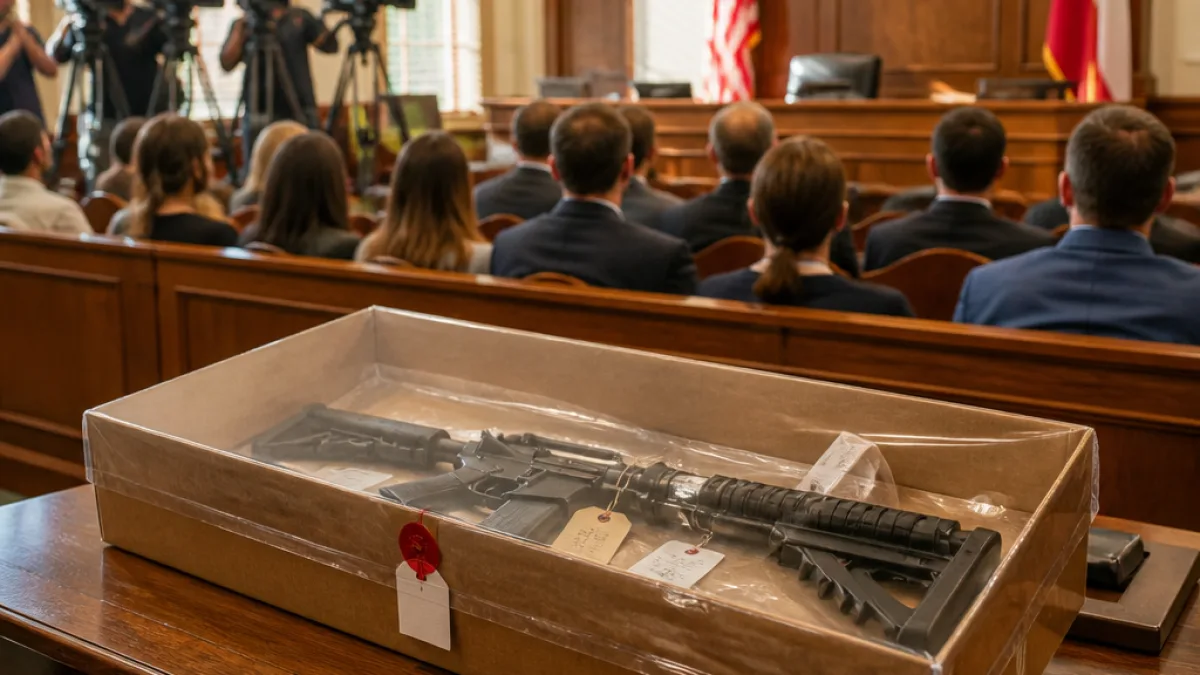
The father of the teen who carried out the Sept. 4, 2024, mass shooting at Apalachee High School was sentenced to 15 years in prison Thursday, in what prosecutors and defense attorneys said was the first time a Georgia parent has been convicted in connection with a school shooting.
Historic conviction follows earlier life sentence for teen shooter
Colin Gray, 55, was convicted in March on 27 counts including second-degree murder, involuntary manslaughter, reckless conduct and cruelty to children. The sentence came days after his son, Colt Gray, 16, was sentenced to life in prison after pleading guilty to 55 charges tied to the Sept. 4, 2024, attack at Apalachee High School.
During his roughly two-week trial, Colin Gray testified that he had given his son the rifle as a Christmas present and said he had no idea his son was capable of carrying out a mass shooting. In court he said, "I struggle with it every day," describing the emotional toll of the events and the loss suffered by victims and their families.
"I struggle with it every day," he testified, describing the emotional toll of the tragedy.
Prosecutors say father should have foreseen risk
Prosecutors told jurors the case turned on who provided the weapon and whether the father had enabled the attack. "The case is about who armed Colt and who enabled him to do what he did," prosecutor Patricia Brooks said during closing arguments, according to court reporting.
Judge Nicholas Primm, presiding at the sentencing hearing, acknowledged the "historic and divisive nature of the case" and criticized Gray's parenting, saying it had become "more and more obvious that something bad was going to happen" before the shooting. Still, the judge noted that the father did not intentionally plan harm and did not pull the trigger.
Under Georgia law, the most serious conviction in the case, second-degree murder, carries a potential prison term of up to 30 years. The 15-year sentence handed down to Colin Gray falls within that statutory framework and reflects the judge's effort to balance culpability and intent.
Charges and outcomes
The trial jury returned a guilty verdict on multiple counts after less than two hours of deliberation. The convictions included a mix of felony and misdemeanor counts tied to the acquisition and provision of the firearm and the resulting deaths and injuries at the school.
| Defendant | Convictions | Sentence |
|---|---|---|
| Colin Gray (father) | 27 counts (including second-degree murder, involuntary manslaughter, reckless conduct, cruelty to children) | 15 years in prison |
| Colt Gray (son) | Plead guilty to 55 charges (including felony murder, aggravated assault, cruelty to children) | Life in prison |
Legal significance and community impact
Prosecutors and defense attorneys agreed the case was a first for Georgia — the first time a parent was charged, convicted and punished in relation to a school shooting under the state's statutes. That distinction elevates the case from a local criminal matter to one likely to be cited in future prosecutions, legislative debates over gun safety and parental responsibility, and civil claims related to school violence.
For the families of the victims and for the Apalachee community, the back-to-back sentences — the juvenile's life term followed by the father's 15-year prison term — represent legal closure of a sort, though judges and lawyers acknowledged that no sentence can fully repair the harm done. The emotional testimony at trial and the judge's remarks at sentencing underscored the human toll that preceded the legal reckoning.
What this means going forward
Legal experts and lawmakers will likely scrutinize the case for precedent. The conviction demonstrates how Georgia's more recent additions to criminal statutes can be applied to parents or guardians who provide firearms used in violent crimes. It also may inform school safety policies, risk assessments used by families, and conversations among legislators weighing changes to criminal liability and gun storage laws.
- Key legal point: Second-degree murder in Georgia carries up to 30 years in prison.
- Conviction scale: The father was found guilty on 27 counts; the son pleaded guilty to 55 charges.
- Community effect: The case is likely to shape future prosecutions and public debate over parental responsibility and firearm access.
The sentencing marks a consequential moment in Georgia’s criminal justice landscape — one that will be analyzed by prosecutors, defense lawyers and policymakers as the state continues to grapple with how to prevent gun violence in schools and hold adults accountable when weapons in their possession are used to harm children and communities.