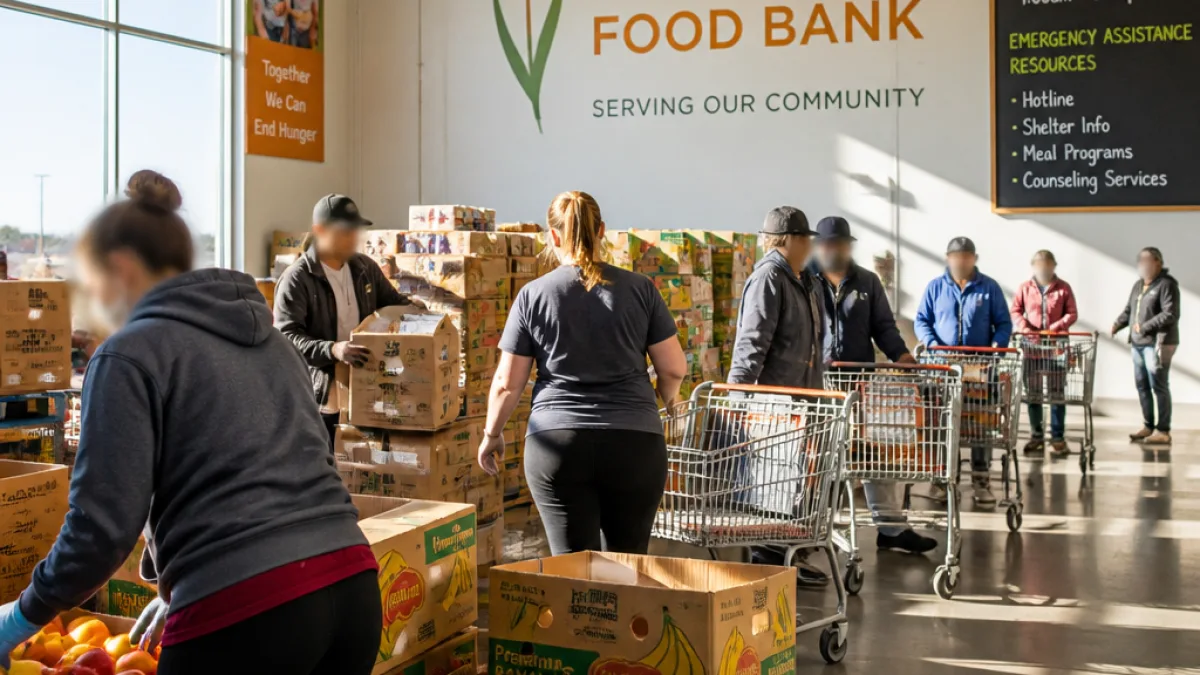
FARGO — The Great Plains Food Bank says a record number of people turned to its network of pantries over the past year, underscoring growing financial pressure across North Dakota and neighboring Clay County, Minnesota.
For the fiscal year that ended June 30, the food bank reported that more than 186,000 people accepted assistance — a 16% increase from the prior year. The organization also distributed about 15.4 million pounds of food, up 4.5% from the previous year.
Drivers behind rising need
Ann Prifrel, chief executive officer of the Great Plains Food Bank, said in an interview that higher costs for essentials — including food, fuel and insurance — have pushed people who work into the network for help. She noted federal policy changes and declines in some federal supports also contributed to the surge.
“Our neighbors are struggling to make ends meet,” Prifrel said.
Prifrel pointed to cuts in the Supplemental Nutrition Assistance Program as one factor. She described a concrete example of a family whose SNAP benefits fell from about $200 a month last year to roughly $25 a month after federal changes and the disruption tied to the government shutdown last year.
The food bank also saw a reduction in the amount of food it receives from federal programs such as The Emergency Food Assistance Program, adding strain to its supply while demand climbed.
Local support and operational pressures
Volunteers and donors have helped cushion the need. Prifrel said financial and food donations from individuals and partner agencies enabled the food bank to keep up with requests despite rising costs, including higher gasoline expenses to move food across its service area.
State support played a role during a particularly difficult stretch: the food bank received more than $900,000 from the state of North Dakota during the federal government shutdown, funding Prifrel said helped it weather the interruption until federal benefits restarted.
At the same time, the organization leaned on volunteer efforts in communities across the state. A photograph published with the food bank’s reporting shows Linda Roberson, a volunteer at the Dream Center in Bismarck, preparing meals alongside other volunteers — a reminder of the human labor behind distribution.
Numbers at a glance
- People served: 186,000+ (record high)
- Year-over-year increase: 16%
- Pounds distributed: 15.4 million (up 4.5%)
- Geographic reach: North Dakota and Clay County, Minnesota
| Metric | Current year | Change from prior year |
|---|---|---|
| People served | 186,000+ | +16% |
| Pounds distributed | 15.4 million | +4.5% |
Who’s being affected
Prifrel emphasized that many of those seeking help are working households facing higher living costs. The surge was not limited to one demographic; rather, the food bank is seeing a broad swath of neighbors — families, seniors and people in steady jobs — needing short-term and longer-term assistance.
The drop in federal supports and programmatic shifts has a ripple effect: lower SNAP payments and reduced allocations from federal commodity programs mean more households turn to local pantries, and those pantries must stretch donations and purchasing power further.
What this means for residents
For North Dakotans, the food bank’s data signal a few practical realities:
- Local pantries may experience longer lines and reduced variety of donated goods.
- Neighbor-to-neighbor support — volunteering and donations — helps keep distribution flowing.
- State and federal policy choices on nutrition programs can have immediate local consequences.
Prifrel expressed gratitude for community donors and volunteers who helped meet needs through the year but warned that continued pressure could require expanded resources.
The Great Plains Food Bank’s report is a reminder that economic pressures beyond the urban centers are reshaping demand for basic services across the state. As North Dakotans face higher costs for everyday necessities, local networks of volunteers and nonprofit staff remain a crucial backstop.
—
For information on how to support local food distribution or to find a pantry near you, contact the Great Plains Food Bank or visit their network partner listings online.