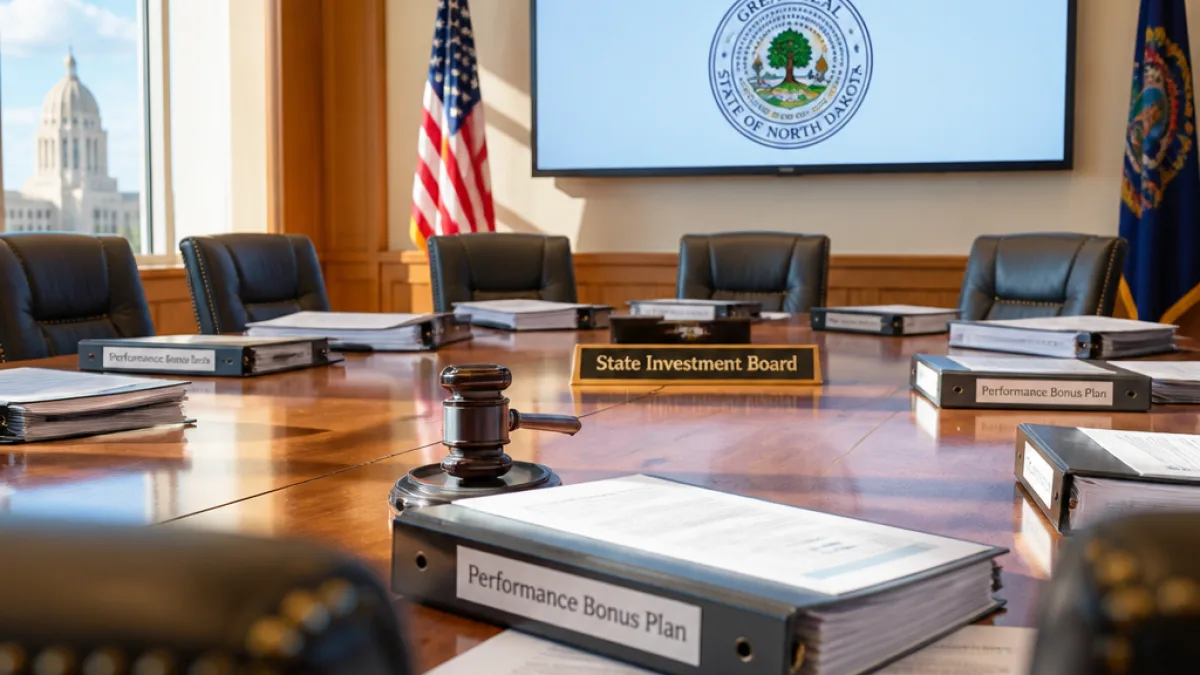
BISMARCK — A state board on Wednesday gave unanimous approval to a revised performance bonus program for employees of the office that oversees North Dakota’s investment and retirement funds, ending months of debate over payouts that critics have called excessive.
The governor-led State Investment Board voted to adopt a set of changes that will alter when and how bonuses are paid, who is eligible and the maximum awards senior staff can receive. The action follows scrutiny last year over large individual payments tied to investment returns, and comes ahead of the next fiscal year.
What the changes do
The board approved revisions that include spreading bonus payments out over multiple years, increasing the minimum employment period required for eligibility, and lowering the maximum bonus percentages for some leaders. A media brief circulating with the proposal laid out several of the key adjustments.
- Bonuses will be paid in three increments over three years rather than as a single lump sum.
- Employees must now have worked at least six months to qualify, up from three months.
- Maximum bonus percentages were reduced for certain positions; for example, two office leaders will be capped at 75% instead of 100%.
Officials have said the program applies only to staff whose work is tied to investments the office directly manages, though lawmakers and other observers questioned that interpretation last year. The initial 2023 Legislature-authorized program drew attention after reports that some awards were very large — including media reports of payments that topped six figures for individual employees.
Size and scope
Office Executive Director Jodi Smith told the board that of the agency’s 35 staff, 19 are eligible for the bonus under the program’s rules. The board also previously approved about $1.3 million in bonuses for fiscal year 2025, paid to 12 employees.
| Item | Figure |
|---|---|
| Staff in office | 35 |
| Staff eligible for bonus | 19 |
| Bonuses approved for FY2025 | $1.3 million (12 employees) |
Supporters, including Gov. Kelly Armstrong and the investment office’s leadership, argue the program is necessary to attract and retain the specialized talent who manage billions in assets on behalf of state workers and retirees.
“There’s always going to be scrutiny and criticism of a board like this. I’m comfortable with that, but at the end of the day, we need to make sure we are managing billions of dollars of assets for the North Dakota citizens, and we can’t do that without the human resources to do it well.”
Armstrong made the statement to reporters as the board considered the revisions. The governor has previously defended the program as a tool for recruitment and reward for performance.
Defense and comparison
Jodi Smith acknowledged that headline figures can look large but suggested the payments should be viewed through the lens of performance-based pay common in other fields. In a prior interview she drew an analogy to athletics: she compared bonuses in finance to the incentives paid to college coaches for winning seasons.
Critics, including some lawmakers who raised concerns last year, have said the program’s design could be too broad in defining what investments are "internally managed" and that large awards risk eroding public confidence. Questions about whether the office stretches that definition have driven much of the controversy.
What comes next
With the board’s approval now final, the revised rules are expected to guide bonuses for the coming fiscal year. The changes aim to temper one-time large payouts by smoothing awards over time and tightening eligibility, while maintaining a structure supporters say helps keep qualified staff in state service.
Lawmakers and watchdogs will likely continue to monitor how the office applies the revised policy and how payments align with investment performance. Because the office manages funds that support state pensions and other long-term obligations, decisions about compensation carry implications for fiscal stewardship and public trust.
For now, the board’s unanimous vote closes this chapter of the debate but not the conversation over how best to compensate people who manage the state’s financial future.