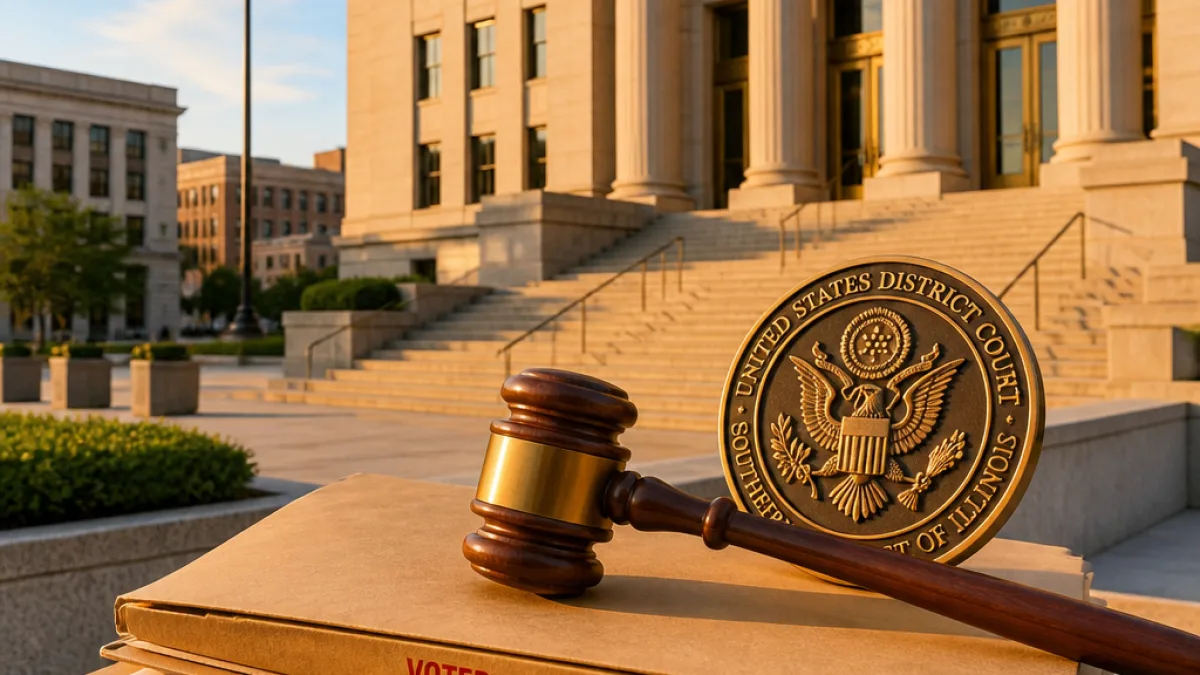
SPRINGFIELD — A federal judge has concluded that Illinois officials do not have to surrender the state’s complete voter registration database, including sensitive personal identifiers, to the U.S. Department of Justice.
Judge: Civil Rights Act doesn’t grant blanket auditing power
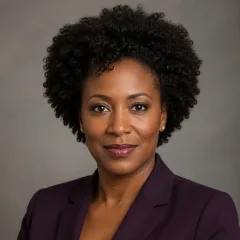
In a 14-page opinion issued late Friday, U.S. District Judge Colleen Lawless rejected the Justice Department’s request, saying the agency had not shown Congress gave the attorney general broad authority under the Civil Rights Act of 1960 to demand state voter files. Lawless’s decision follows a string of rulings around the country that reached similar outcomes.
The Justice Department had sought unredacted voter rolls that include dates of birth, driver’s license numbers and partial Social Security numbers—information some election experts consider particularly sensitive.
"The Attorney General’s demand is deficient in both its stated basis and purpose and cannot be enforced against (Illinois State Board of Elections Executive Director Bernadette) Matthews," Lawless wrote.
Judge finds no factual basis or legitimate purpose
Lawless said federal prosecutors offered no evidence suggesting Illinois election officials had mishandled the state’s voter list, nor did they present a legitimate statutory purpose for demanding the data. The opinion mirrors findings made by judges in numerous other federal districts and an appellate court that have weighed comparable requests from the Justice Department.
The department began pressing states for full, unredacted voter data after President Donald Trump began his second term in 2025. The requests were framed as efforts to ensure compliance with federal laws requiring accurate voter registration lists.
Wider pattern: courts rejecting the administration’s demands
Lawless’s ruling adds Illinois to a growing list of jurisdictions where judges have refused the Justice Department’s demands. So far, no court has enforced the administration’s demand for complete voter registration databases.
| Item | Figure |
|---|---|
| States and D.C. targeted by DOJ requests | 30 |
| Federal districts ruling against DOJ so far | 18 |
| Appellate circuit ruling against DOJ | 1 |
Privacy, state authority and electoral administration at stake
Illinois election officials had resisted handing over the complete files, arguing state law and privacy concerns constrain what can be shared. The state’s voter registration database contains personal identifiers that officials say must be protected from unnecessary disclosure.
The dispute raises broader questions about federal authority to scrutinize state-run election systems. Legal experts have debated whether the Civil Rights Act of 1960 — enacted in a very different era of election oversight — authorizes the modern federal executive branch to demand raw voter registration records from states without a clearer statutory mandate.
What this means for Illinois voters and officials
For now, the ruling means Illinois will not turn over the state’s full, unredacted voter registration list to the Justice Department. The decision protects personally identifying details of registered voters from federal disclosure in this instance, and for the time being preserves Illinois control over its voter-roll maintenance practices.
Legal observers say the case could be appealed, and continued litigation may push the issue higher in the federal courts. Any appeal would determine whether this line of decisions remains the controlling precedent or whether a higher court will chart a different course.
Context and next steps
The Justice Department argued its inquiries were part of efforts to make sure states keep accurate and up-to-date rolls. Opponents, including election administrators and privacy advocates, warned that handing over unredacted records nationwide would create risks to voter privacy without clear evidence of wrongdoing.
- Judge Colleen Lawless issued the opinion in federal court in Springfield.
- The decision aligns Illinois with other jurisdictions that have rebuffed similar federal requests.
- The case highlights tension between federal oversight and state control of election administration.
As litigation moves forward nationally, Illinois voters and officials will be watching whether higher courts provide a definitive ruling on how far the attorney general’s authority extends when it comes to requesting state election data.