MADISON — A police shooting this week in the heart of one of Madison’s most liberal neighborhoods has forced the city to cancel or postpone several signature summer events and amplified long-simmering tensions over race and police accountability.
Immediate disruption to summer calendar
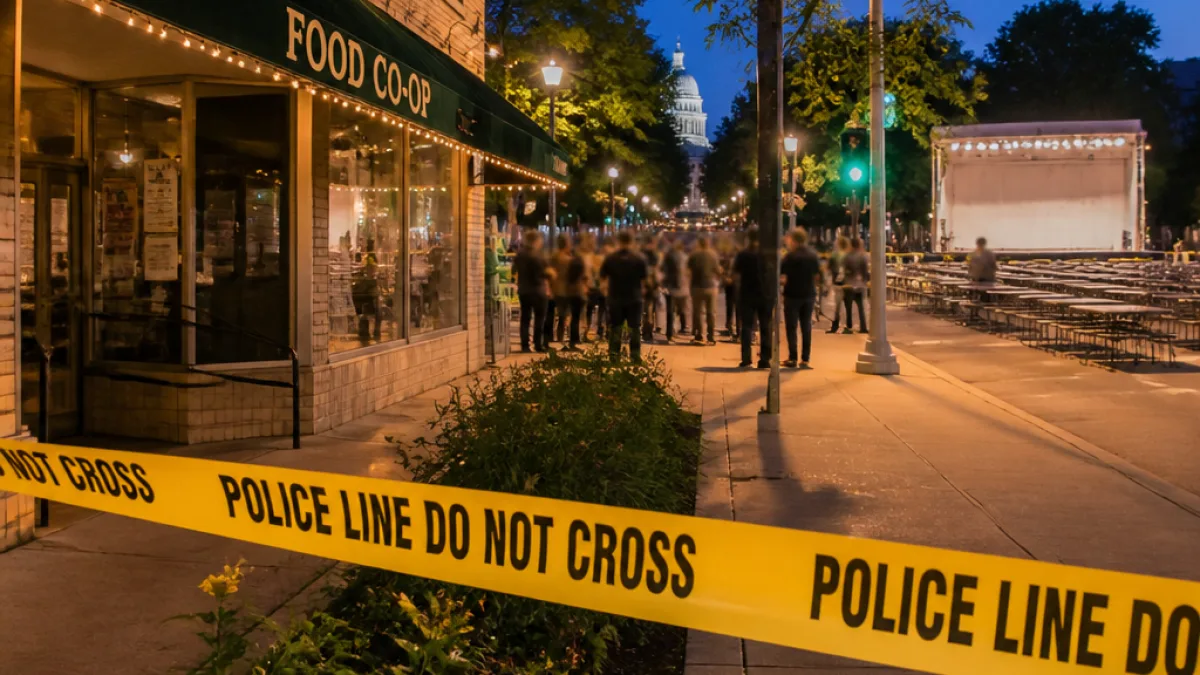
The shooting, which left Corey Ruiz dead after a brief scuffle with a Madison police officer, occurred just yards from a 52-year-old food cooperative in the Marquette neighborhood. The incident prompted protesters to take to the streets within hours, and their presence disrupted a popular Wisconsin Chamber Orchestra outdoor concert on the Capitol grounds that normally draws about 30,000 people on summer nights.
Organizers canceled that concert after demonstrators gathered among concertgoers and near high-priced rented tables. In the same area, the city postponed the grand opening of a new public market due to threats of protest, and neighborhood organizers called off AtwoodFest, a nearby festival slated to begin the weekend after the shooting.
| Event | Location | Status |
|---|---|---|
| Wisconsin Chamber Orchestra outdoor concert | State Capitol | Cancelled |
| Public market grand opening | Near Marquette neighborhood | Postponed |
| AtwoodFest | Near shooting site | Cancelled |
Calls for reform and the racial context
The shooting has renewed demands for changes to policing in a city that is roughly 70% white, with advocates saying the response underscores persistent disparities and distrust between law enforcement and Madison’s Black community. Activists and community leaders said the cancellations reflect a collective refusal to treat life or civic events as business as usual in the face of another fatal officer-involved shooting.
“Our community has spoken loud and clear: this is NOT business as usual,” Black activist Clyde Mayberry posted on Facebook. “Your decisions have helped ensure that this city continues to acknowledge the pain, the loss, and the call for accountability.”
According to court and police records cited by state and national outlets, Ruiz is identified as Black or Latino. The shooting marks the third time since 2012 that Madison police have shot and killed someone in the same neighborhood, a point that has intensified scrutiny of department policies and oversight.
Local impact beyond the headlines
The ripple effects are practical and immediate. Vendors and small businesses that count on festival crowds and concerts for summer revenue face lost income. Civic organizations that rely on public events for fundraising and community outreach must scramble to reschedule or cancel activities. City officials are left balancing public safety, free-speech rights and the economic fallout from canceled events.
- Local businesses lose foot traffic and sales tied to canceled events.
- Community groups must delay or shift outreach and fundraising plans.
- City leaders confront competing pressures: public safety, protest management and calls for police accountability.
Organizers and city officials did not immediately provide specific timelines for rescheduling the postponed market opening or the other events. The cancellations came as protesters demanded transparency and changes while emphasizing the emotional toll on families and neighbors.
What comes next
The shooting is likely to prompt renewed debate at City Hall and in public forums over police training, use-of-force policies and civilian oversight. Community leaders have called for accountability and for concrete reforms, though those conversations frequently play out slowly, tangled in legal reviews, union negotiations and budget constraints.
For now, the summer calendar in Madison looks different. Concertgoers who expected an evening on the Capitol lawn left disappointed. Vendors and organizers are left to pick up the pieces. And the city is once again being asked to reckon publicly with racial grief and the question of how it protects both safety and civil liberties.
Madison’s civic life has always had a political edge — that’s part of what brings people here. But when activism replaces an orchestra’s opening chord and a farmers market ribbon-cutting, it’s a clear sign the community is operating under a different script this week.
Local officials, organizers and residents will now face the task of moving forward — responsibly, transparently and with an eye toward preventing a repeat — while also trying to get summer festivals and the local economy back on track.