Milwaukee becomes triathlon hub again as nationals bring athletes, fans downtown
Milwaukee’s lakefront streets and parks filled with athletes, volunteers and spectators this weekend as the 2026 USA Triathlon National Championships took over the downtown corridor. The multi-day event, which organizers call their largest and longest-running annual competition, returned to the city that has hosted nationals repeatedly over the past decade and more.
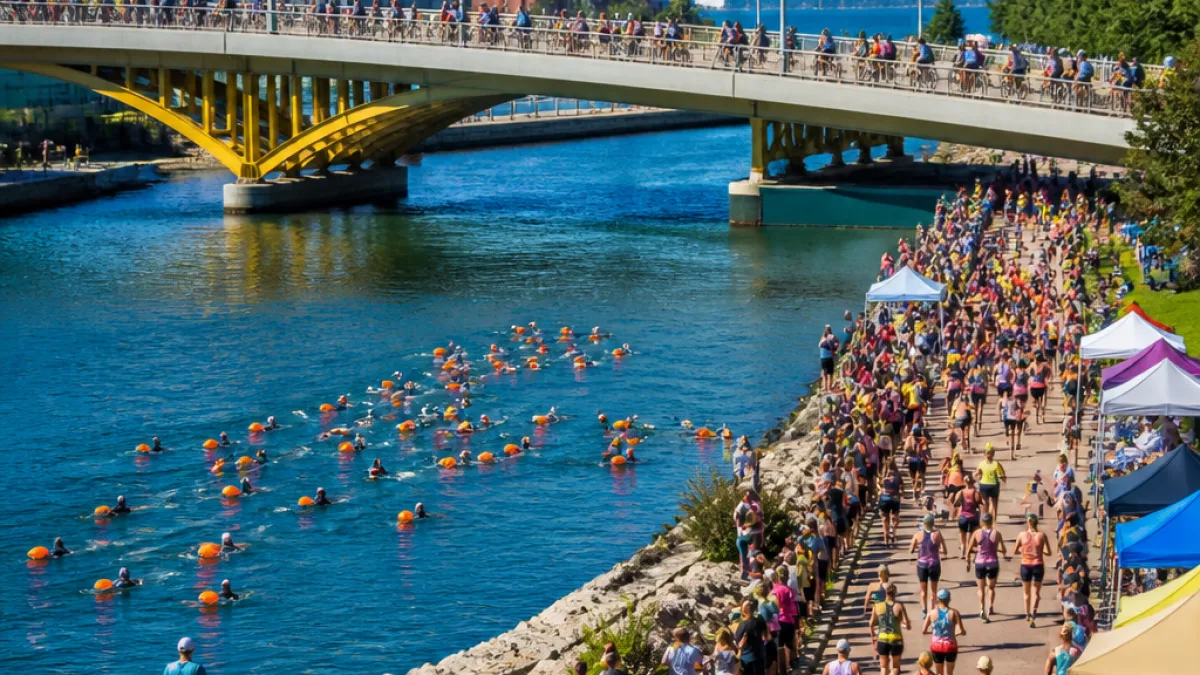
Racers tackled the classic sequence — swim, bike, run — with course elements familiar to Milwaukee residents: a swim start in Lake Michigan, a bike leg across the Daniel Hoan Memorial Bridge, and a run through Veterans Park. The Olympic-distance race scheduled for Saturday features a 1,500-meter swim, a 40-kilometer bike ride and a 10-kilometer run.
Local spectators have been coming out in force. Pam Kirk and her friend Beth Poole were among those cheering from the sidelines on Friday morning, watching their husbands compete in an age-group event for athletes aged 80–84. “We’re the support staff,” Kirk said later, “and the cheerleaders and the equipment managers.”
“Milwaukee has repeatedly proven to be an exceptional home for USA Triathlon Nationals.” — Brian D’Amico, director of events, USA Triathlon
Brian D’Amico, the organization’s director of events, pointed to the city’s previous stints as host — from 2013–2015, 2021–2023 and last year — as evidence Milwaukee knows how to stage a big triathlon. The recurring choice reflects both the course’s variety and the community infrastructure volunteers and city services provide.
Local athletes, economic bump and logistics
For Milwaukee-area competitors, racing at home carries an extra edge. Shorewood resident and Marquette University assistant professor Jacob Capin, last year’s men’s overall Olympic-distance winner in Milwaukee and a 2025 Triathlon Athlete of the Year, returned to defend his form this weekend. Capin said winning in front of a hometown crowd was a “dream come true” and that the race remains one of the biggest events on his annual calendar.
The event also has a tangible effect on downtown: streets closed for the bike course, staging areas near the lakefront and concentrated foot traffic in hospitality corridors. Local businesses that cater to athletes — bike shops, running stores, cafes and hotels — typically see a boost, and volunteers from clubs and nonprofits are key to keeping transitions and aid stations running smoothly.
- Course highlights: swim in Lake Michigan, bike over Daniel Hoan Memorial Bridge, run through Veterans Park
- Olympic-distance distances: 1,500m swim, 40km bike, 10km run
- Milwaukee hosting history: 2013–2015, 2021–2023, 2025 and 2026
Race organizers and city officials work together to manage public safety, traffic detours and course marshaling. That coordination is essential when thousands of athletes and spectators converge on a tight urban waterfront. For residents, the familiar signs of a major race — temporary fencing, bike racks stacked with wheels, and cheering clusters at key turns — are a reminder that Milwaukee has become a repeat player on the national endurance-sport circuit.
What locals should know this weekend
For Milwaukeeans planning errands or outings downtown, expect neighborhood impacts during peak race times: bridge accesses may be limited, lakeshore paths could be busier than usual, and parking near Veterans Park and Pier Wisconsin may be restricted. Spectators planning to watch should bring layers — Lake Michigan mornings can be cool, even in August — and consider using public transit or parking farther away to avoid temporary closures.
| Event | Distance |
|---|---|
| Olympic swim | 1,500 meters |
| Olympic bike | 40 kilometers |
| Olympic run | 10 kilometers |
As racers and fans flow into Milwaukee this weekend, the city will again show its ability to host endurance events that mix urban scenery with lakefront grit. For those out cheering along the course, it’s an easy way to see elite and everyday athletes push themselves — and for the rest of us, a reminder that even on a weekday morning you might run into someone who swam in Lake Michigan before breakfast.