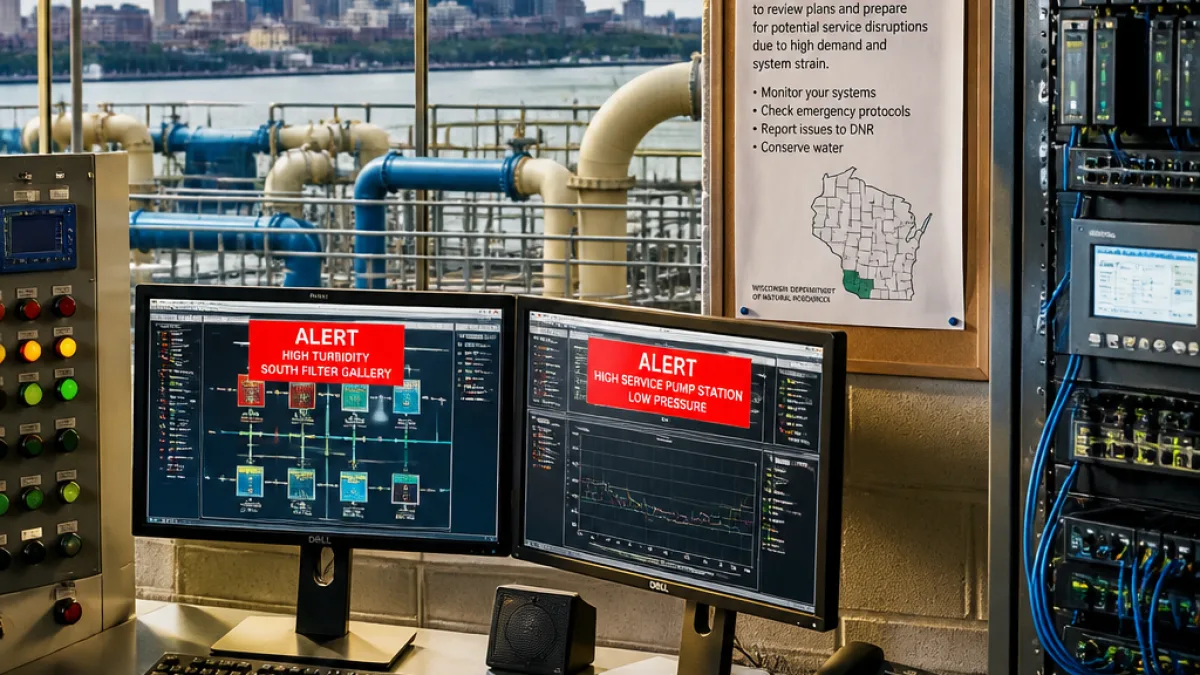
State and federal officials are warning Wisconsin water and wastewater operators to shore up security on industrial control systems after recent cyber incidents in neighboring states disrupted operations and highlighted vulnerabilities in utility technology.
What officials are saying
The Wisconsin Department of Natural Resources issued a statewide alert to utilities, calling attention to “ongoing malicious activity” aimed at programmable logic controllers (PLCs) — the small industrial computers that help run pumps, regulate pressure and route flow in treatment and distribution systems. The alert follows incidents in Minnesota and a joint public warning from the FBI and the Environmental Protection Agency.
The federal Cybersecurity and Infrastructure Security Agency (CISA) also raised the alarm, reporting a “significant increase” in threat activity targeting PLCs used by water and wastewater systems. Federal officials said attackers had targeted internet-facing PLCs in at least seven states, and some intrusions caused operational disruptions, including pressure loss and utilities switching to manual operations.
“Control over our critical infrastructure, especially like our water supply, is paramount to us,” said Alex Holden, chief information security officer for Hold Security.
Why PLCs matter
PLCs are compact computers deployed at pump stations, treatment plants and other critical points in a utility’s network. When these devices are reachable from the public internet without proper protections, they can become an entry point for attackers who could interfere with automated controls. Federal alerts indicate the threat actors are specifically scanning for and probing these internet-exposed systems.
What’s happened so far
Officials have tied the recent wave of malicious activity to incidents that forced some utilities to revert to manual operations and, in some cases, to deal with temporary pressure loss. Federal agencies have stopped short of saying Wisconsin utilities have been compromised; state officials say no confirmed breaches in Wisconsin have been announced. Still, the warning is clear: operators should assume risk and act.
| Agency | Action or Warning |
|---|---|
| Wisconsin DNR | Statewide alert to water and wastewater utilities about ongoing malicious activity targeting PLCs |
| FBI & EPA | Joint public warning about malicious actors targeting internet-facing PLCs in at least seven states |
| CISA | Advised a significant increase in targeting of PLCs used by water/wastewater systems |
Practical next steps for utilities — and what residents should know
Federal and state warnings focus on reducing exposure of PLCs to the public internet and improving cybersecurity hygiene across utility networks. That means operators are being urged to identify internet-facing control devices, remove or isolate those connections where possible, and bolster monitoring and incident response plans.
For everyday residents, the immediate takeaway is simple: there is no confirmed compromise affecting Wisconsin water systems at this time, but the risk is real enough that regulators and cybersecurity professionals are asking utilities to act now to prevent a local disruption.
- Utilities: inventory PLCs and other industrial control systems, limit internet exposure, and review incident response plans.
- Local officials: coordinate with state and federal partners to share threat intelligence and mitigation steps.
- Residents: stay informed via local utility or municipal alerts; follow guidance if a utility reports an incident affecting water service.
Alex Holden, a cybersecurity expert, emphasized the stakes for essential services. The concern isn’t theoretical: when attackers reach into the systems running pumps and valves, the result can be measurable and immediate for customers who depend on steady pressure and continuous treatment.
The warnings from the Wisconsin DNR and federal agencies arrived against the backdrop of earlier incidents across multiple states. While the focus so far has been on detecting and disrupting malicious access to PLCs, the broader message is that utilities — from small municipal systems to larger regional providers — need stronger controls and faster detection to keep water systems resilient.
State agencies are offering resources and guidance to help utilities assess exposure and harden systems. For now, the public can take comfort in the fact that state officials say there are no confirmed compromises in Wisconsin, but they should also expect utilities to tighten defenses and, possibly, to issue local advisories if a situation changes.
As always with infrastructure and cybersecurity, prevention is the cheapest — and safest — option. It’s the kind of local work you don’t notice when it’s done right. You certainly notice it when it’s not.