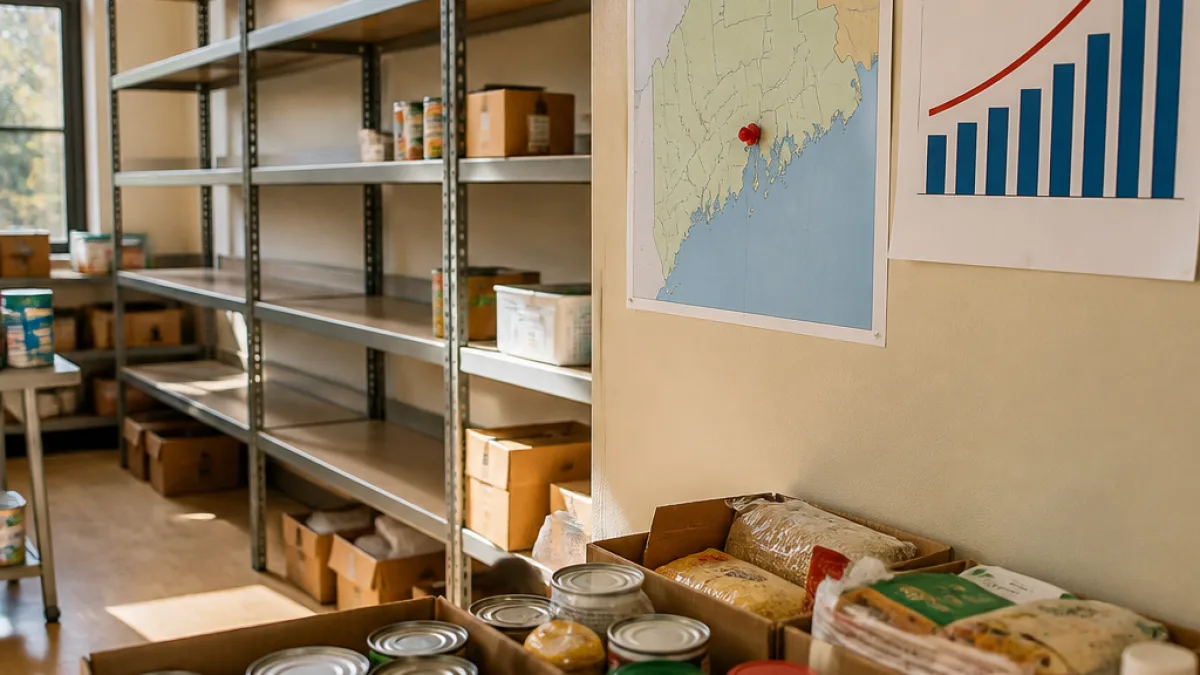
A new national analysis released this week finds that food insecurity increased across Maine in 2024, leaving an estimated 203,000 residents without consistent access to enough nutritious food. The study, part of Feeding America’s annual "Map the Meal Gap" report, puts the statewide food insecurity rate at 14.5%, up from 13.8% the prior year.
Numbers and who’s affected
The report’s figures show the problem reaches into many corners of the state and touches a wide range of residents. Among those estimated to be food-insecure in 2024 were nearly 50,600 children and more than 31,000 adults age 60 and older. Rural counties continue to be disproportionately affected: Washington County recorded the highest estimated food insecurity rate in New England at 18.8%.
| Measure | 2024 Estimate |
|---|---|
| Overall food insecurity rate | 14.5% |
| Number of people affected | 203,000 |
| Children | 50,600 |
| Adults 60+ | 31,000+ |
| Highest county rate (Washington) | 18.8% |
Gaps in federal assistance
The report draws attention to a gap between need and eligibility for federal nutrition aid. It estimates almost 46% of Mainers who are food-insecure earn too much to qualify for the Supplemental Nutrition Assistance Program, or SNAP. Those households often turn to local food pantries and other community resources to get by.
- 203,000 Mainers estimated food-insecure in 2024.
- 50,600 children affected.
- 46% of food-insecure Mainers estimated to be ineligible for SNAP.
Voices from the relief network
Local food distribution groups said the report reflects patterns they see on the ground: rising demand and stretched resources. Heather Paquette, president of Good Shepherd Food Bank, framed the statistics as a reminder of who’s behind the numbers.
“Food insecurity touches every community in Maine,” Paquette said. “These numbers represent our neighbors, children, older adults, working families, veterans, and people doing everything they can to make ends meet.”
Paquette and others stress that the report is a snapshot of conditions as they were in 2024. They warned that subsequent increases in costs and policy shifts at the federal level likely have pushed current demand higher than the figures indicate.
Where this leaves communities and services
Food banks and pantries around Maine have grown into an essential part of the safety net for many families. The report’s authoring organization and state partners say the data underscores the need to maintain support for those local networks while also pushing for broader policies to reduce hunger.
For rural communities—where transportation, seasonal employment and limited access to stores can compound the problem—the effect is pronounced. Agencies that serve remote towns say logistical costs and volunteer shortages make it harder to respond as demand climbs.
What readers should know
The report offers context for residents wondering why food assistance lines feel longer and why local pantries appear busier. While SNAP and school meal programs remain primary supports, eligibility rules and income thresholds leave a substantial segment of struggling households outside those systems.
Residents seeking assistance should contact local food banks or municipal social services for information on pantry hours, school meal options and senior assistance programs. Organizations such as Good Shepherd Food Bank maintain directories of regional partners and resources that can help households find immediate aid.
The statistics in the Feeding America study form part of a longer conversation about economic stability in Maine and how public and private systems respond when more families fall short of basic needs. For many communities, the immediate challenge is ensuring that people can reach a meal while longer-term solutions—from living-wage work to more inclusive benefit rules—are pursued at the state and federal levels.
As the year moves on and costs continue to fluctuate, relief agencies say they will be watching the same indicators Feeding America tracks: unemployment, wages, and the changing landscape of federal nutrition programs that determine how many households qualify for assistance.