ALLAGASH — When Troy Jackson stood shoulder to shoulder with fellow loggers nearly three decades ago and faced down state troopers at a blockade near the Quebec line, he left with a clear sense: change would not come from the outside. It would have to be made from within the system.
Roots in The County
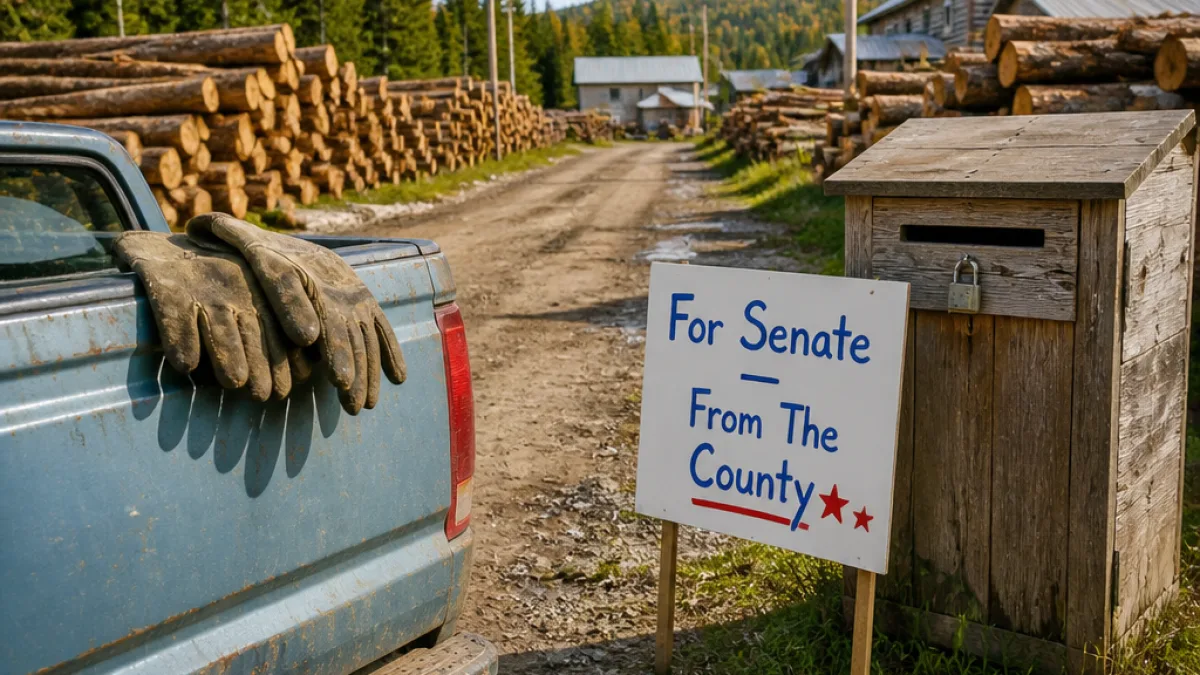
Jackson, now 58, has parlayed that early confrontation with authorities into a political life built on his identity as a fifth‑generation woodsman from Aroostook County — a vast, forested region Mainers simply call “The County.” It is that background, he and allies say, that drives his fight against what he calls the influence of wealthy interests and distant corporations.
His selection as the Democratic nominee for the U.S. Senate came abruptly after the original nominee, Graham Platner, stepped aside amid a sexual assault allegation he denied. Jackson’s entrance into the race makes him a late replacement in a contest many national strategists will be watching: it could be among a handful of races that decide control of the Senate in November.
“What I am is a guy from northern Maine that's a logger,”
The line, delivered as Jackson accepted the party nod, is central to his message — that his life in a rural, working‑class economy gives him a vantage that urban or coastal politicians lack. Yet that same home region has presented electoral challenges: Aroostook County has backed Republican Donald Trump at the presidential level even as it returns Jackson to the state Legislature, illustrating the split‑ticket dynamics Jackson must exploit to unseat a well‑known incumbent.
Facing a long‑standing incumbent
Susan Collins, the five‑term Republican senator, is also from Aroostook County and has survived a string of Democratic challenges over the years. At 73, she carries the advantage of incumbency and name recognition statewide. Jackson has centered criticism on her record, arguing she too often puts personal or political calculation ahead of Maine’s interests, and has publicly faulted her vote that helped set the stage for the U.S. Supreme Court to overturn the nationwide right to abortion.
Jackson’s campaign strategy appears to rest on several pillars:
- Emphasizing his working‑class upbringing and ties to rural voters in northern Maine.
- Painting Collins as aligned with powerful interests and out of step with Mainers on issues such as reproductive rights.
- Leveraging his legislative experience and local credibility as an alternative to a long‑serving senator.
Challenges ahead
That plan faces obvious obstacles. Collins’ long tenure has brought her a broad donor network and established political machinery across a diverse state that includes coastal, suburban and inland voters. Jackson’s late start compresses fundraising, organizing and name‑recognition efforts during a campaign cycle that will attract national attention and resources on both sides.
Moreover, Jackson must win over voters in a county that has demonstrated a willingness to split tickets — supporting him locally while choosing Republican presidential candidates. Whether that pattern can be expanded into a statewide coalition in a polarized national environment is an open question.
What’s at stake
Nationally, the contest matters because it is one of several Senate races that could shift the balance of power in Congress. For Mainers, the choice also concerns representation from a state that prizes independent thinking and hometown ties. Jackson’s appeal is rooted in authenticity and a narrative of standing up for workers; Collins’ appeal rests on seniority, constituent services and an established legislative record.
| Candidate | Age | Background |
|---|---|---|
| Troy Jackson | 58 | Fifth‑generation logger; state legislator; Democratic nominee |
| Susan Collins | 73 | Five‑term U.S. senator; Republican incumbent |
Jackson’s candidacy also highlights the unpredictable nature of modern campaigns. His nomination followed an abrupt vacancy created by serious allegations against his predecessor on the ticket, underscoring how quickly political dynamics can change and how parties sometimes turn to familiar, local figures to steady a ship.
For now, Jackson’s message is straightforward and local: he says his life in the woods and time in the Legislature give him a grounding in the struggles of Mainers outside the coastal population centers. Whether that grounding will translate into statewide victory against a seasoned incumbent remains to be seen. In the months ahead, voters will gauge if a logger’s voice is what they want in the Senate when the stakes are counted not just for Maine, but for the balance of power in Washington.
Reporting from Allagash.