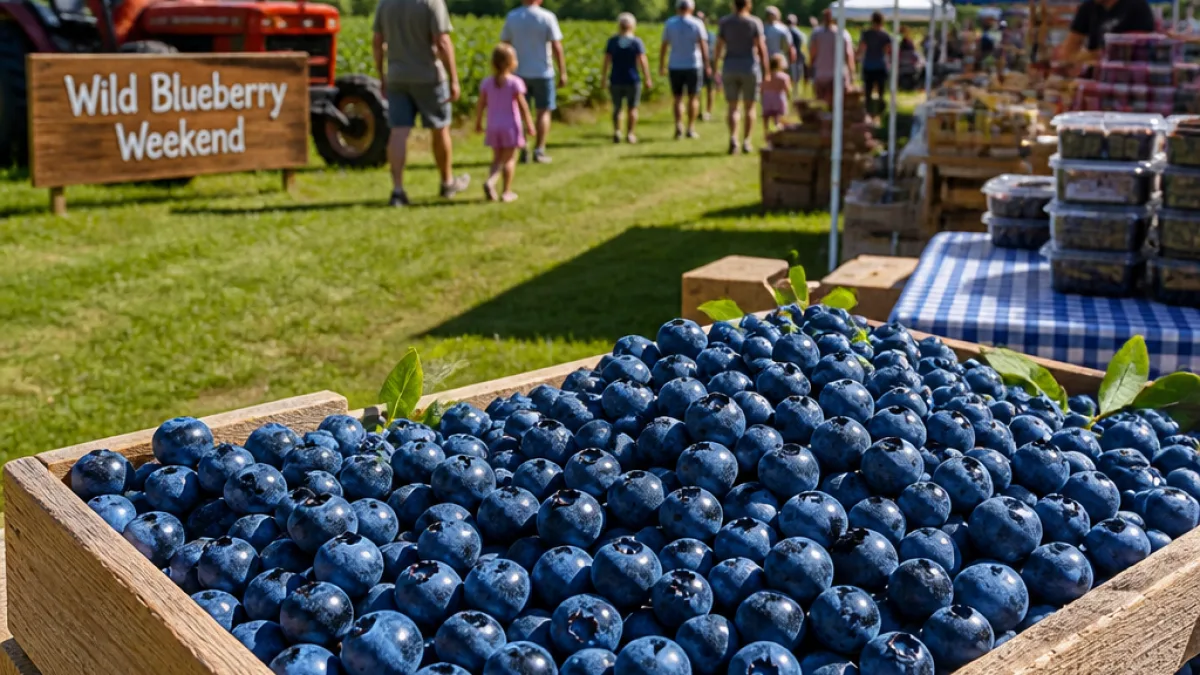
Maine’s Wild Blueberry Weekend drew steady traffic to Fields Fields in Dresden, where owners opened their gates for tours, music and hands-on views of the state’s signature fruit. The event, held the first weekend in August, is designed to connect the public with the people and labor behind Maine’s wild blueberry industry.
Farm life on display
The farm hosted a mix of activities that invited curiosity and commerce: guided tours across the barrens, live entertainment, arts and crafts vendors and hot food set up for visitors. Owners also highlighted how most of the ripe fruit is handled after picking — frozen and processed into a range of products sold locally and online.
"I think word is finally getting out about Wild Blueberry Weekend. And people are traveling, we had lots out-of-state plates. It's just a really great opportunity for people that may not know the story of wild blueberries to to learn about the history and what they taste like,"
The event attracts both local families and out-of-state guests, according to the farm. That mix is one of the explicit goals of Wild Blueberry Weekend: to raise public knowledge about how wild blueberries differ from cultivated varieties, and to broaden the market for farms that often depend on frozen inventory sold year-round.
Weather, pollination and the harvest
Farm owners described the season as favorable despite a late drying trend. They pointed to a cool, productive stretch in June that enhanced pollination, followed by rain that fattened the berries before harvest.
On-farm processing typically focuses on freezing the harvest to preserve the berries for sale through the winter and into the next season. At Fields Fields, that supply feeds a modest line of value-added items, including crumble and chips, sold both online and in local stores.
- What visitors saw: farm tours, entertainment, vendors and food
- How berries are stored: most are frozen soon after harvest
- Products offered: baked goods, blueberry chips and boxed frozen fruit
Why it matters
Wild blueberries are a distinctive part of Maine’s agricultural identity. Unlike cultivated highbush blueberries, wild blueberries grow on low, spreading bushes and are often harvested from larger, open barrens. Freezing as a primary storage method lets farms smooth out seasonal swings in demand and supply, and allows Maine growers to ship product beyond the summer months.
Events like Wild Blueberry Weekend also serve an educational purpose. Farmers said the weekend helps correct misconceptions about the crop, shows visitors where their food comes from, and demonstrates the scale of work involved in bringing blueberries from bush to freezer to market.
Practical takeaways for visitors
If you plan to visit a farm for future blueberry weekends, organizers recommend arriving prepared for uneven terrain and variable summer weather. Bring comfortable shoes for walking the barrens, and expect some on-site food and small retail booths featuring local products. If you want fresh or frozen berries, check with the farm in advance about availability and packaging.
| Item | Typical at Fields Fields |
|---|---|
| Open to public | Yes — tours and demonstrations |
| On-site food | Hot food and vendors |
| Year-round product | Frozen berries, baked goods, blueberry chips |
For many farms, Wild Blueberry Weekend is also a chance to measure consumer interest. The presence of out-of-state license plates suggested to one owner that word about the weekend is spreading beyond Maine, bringing new customers to a longstanding regional crop.
The weekend remains a relatively low-key, locally driven celebration, but its effect ripples into farm economics and public understanding — a reminder that even small-scale agricultural traditions still matter to Maine’s rural communities and markets.
Coverage for this story was based on reporting at Fields Fields during Wild Blueberry Weekend and on direct remarks from farm ownership about turnout and the season’s harvest conditions.