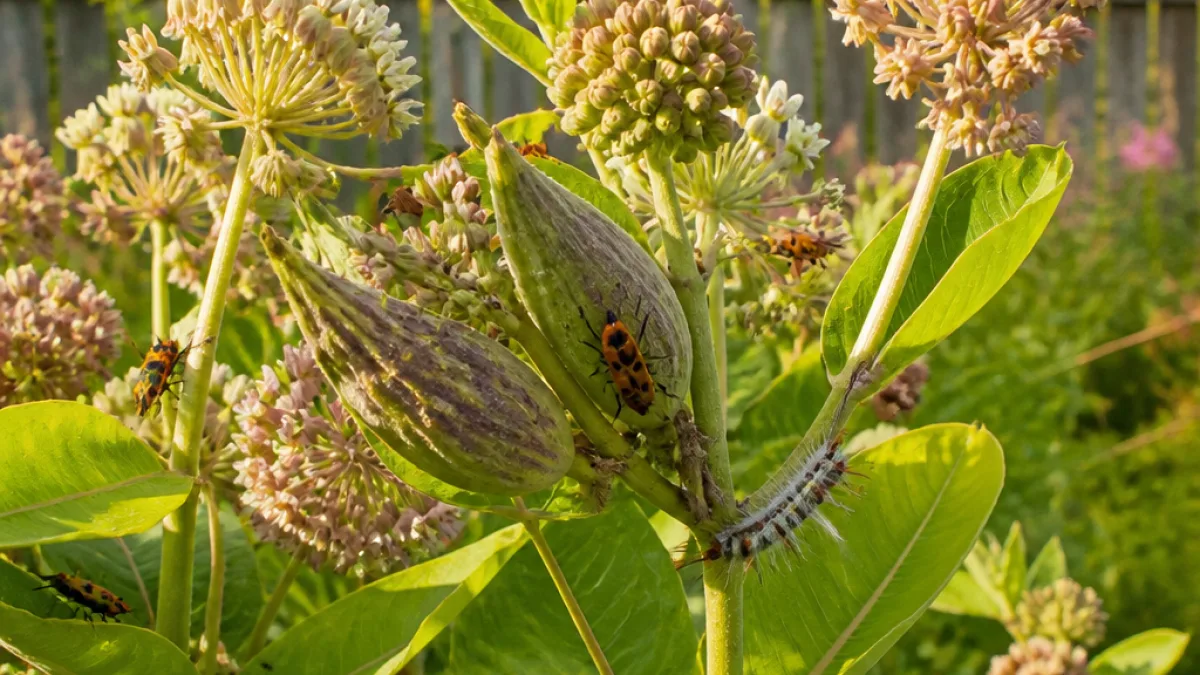
Walk a summer garden where milkweeds (Asclepias spp.) stand in bloom and you may first notice a flash of orange and black — not a monarch, but one of the milkweed bugs that favor these native plants. Their presence is a reminder that milkweeds are small ecosystems, hosting a cast of insects that use the plants for food and defense. For gardeners who have planted milkweed to help monarchs, most of these visitors are neither novel nor destructive.
Milkweeds and the company they keep
Milkweeds have surged in popularity among Pennsylvania gardeners in recent years because they are the only host plants for monarch caterpillars. Across the state there are 11 native species of Asclepias, with the most commonly chosen for home plantings being common milkweed (Asclepias syriaca), rose milkweed (Asclepias incarnata) and butterfly milkweed (Asclepias tuberosa). All contain bitter cardiac glycosides — chemical defenses that make the plants unpalatable to many animals and insects.
That chemistry is part of what binds together the community that uses milkweeds. Several insects not only tolerate those compounds, they use them for protection. Among the frequent visitors late in summer are the large milkweed bug and the small milkweed bug. Despite its name, the large milkweed bug is only about 3/4 of an inch long, and both species display the vivid orange-and-black patterning familiar from monarchs.
What the bugs eat — and why they matter
Milkweed bugs feed mainly on sap and seeds, although they can pierce other plant parts. Their preference for seeds often brings them together in noticeable congregations on pods in late summer and early fall, when seeds are abundant. Because these bugs sequester the plants’ cardiac glycosides in their own tissues, they are distasteful to many predators — an ecological echo of the monarch’s well-known strategy.
- They feed primarily on milkweed sap and seeds, not foliage.
- They concentrate plant toxins and become unpalatable to predators.
- They migrate south to overwinter and return in spring as temperatures rise.
For most gardeners this means the bugs are more of an interesting sight than a threat. Established milkweeds tolerate seed-feeding without significant long-term harm. Rather than reach for insecticides, observers can take the opportunity to watch an unfolding natural history lesson — the bright insects, the silvery seeds in foamy pods, and the movement of life stages through the season.
Other milkweed residents: tussock moth caterpillars
Milkweed tussock moth caterpillars are another insect you might spot. Newly hatched larvae are pale and relatively hairless with dark heads; as they grow they develop tufts of black, white and orange hairs. Their coloring and hairs are part of their identity on milkweed, but like the bugs they seldom cause lasting damage to strong plants.
| Milkweed visitor | Diet | Notable trait |
|---|---|---|
| Large milkweed bug (Oncopeltus fasciatus) | Sap and seeds | About 3/4 inch; orange-and-black; sequesters cardiac glycosides |
| Small milkweed bug | Sap and seeds | Smaller; similar coloration and habits |
| Milkweed tussock moth caterpillar (Euchaetes egle) | Leaves and foliage | Hair tufts; color changes as they grow |
Gardeners with conservation goals should remember that milkweeds are intended to support monarchs and other specialized herbivores. Removing every non-monarch insect can do more harm than good to local biodiversity. When milkweed plants appear crowded with seed-feeders, evaluate the overall plant health before acting: vigorous stands tolerate seed loss and still support caterpillars.
Finally, a practical note for those who worry the bugs might overrun a garden: these milkweed specialists have life cycles tuned to the season. They migrate or die back when frost arrives and reappear with warm weather, so populations tend to ebb and flow rather than explode uncontrollably.
In small suburban plots and larger meadows alike, milkweeds remain keystones for pollinators and specialized insects. The orange-and-black bugs are part of that story — vivid, largely harmless, and a reminder that planting for wildlife is never just about a single species.