Pennsylvania State Police stations have begun carrying autism sensory aid bags, a measure intended to help officers and community members manage stressful interactions with people on the autism spectrum.
What the initiative is aiming to do
The presence of sensory aid bags at state police stations is designed to offer immediate, low‑tech supports that can reduce anxiety, limit sensory overload and improve communication during encounters with law enforcement. Officials say the move is meant to create calmer, safer settings when police come into contact with autistic individuals.
Details about the rollout — including how many stations now have bags, where they are located and when the program began — were not included in the available notice announcing the effort. What is clear is that the state police are aligning with a broader national trend in law enforcement toward adopting accommodations and tools to better serve neurodiverse residents.
How the bags help
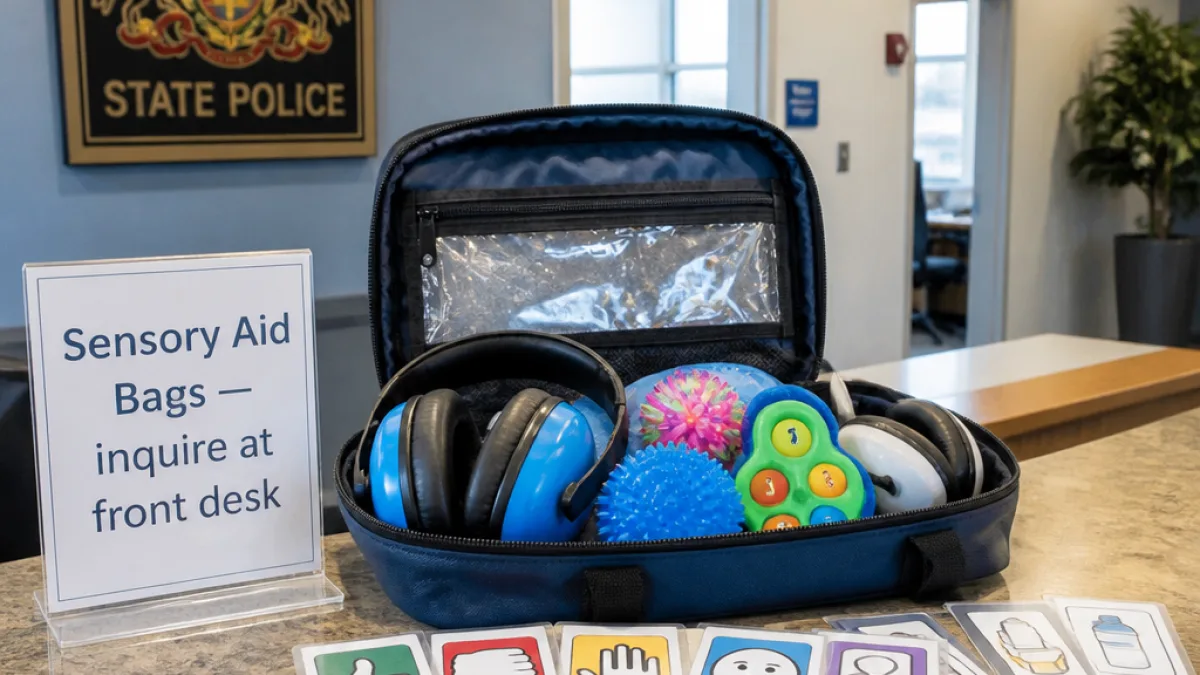
Sensory aid bags are portable kits that provide simple items to ease common challenges associated with autism, such as sensitivity to noise, difficulty with transitions and trouble communicating under stress. While contents vary by program, these kits are generally intended to be used temporarily at the scene or within a station to help an individual feel more secure and to facilitate a safer interaction with officers.
| Typical item | Purpose |
|---|---|
| Noise‑reducing headphones | Lower auditory overstimulation in noisy environments |
| Fidgets or stress‑relief items | Provide a predictable sensory input to reduce anxiety |
| Visual cue cards or communication boards | Support nonverbal communication or help explain steps |
| Soft lighting or sunglasses | Reduce visual sensory overload |
Why this matters locally
Police encounters can be disorienting for anyone; for autistic people — particularly those who are nonverbal or who experience sensory sensitivities — the risk of misunderstanding and escalation is higher. Tools that reduce sensory distress and clarify communication can shorten interactions, lower anxiety for the person and help officers carry out their duties with fewer complications.
Community advocates across the country have increasingly pushed for police departments to adopt autism‑aware practices, including crisis intervention training, clear visual supports and simple accommodations such as sensory kits. The availability of these items at Pennsylvania State Police stations may offer families a tangible reassurance that officers have resources available to help manage a difficult moment.
Practical guidance for families and caregivers
Families and caregivers of autistic Pennsylvanians should consider a few practical steps to prepare for interactions with law enforcement:
- Keep identification information and a brief explanation of sensory needs or communication preferences on hand.
- Consider registering with local police programs if available, such as registries for residents with special needs (verify availability in your area).
- Carry familiar calming items or tools that help with transitions when leaving home.
- If you anticipate contact with police (for example, during travel or an event), inform responding officers about any specific triggers and coping strategies.
What to watch for next
Further information about the program’s scope — including station participation, officer training tied to the initiative and guidance on how families can request or access the bags — was not included in the initial announcement. Community members interested in details should check the Pennsylvania State Police website or contact their local station for confirmation and procedures.
The adoption of sensory aid bags is one piece of a larger conversation about how first responders adapt to the needs of neurodiverse residents. As more departments test similar resources, tracking their impact on outcomes, training and community trust will be important for officials and families alike.
For now, the presence of these kits at state police stations marks a visible step toward accommodations intended to make police interactions less stressful — a small collection of items that can help bridge a difficult moment between officers and autistic people in Pennsylvania.