The Pennsylvania State Police is increasingly called on to patrol communities that once relied on local departments — a shift that comes amid rising public-safety spending but shrinking ranks of police officers across the commonwealth.
Budget documents and a recent report from the Joint State Government Commission paint a picture of competing forces: since 2020 the state has increased public-safety and law-enforcement spending by more than $1.3 billion, and Gov. Josh Shapiro has earmarked $63 million for training new cadet classes during his term. Yet the overall number of police employees in Pennsylvania has fallen, even as municipal departments close and the State Police are expected to provide broader coverage.
Funding up, workforce down
The increases in funding signal a priority in Harrisburg for public safety. The administration also nearly doubled funding for municipal police training in the 2024-25 budget, according to the report. But higher budgets have not yet reversed a downward trend in staffing that state analysts link to national events and local fiscal pressures.
“The movement following George Floyd’s death appears to have created a broader socio-political effect than other police incidents,” the commission wrote, summarizing research that found many agencies saw a spike in resignations and retirements in the two years after 2020. That national phenomenon has contributed to what the commission called a roughly 5 percent staffing deficit among police agencies since 2020.
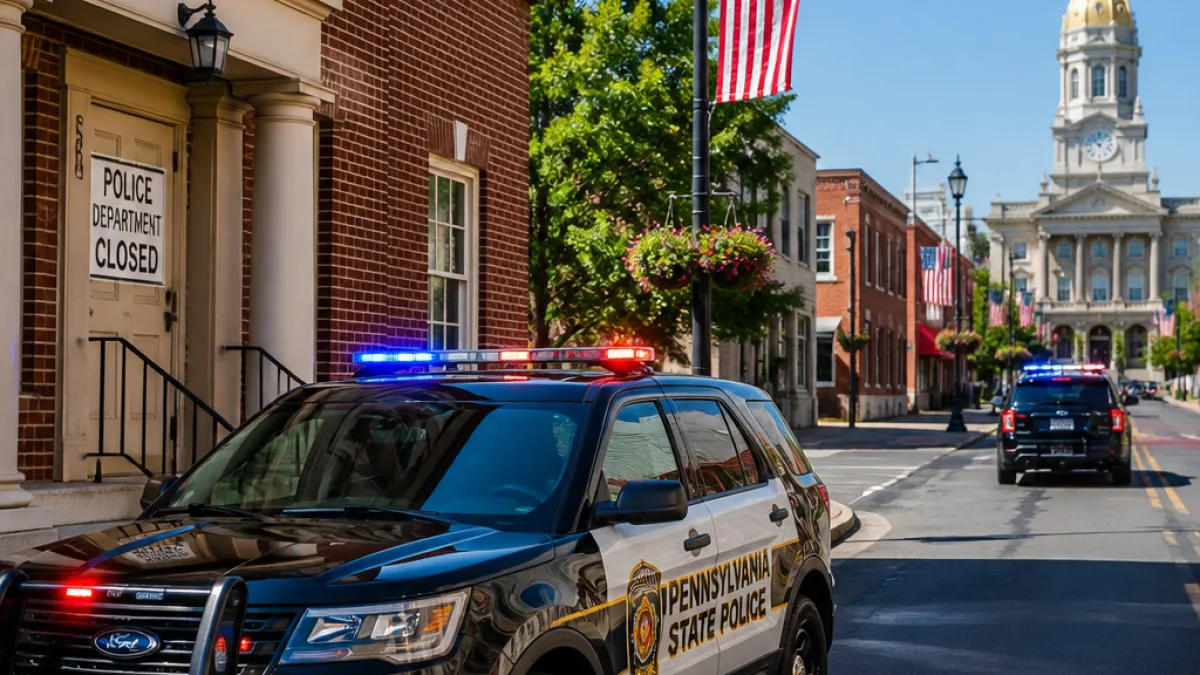
“With municipal police departments closing, the PSP is responsible for patrolling larger geographic areas and staff can frequently be spread thin or have longer response times due to the availability of officers,” the report reads.
The closure of municipal departments, often driven by local budget constraints, has forced the Pennsylvania State Police to add full-time coverage in places that previously had their own forces. The commission recommended sustained funding for the State Police and proposed repealing the statutory cap on the number of troopers the agency can employ — a move backed by the Shapiro administration.
Numbers and capacity
State police workforce figures underscore the dilemma: the agency currently employs more than 4,200 troopers out of 4,410 authorized positions, leaving limited headroom to absorb new patrol responsibilities without increasing authorized strength or changing deployment patterns.
| Metric | Figure |
|---|---|
| Increase in public safety and law enforcement spending since 2020 | $1.3 billion+ |
| Funding for cadet training during Shapiro's term | $63 million |
| Authorized State Police positions | 4,410 |
| Current troopers employed | more than 4,200 |
Those numbers do not, however, address the distribution of personnel across the state. Troopers assigned to larger geographic beats may face longer response times when covering towns that once relied on municipal patrols, the commission found.
Local impact and policy choices
For residents of small boroughs and rural townships, the switch to state-police coverage can be felt in response times and familiarity. Local officers typically live in the communities they patrol; state troopers cover larger areas and rotate among districts. The commission urged lawmakers to consider a mix of approaches to shore up local safety: sustained state funding, expanded training for municipal departments, and lifting the cap that limits the State Police’s authorized trooper count.
Repealing the cap would give the State Police more flexibility to hire and place troopers where demand has increased. The Shapiro administration’s support for that change aligns with the commission’s recommendation, but any statutory repeal would require approval from the General Assembly.
Recruitment and retention remain central
Officials and analysts say the problem is not only hiring new recruits but keeping experienced officers on the job. The commission’s review points to national trends that accelerated departures after high-profile incidents in 2020 and the ensuing public debate over policing. To reverse the staffing decline, experts suggest focused recruitment, improved training, and incentives to retain personnel — measures that need both funding and legislative backing.
As municipalities weigh their budgets and public-safety priorities, the state faces a choice: concentrate resources on shoring up the State Police or bolster local departments to preserve community-based policing. The commission’s recommendations and the Shapiro administration’s spending priorities make clear that Pennsylvania’s leaders view steady investment and policy changes as necessary to meet the growing demand for law enforcement coverage.
For now, troopers and local leaders are left to manage the immediate effects of closures and shifting responsibilities while state officials and lawmakers debate the policy levers that might stabilize policing across Pennsylvania.